
Garden Design for Texas
Design a beautiful Texas garden with heat-tolerant native plants, wildflower meadows, clay soil strategies, and water-wise techniques for Texas extremes.
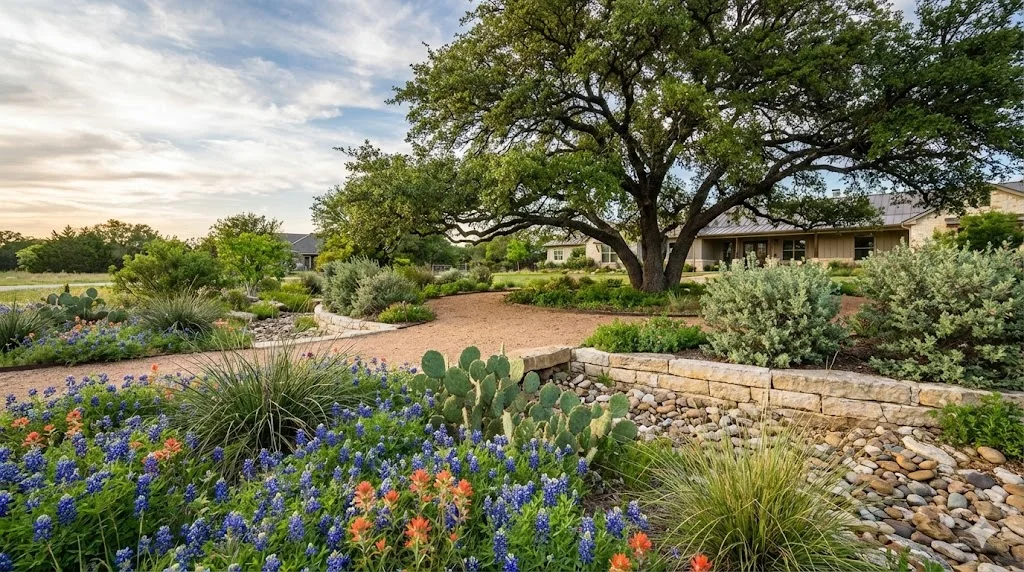
Garden Design for Texas
Texas is big in every sense, and that includes its gardening challenges. The Lone Star State spans a staggering range of climates — from the humid, pine-forested east to the bone-dry deserts of the west, from the subtropical Rio Grande Valley to the windswept High Plains that can see -20 C (-4 F) in winter. No single garden guide can cover all of Texas, but certain themes unite Texas gardening: extreme heat, unpredictable rainfall, heavy clay or caliche soils, and a wildflower tradition that is the envy of the gardening world.
This guide is part of our Garden Design for Your Climate Zone series. It covers the strategies, plants, and design principles that help Texas gardens not just survive but thrive — from the first bluebonnet of spring to the last salvia bloom of fall.
Texas Climate Zones
Texas spans USDA Zones 6b to 9b, an enormous range:
- North Texas / Dallas–Fort Worth — Zone 8a. Hot summers (38 C+ / 100 F+), cold winters with occasional ice storms. Heavy clay soil. 850 mm (33 inches) annual rain.
- Central Texas / Austin–San Antonio — Zone 8b–9a. Legendary summer heat, mild winters. Alkaline limestone and clay soils. 810–860 mm (32–34 inches) rain, often in intense bursts.
- Houston / Gulf Coast — Zone 9a. Subtropical heat and humidity, heavy clay, flat terrain prone to flooding. 1,250 mm (49 inches) rain. The Gulf Coast zone shares many of its humidity challenges and plant selections with the broader Southeast US gardening region.
- South Texas / Rio Grande Valley — Zone 9b. Near-tropical, mild winters, extremely hot summers. Semi-arid to subtropical.
- West Texas / El Paso — Zone 7b–8a. True desert. Less than 250 mm (10 inches) rain. Extreme heat, cold winters, alkaline soil. West Texas gardeners will find closely related strategies in our guide to garden design for the desert Southwest of Arizona and New Mexico.
- Texas Panhandle — Zone 6b–7a. Cold winters, hot summers, high wind, flat prairie. 450–500 mm (18–20 inches) rain.
Texas gardening is about understanding your specific region and its extremes — then choosing plants tough enough to handle the worst days, not just the averages.
Dealing with Texas Heat
Heat is the defining force of Texas gardening. When temperatures stay above 38 C (100 F) for weeks and nighttime lows barely drop below 27 C (80 F), plant selection becomes an exercise in survival-of-the-fittest.
Heat-Tolerant Design Strategies
- Shade, shade, shade — Large trees are the most valuable asset in a Texas garden. A single mature live oak can cool the area beneath it by 10 C (18 F).
- East-facing gardens — Position seating and sensitive plants to catch morning sun and escape brutal afternoon heat
- Reflective mulch — Light-colored gravel or decomposed granite reflects heat rather than absorbing it
- Thermal mass — Stone walls and water features moderate temperature extremes
- Night gardens — Design spaces for evening use, when temperatures finally become comfortable
Texas Heat Champions
Plants that not only survive but flourish in extreme Texas heat:
- Blackfoot daisy (Melampodium leucanthum) — White daisies from spring through fall, heat and drought proof
- Flame acanthus (Anisacanthus quadrifidus var. wrightii) — Tubular red-orange flowers, hummingbird magnet, blooms in the worst heat
- Turk's cap (Malvaviscus arboreus var. drummondii) — Red or pink flowers, shade-tolerant, native
- Pride of Barbados (Caesalpinia pulcherrima) — Tropical-looking red and yellow flowers, thrives in triple-digit heat
- Zexmenia (Wedelia acapulcensis var. hispida) — Yellow daisies, native ground cover, indestructible
The Texas Wildflower Tradition
Nothing defines the Texas landscape quite like the spring wildflower display. The sight of bluebonnets carpeting a hillside is as iconic as any garden border in the world, and incorporating wildflowers into your garden design connects you to this beloved tradition.
Creating a Wildflower Meadow
- Sow in fall — September through November is the ideal time to scatter wildflower seed in Texas. Seeds need winter cold stratification and early spring moisture.
- Prepare the site — Remove existing vegetation, rake to expose bare soil, and scatter seed directly. Do not bury seed deeply — most wildflowers need light to germinate.
- Choose native Texas species:
- Bluebonnet (Lupinus texensis) — The state flower, deep blue spikes
- Indian paintbrush (Castilleja indivisa) — Brilliant red-orange, often mixed with bluebonnets
- Pink evening primrose (Oenothera speciosa) — Delicate pink cups, vigorous spreader
- Black-eyed Susan (Rudbeckia hirta) — Golden yellow, long blooming
- Indian blanket (Gaillardia pulchella) — Red and yellow daisies, drought-proof
- Horsemint (Monarda citriodora) — Lavender whorls, fragrant, attracts bees
- Do not mow until seed sets — Let wildflowers complete their life cycle (typically by late May or June) before mowing, so they reseed for next year.
When you design your wildflower areas as part of your overall garden layout, you can balance the informal meadow zones with more structured planting areas for a garden that feels both wild and intentional.
Conquering Clay Soil
Heavy clay soil is the bane of Texas gardeners, particularly in the Dallas–Fort Worth, Austin, San Antonio, and Houston areas. Clay holds water when wet (suffocating roots) and cracks when dry (tearing them apart). It is alkaline, hard to dig, and seems designed to frustrate.
Clay Soil Strategies
- Raised beds — The single most effective solution. Fill with imported garden soil over native clay.
- Gypsum application — Gypsum helps break up clay structure without changing pH. Apply 2–5 kg per 10 m2 (4–10 lbs per 100 sq ft) and work into the top 15 cm.
- Compost incorporation — Add 10–15 cm (4–6 inches) of compost to new beds and till into the clay. Repeat annually.
- Avoid tilling wet clay — Working wet clay destroys its structure and creates dense, brick-like clods.
- Choose clay-tolerant plants — Many native Texas plants thrive in clay:
- Texas sage (Leucophyllum frutescens) — Purple flowers after rain, silvery foliage
- Possumhaw holly (Ilex decidua) — Red berries in winter, deciduous
- Mexican buckeye (Ungnadia speciosa) — Pink spring flowers, native understory tree
- Inland sea oats (Chasmanthium latifolium) — Graceful grass, shade-tolerant, clay-loving
Texas clay is not a death sentence — it is a filter. It eliminates weak plants and rewards the tough ones. The plants that thrive in Texas clay are some of the most resilient and beautiful natives on the continent.
Water-Wise Design for Texas
Water conservation is a moral and practical imperative in Texas, where drought is not a possibility but a certainty:
- Xeriscaping — The term was invented in the American West, and Texas is its proving ground. Design with water need in mind from day one.
- Rainwater harvesting — Capture roof runoff in tanks or cisterns. Even a modest Texas thunderstorm can fill a large tank.
- Rain gardens — In areas prone to flash flooding (Houston, especially), rain gardens absorb and filter stormwater
- Native plant foundation — Native Texas plants have survived centuries of drought without supplemental irrigation
- Efficient irrigation — Drip systems with smart controllers, watering in early morning only
- Mulch — 7–10 cm (3–4 inches) of hardwood mulch or decomposed granite over all planted areas
Trees for Texas
The right trees are the most valuable long-term investment in a Texas garden:
- Live oak (Quercus virginiana) — The king of Texas trees. Semi-evergreen, massive spreading canopy, wind-resistant, clay-tolerant. Works in all but the coldest Texas zones.
- Texas mountain laurel (Sophora secundiflora) — Evergreen, fragrant purple flowers, drought-tolerant, slow-growing
- Cedar elm (Ulmus crassifolia) — Native, tough, adaptable, golden fall color
- Texas redbud (Cercis canadensis var. texensis) — Pink spring flowers, compact, clay-tolerant
- Desert willow (Chilopsis linearis) — Orchid-like flowers, drought-proof, excellent for west and central Texas
- Monterrey oak (Quercus polymorpha) — Semi-evergreen, fast-growing, drought-tolerant, increasingly popular
Designing for Texas Storms
Texas weather is violent — hailstorms, tornadoes, straight-line winds, flash floods, and ice storms all occur with regularity:
- Wind-resistant trees — Live oak, cedar elm, bald cypress, and Texas mountain laurel have proven storm records
- Avoid brittle species — Bradford pear, silver maple, and Siberian elm are notorious for storm damage
- Design for drainage — Grade landscapes to direct water away from structures. Build berms and swales to manage flash flood runoff.
- Hail-resistant plants — Low-growing perennials and ground covers recover faster from hail damage than brittle shrubs
- Ice storm preparation — In north Texas, choose trees with flexible wood and avoid species prone to ice loading
Seasonal Rhythm in Texas
The Texas garden year follows its own calendar:
- Spring (March–May) — Peak season. Wildflowers, redbud bloom, roses peak, ideal planting window.
- Summer (June–September) — Survival mode. Heat, drought, and high water bills. Focus on heat-tolerant performers and evening garden use.
- Fall (October–November) — Second spring. Temperatures moderate, rain returns. Excellent planting season. Fall color from cedar elm and Texas red oak.
- Winter (December–February) — Mild in south Texas, cold in the north. Structural interest from evergreens, berries, and bark. Planning and soil preparation season.
Getting Started: Your Texas Garden Plan
- Identify your Texas region — North, Central, Gulf Coast, South, or West Texas each require fundamentally different approaches.
- Test your soil — Know your pH, drainage, and composition before selecting plants.
- Plant trees first — They are the most valuable long-term element and take the longest to mature.
- Build with natives — Texas native plants are adapted to the exact conditions you face.
- Plan for water — Install rainwater harvesting, drip irrigation, and deep mulch from the start.
- Include wildflowers — Sow a wildflower meadow in fall for spring magic.
- Design for the extremes — Plan for the hottest summer, the worst drought, and the hardest freeze — not the average conditions.
- Garden in the cooler hours — Do your outdoor work and enjoy your garden in early morning and evening. Design your outdoor living spaces accordingly.
Texas gardens reward boldness, resilience, and a deep respect for the land. When you design with the Texas climate rather than against it, you create a garden that is tough, colorful, water-wise, and unmistakably Texan — from the first bluebonnet of March to the last flame acanthus bloom of November.
Garden Design Team
Expert garden designers sharing tips, inspiration, and practical advice for creating beautiful outdoor spaces.
Explore professional garden design
Gardenly3D is a paid professional garden-design application. See plans for included capabilities and availability.
Join the waitlistRelated articles
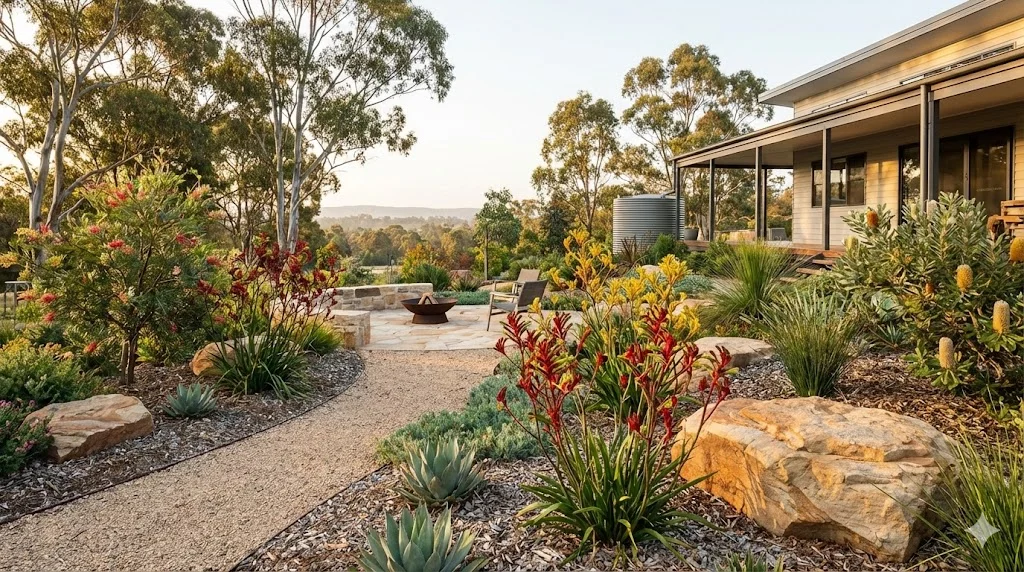
Garden Design for Australian Conditions
Design a resilient Australian garden with native plants, bushfire-safe landscaping, water-wise strategies, and solutions for subtropical to arid climates.
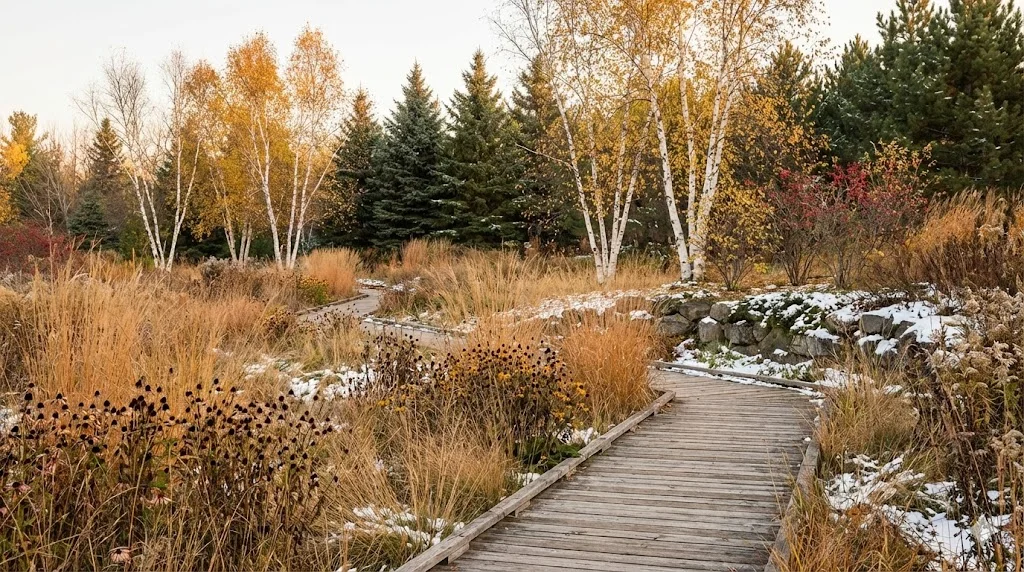
Garden Design for Canada
Design a resilient Canadian garden with extreme cold strategies, native prairie and boreal plants, short season planting, and wildlife-friendly garden design.
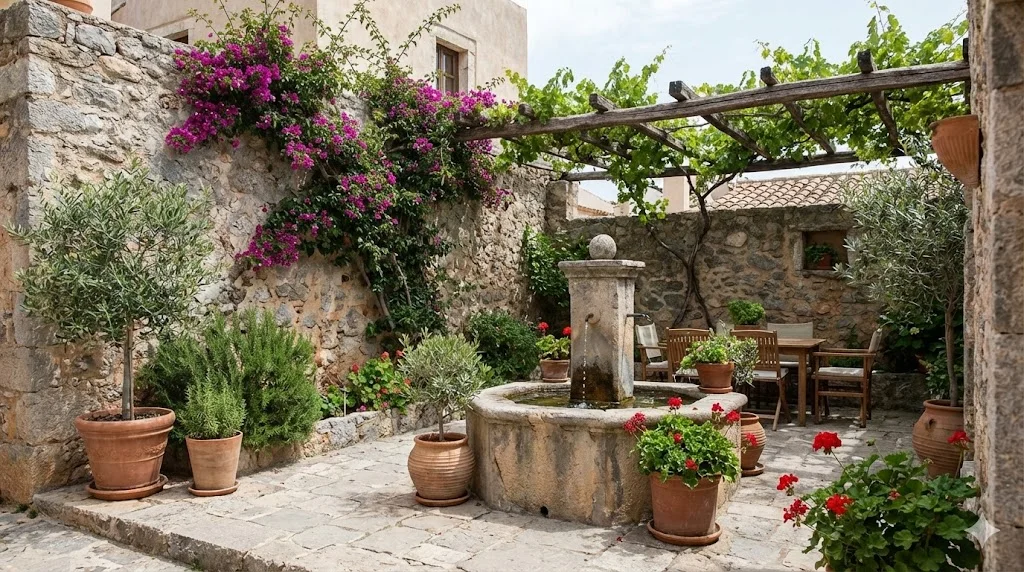
Garden Design for Coastal Mediterranean (Spain, Italy, Greece)
Design a stunning coastal Mediterranean garden with bougainvillea, citrus, courtyards, dry stone walls, and irrigation strategies for Spain, Italy, and Greece.