
Garden Design for Coastal Mediterranean (Spain, Italy, Greece)
Design a stunning coastal Mediterranean garden with bougainvillea, citrus, courtyards, dry stone walls, and irrigation strategies for Spain, Italy, and Greece.
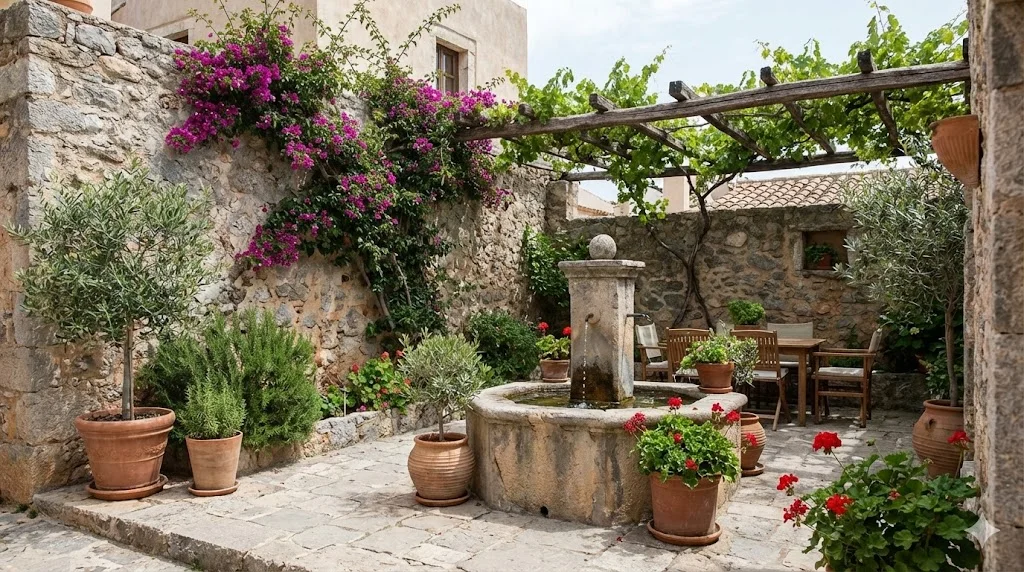
Garden Design for Coastal Mediterranean (Spain, Italy, Greece)
The coastal Mediterranean — from the Algarve of Portugal through southern Spain, the French Riviera, the Italian Amalfi Coast, the Greek Islands, and the Turkish Aegean — is the birthplace of Western garden culture. For three thousand years, people in this region have cultivated gardens that balance beauty with practicality, abundance with restraint, and the pleasures of outdoor living with the realities of drought, wind, and intense sun. The result is a garden aesthetic that is admired and emulated worldwide: terracotta pots overflowing with geraniums, bougainvillea cascading over whitewashed walls, the silver shimmer of olive trees, the fragrance of jasmine on a warm evening, and the sound of water from a courtyard fountain.
This guide is part of our Garden Design for Your Climate Zone series and a companion to our broader guide to Mediterranean climate garden design. Here we focus specifically on the coastal regions of southern Europe, with their unique cultural traditions, plant palettes, and design approaches.
Understanding the Coastal Mediterranean Climate
The coastal Mediterranean climate is characterized by:
- Hot, dry summers: June through September brings 3–4 months of virtually no rain. Summer temperatures of 28–40 C (82–104 F) along the coast, hotter inland.
- Mild, wet winters: November through March brings the year's rain — 400–900 mm (16–35 inches) depending on location. Winter lows of 5–12 C (41–54 F) at the coast; frost is rare in most coastal areas.
- Intense sunlight: 2,500–3,000+ hours of sunshine annually. UV radiation is strong, especially on south-facing slopes.
- Sea influence: Proximity to the Mediterranean Sea moderates temperature extremes and raises humidity relative to inland areas.
- Wind: Coastal areas face specific named winds — the mistral (France), tramontana (Spain/Italy), meltemi (Greece), and sirocco (North Africa across to southern Europe) — that shape plant selection and garden design.
- Alkaline, rocky soils: Limestone-based soils dominate most of the region, producing alkaline (pH 7.5–8.5), well-draining, mineral-rich conditions.
The Mediterranean coast is where gardens and outdoor living became inseparable. The climate demands it — summers too hot for indoor confinement, evenings too beautiful to ignore. Every Mediterranean garden is, at its heart, an outdoor room.
The Courtyard Garden Tradition
The enclosed courtyard (patio in Spanish, cortile in Italian, avli in Greek) is the most distinctive garden form of the coastal Mediterranean. Originally a Roman atrium and later refined by Moorish, Byzantine, and Renaissance influences, the courtyard garden offers:
- Privacy and enclosure — Walls create a private paradise, sheltered from wind and public view
- Microclimate control — Enclosed spaces are cooler than open areas, especially when combined with water features and shade
- Focused beauty — A small, enclosed space concentrates design impact. Every pot, every plant, every surface matters.
- Sound management — Fountain sound masks urban noise and creates a sense of tranquility
Essential Courtyard Elements
- Water feature — A central fountain, basin, or rill. Even the simplest trickle of water cools the air and adds sound.
- Paving — Natural stone, terracotta tile, cobblestone, or decorative pebble mosaic (empedrado in Spain, ciottolato in Italy)
- Shade — Pergola, awning, or shade tree. Grape vine, wisteria, or bougainvillea-covered pergolas are classic.
- Potted plants — Terracotta pots of varying sizes with pelargoniums, herbs, citrus, and seasonal flowers
- Whitewashed or stone walls — Provide a neutral, light-reflecting backdrop that intensifies plant colors
- Seating — Built-in stone benches, wrought iron chairs, or simple wooden seating for outdoor living
When you design your courtyard layout with shade and water features, you can test how sunlight moves through the space at different times of day and year.
Bougainvillea: The Mediterranean Icon
No plant symbolizes the coastal Mediterranean more than bougainvillea. Its vivid paper bracts in magenta, orange, white, gold, and salmon transform any wall, pergola, or fence into a riot of color.
Growing Bougainvillea
- Full sun — Needs at least 6 hours of direct sun for best flowering
- Drought-tolerant — Once established, thrives on minimal water. Overwatering promotes leaf growth at the expense of flowers.
- Training — Bougainvillea is a sprawling shrub, not a true climber. Train it on walls and structures by tying branches to supports.
- Pruning — Prune hard after the main flowering flush to promote compact growth and repeat bloom
- Frost sensitivity — Hardy to about -2 C (28 F). In marginal areas, plant against south-facing walls for warmth.
- Color combinations — Purple bougainvillea against white walls is the classic Mediterranean look. Orange varieties pair beautifully with terracotta and blue-painted woodwork.
Citrus in the Mediterranean Garden
Citrus trees have been cultivated in Mediterranean gardens for over a thousand years. They offer fragrance, fruit, evergreen foliage, and sculptural form:
Citrus for Garden Design
- Lemon (Citrus limon) — The most widely grown Mediterranean citrus. Fragrant flowers, yellow fruit, evergreen.
- Orange (Citrus sinensis) — Sweet orange for eating; bitter orange (C. aurantium) for marmalade and fragrance. The orange blossom scent defines Seville, the Amalfi Coast, and many Greek islands.
- Mandarin (Citrus reticulata) — Compact, sweet fruit, excellent in containers
- Kumquat (Fortunella) — Small, ornamental, edible whole, the hardiest commercial citrus (to -10 C / 14 F)
- Citron (Citrus medica) — Large, fragrant fruit with thick rind, historically important
Citrus Design Principles
- Pots and containers — The traditional approach. Citrus in large terracotta pots can be moved to sheltered positions in cold weather.
- Formal groves — Rows or grids of citrus trees with underplanting of aromatic herbs
- Focal specimens — A single lemon tree in a courtyard can serve as the central feature
- Fragrance placement — Position citrus near seating areas and doorways where their blossom fragrance can be enjoyed
Dry Stone Walls and Terracing
The Mediterranean landscape is defined by terracing — the centuries-old practice of carving level planting surfaces from hillsides, retained by dry stone walls:
- Agricultural heritage — Terracing was developed for olive, grape, and citrus cultivation on steep coastal slopes
- Drainage management — Each terrace level provides drainage for the one above, preventing erosion during winter rains
- Microclimate creation — Stone walls absorb heat during the day and release it at night, creating warm microclimates for tender plants
- Wildlife habitat — Dry stone walls shelter lizards, insects, and small mammals
- Aesthetic power — Terraced gardens have a timeless, sculptural quality that defines the Mediterranean landscape
Building with Local Stone
Use local limestone, sandstone, or volcanic stone to connect your garden to its specific place:
- Spanish gardens — Golden sandstone, terracotta, iron oxide red
- Italian gardens — Tufa, travertine, Istrian stone, volcanic basalt (around Vesuvius and Etna)
- Greek gardens — White marble, grey limestone, volcanic pumice (Santorini)
The Mediterranean Plant Palette
Trees
- Olive (Olea europaea) — The defining Mediterranean tree. Silver foliage, gnarled trunk, millennium lifespan.
- Stone pine (Pinus pinea) — Umbrella-shaped canopy, iconic Italian silhouette
- Italian cypress (Cupressus sempervirens) — Vertical exclamation points along drives and boundaries
- Fig (Ficus carica) — Sculptural form, edible fruit, deciduous
- Pomegranate (Punica granatum) — Ornamental flowers, edible fruit, drought-tolerant
- Judas tree (Cercis siliquastrum) — Pink spring flowers on bare branches
- Carob (Ceratonia siliqua) — Evergreen, drought-proof, edible pods
Shrubs and Perennials
- Lavender — French, Spanish, and English types all thrive
- Rosemary — Upright, prostrate, and groundcover forms
- Cistus (rockrose) — Papery white or pink flowers, aromatic foliage
- Oleander — Vivid pink, red, or white flowers, highway and coastal planting
- Plumbago (Plumbago auriculata) — Soft blue flowers, sprawling, fence cover
- Agapanthus — Blue or white spheres on tall stems
- Pelargonium — The pot plant of the Mediterranean. Red, pink, white, and salmon.
- Gaura — Delicate white or pink flowers, continuous bloom
- Euphorbia — Lime green bracts, architectural, drought-tolerant
Climbers and Vines
- Bougainvillea — The signature climber
- Jasmine (Jasminum officinale) — White flowers, intensely fragrant, summer-blooming
- Wisteria — Purple or white cascading racemes, spring-blooming, needs strong support
- Grape vine (Vitis vinifera) — Edible fruit, pergola shade, autumn color
- Trachelospermum jasminoides — Star jasmine, evergreen, fragrant
Aromatic Herbs
The Mediterranean herb garden is both practical and ornamental:
- Oregano — Pink flowers, culinary essential
- Thyme — Dozens of species, creeping and upright
- Sage — Grey-green leaves, blue flowers
- Basil — Annual, culinary staple, summer fragrance
- Bay laurel — Evergreen shrub or tree, culinary leaves
A Mediterranean garden without herbs is like a kitchen without ingredients. They provide fragrance, flavor, pollinator food, and a living connection to the culinary traditions of the region.
Irrigation Strategies
Water management is the most important practical consideration in coastal Mediterranean gardens:
- Drip irrigation — The standard for efficient Mediterranean garden watering. Delivers water directly to roots.
- Timer-controlled systems — Program watering for pre-dawn hours to minimize evaporation and fungal disease
- Gravel mulch — 5–7 cm (2–3 inches) of gravel or crushed stone over all exposed soil
- Mediterranean plants need no irrigation — Once established (1–2 years), most true Mediterranean species need no supplemental water. Reserve irrigation for citrus, vegetables, and non-adapted ornamentals.
- Traditional acequia systems — In southern Spain, historic irrigation channels (acequias) are still in use, distributing water from mountain sources through gravity-fed channels
- Rainwater capture — Cisterns and underground tanks store winter rain for summer use
When you map your irrigation zones across your garden plan, you can separate high-water and no-water zones efficiently.
Regional Variations
Spanish Mediterranean
- Moorish influence: geometric water channels, tiled azulejo decoration, enclosed patios
- Plants: Bougainvillea, jasmine, orange blossom, oleander, palms
- Materials: Terracotta, wrought iron, hand-painted tiles, whitewashed walls
Italian Mediterranean
- Renaissance and Baroque influence: formal geometry, statuary, clipped hedges, grand vistas
- Plants: Citrus, Italian cypress, wisteria, Rosa banksiae, boxwood parterres
- Materials: Travertine, marble, terracotta, classical stonework
Greek Mediterranean
- Minimalist, island aesthetic: white-blue color palette, simple forms, windswept plantings
- Plants: Bougainvillea, pelargoniums, olive, tamarisk, sea lavender
- Materials: Whitewashed stone, blue-painted wood, volcanic pumice, pebble mosaics
Getting Started: Your Coastal Mediterranean Garden Plan
- Design for outdoor living — The garden is an extension of your home. Create shaded dining areas, comfortable seating, and connection between indoor and outdoor spaces.
- Start with a courtyard or terrace — Even a small paved area with pots, a water feature, and shade is the essence of Mediterranean garden design.
- Plant an olive tree — The symbolic and practical center of the Mediterranean garden. Even a small olive in a large pot makes a statement.
- Add bougainvillea — On a south-facing wall, pergola, or fence. It transforms any space instantly.
- Include citrus — In the ground or in pots. The blossom fragrance alone justifies the effort.
- Mulch with gravel — Light-colored gravel over all exposed soil saves water, suppresses weeds, and creates the warm, mineral aesthetic of the Mediterranean.
- Install drip irrigation — For citrus, vegetables, and newly planted specimens. Phase it out as plants establish.
- Use terracotta — Pots, tiles, and earth-toned materials connect your garden to the Mediterranean palette.
The coastal Mediterranean garden is the original outdoor living room — a place of shade and sunlight, water and stone, fragrance and color, food and conversation. It is a tradition thousands of years old that remains as relevant and beautiful today as when the first Roman gardener trained a grape vine over a courtyard pergola and sat beneath it to watch the sun set over the sea.
Garden Design Team
Expert garden designers sharing tips, inspiration, and practical advice for creating beautiful outdoor spaces.
Explore professional garden design
Gardenly3D is a paid professional garden-design application. See plans for included capabilities and availability.
Join the waitlistRelated articles
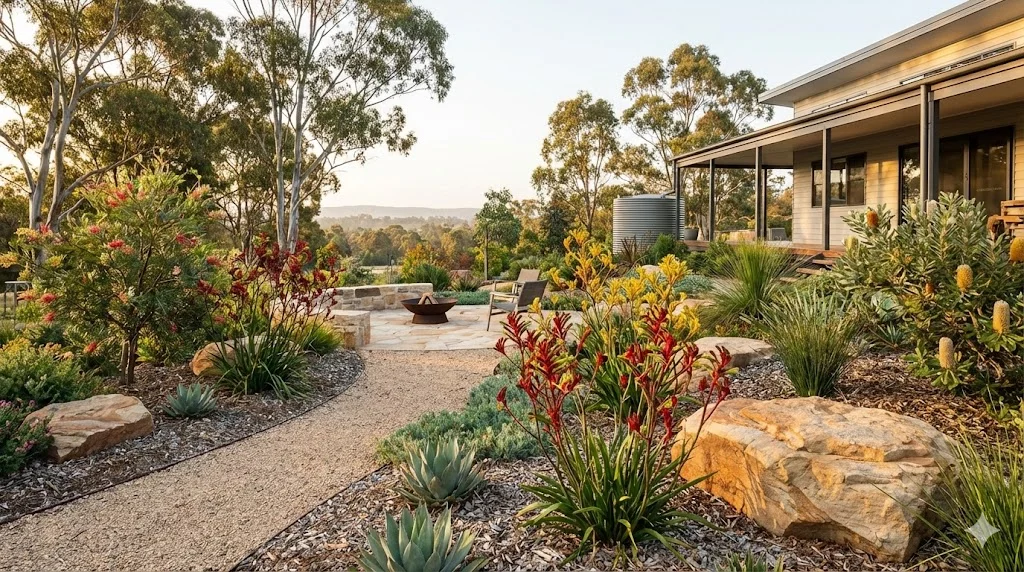
Garden Design for Australian Conditions
Design a resilient Australian garden with native plants, bushfire-safe landscaping, water-wise strategies, and solutions for subtropical to arid climates.
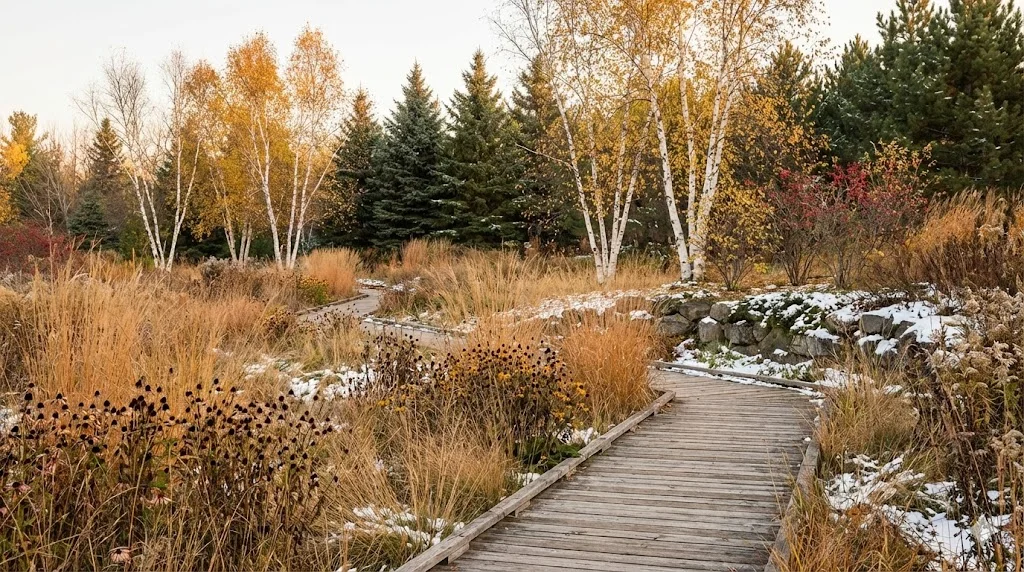
Garden Design for Canada
Design a resilient Canadian garden with extreme cold strategies, native prairie and boreal plants, short season planting, and wildlife-friendly garden design.
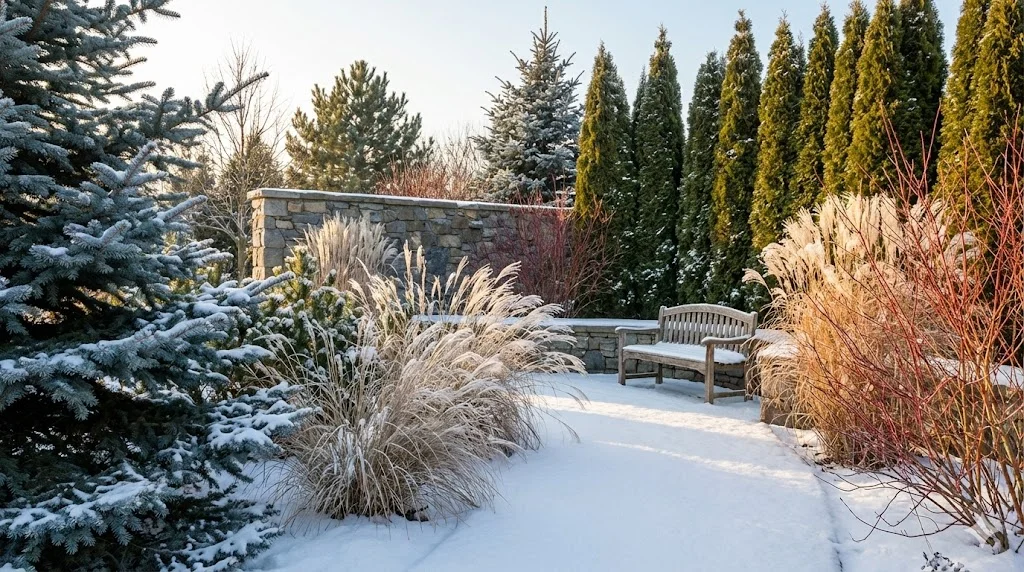
Garden Design for Cold Climates (USDA Zones 3–5)
Design a stunning cold climate garden in USDA Zones 3-5 with hardy plants, winter structure, wind protection, and strategies for short growing seasons.