
Garden Design for the Desert Southwest (Arizona, New Mexico)
Design a stunning desert garden in Arizona and New Mexico with native agave, monsoon drainage, shade ramadas, water harvesting, and Sonoran Desert plants.
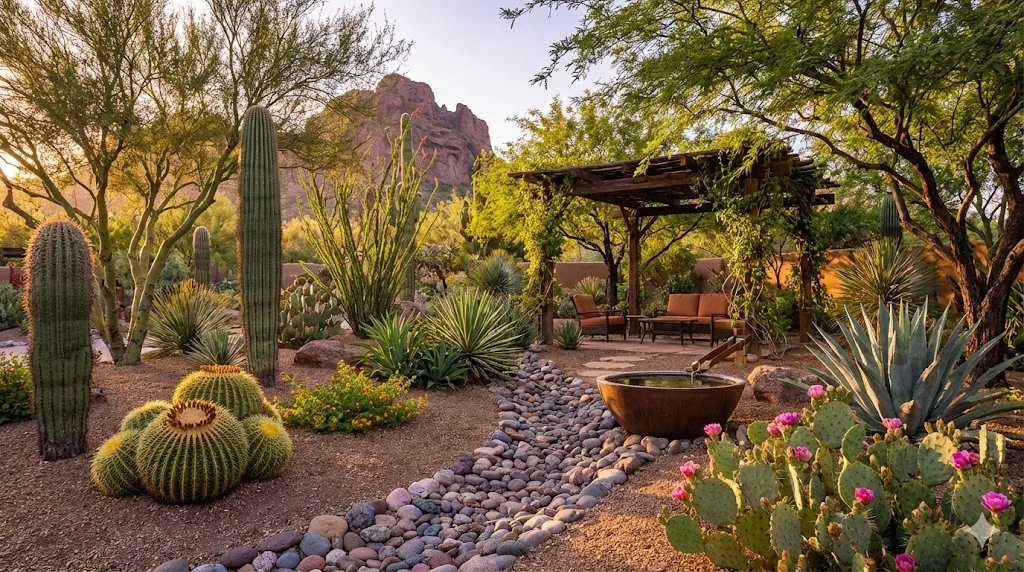
Garden Design for the Desert Southwest (Arizona, New Mexico)
The desert Southwest is a landscape of superlatives — the hottest temperatures in North America, the most dramatic rock formations, the most spectacular sunsets, and some of the most extraordinarily adapted plants on earth. Gardening in Arizona and New Mexico means working with conditions that would defeat most plants: summer temperatures exceeding 46 C (115 F), months without a drop of rain, alkaline caliche soils, and UV radiation so intense it bleaches paint and cracks rubber.
Yet the desert Southwest produces gardens of breathtaking beauty. The sculptural forms of saguaro and agave, the vivid bloom of desert wildflowers after monsoon rain, the shade of a palo verde canopy filtering dappled light onto a courtyard floor — these are garden experiences that exist nowhere else. The key is working with the desert rather than against it.
This guide is part of our Garden Design for Your Climate Zone series. It covers the specific strategies, native plants, and design approaches that create thriving gardens in the Sonoran and Chihuahuan deserts.
Understanding the Desert Southwest Climate
The desert Southwest is not uniformly hot and dry. Elevation, proximity to mountains, and seasonal patterns create significant variation:
- Low desert (Phoenix, Tucson below 900 m / 3,000 ft) — USDA Zone 9b–10a. Extreme summer heat (regularly 43 C / 110 F+), mild winters (rare frost in Phoenix, occasional frost in Tucson). 180–300 mm (7–12 inches) annual rainfall.
- Mid-elevation (Tucson, Albuquerque, 900–1,500 m / 3,000–5,000 ft) — Zone 8–9. Hot summers, cold winter nights (occasional hard frost). 250–400 mm (10–16 inches) rainfall.
- High desert (Santa Fe, Flagstaff, above 1,500 m / 5,000 ft) — Zone 5–7. Four distinct seasons, cold winters with snow, moderate summers. Higher precipitation.
The Monsoon Pattern
The desert Southwest has a distinctive dual rainy season:
- Winter rains (December–March) — Gentle, soaking rains from Pacific storms. Critical for native wildflower germination.
- Summer monsoon (July–September) — Intense, localized thunderstorms that can dump 25–50 mm (1–2 inches) in under an hour. Dramatic, powerful, and often accompanied by dust storms (haboobs), lightning, and flash flooding.
- Dry periods (April–June, October–November) — Extended drought. The April–June "fore-summer" is the hottest, driest, and most stressful period.
The desert garden year revolves around water. The monsoon is not just rain — it is the garden's awakening. Many desert plants bloom, grow, and set seed in a frantic response to monsoon moisture. Designing to capture, direct, and celebrate this water is the desert gardener's primary art.
Water Harvesting: The Foundation of Desert Design
In the desert Southwest, water harvesting is not optional — it is the single most important design principle:
Passive Water Harvesting
- Earthworks — Grade the landscape so every drop of rainfall flows toward planted areas. Even slight grades (1–2%) make a dramatic difference.
- Basins and berms — Create shallow basins (10–15 cm deep) around trees and shrubs to capture and hold rainwater. Berms direct flow between basins.
- Swales — Shallow channels that slow and spread water across the landscape, allowing it to percolate into the root zone.
- Curb cuts and street runoff — Many desert gardeners capture street runoff by cutting their curb and directing flow into front-yard basins.
- Roof runoff — A 100 m2 roof receiving 250 mm of rain captures 25,000 liters per year. Direct this to planted areas via graded channels.
Active Water Harvesting
- Rainwater tanks — Cisterns capture roof runoff for targeted irrigation during dry periods. Even modest tanks (2,000–5,000 liters) make a significant difference.
- Greywater systems — Redirect laundry and shower water to landscape plants (compliant with Arizona and New Mexico regulations, which are generally permissive).
- Drip irrigation — For supplemental watering during establishment and extreme drought. Smart controllers adjust for monsoon moisture.
When you design your garden's water flow and basin placement, you can ensure every drop of precious rainfall reaches the plants that need it most.
Native Desert Plants
The Sonoran and Chihuahuan deserts support an astonishing diversity of plants, many of which are dramatically beautiful:
Iconic Cacti and Succulents
- Saguaro (Carnegiea gigantea) — The symbol of the desert Southwest. Grows to 12 m (40 ft), arms develop after 50+ years. Protected species in Arizona.
- Barrel cactus (Ferocactus) — Golden-spined globes, yellow crown flowers
- Prickly pear (Opuntia) — Paddle-shaped segments, vivid flowers, edible fruit
- Agave — Multiple species from small rosettes to massive century plants. Dramatic, architectural, drought-proof.
- Ocotillo (Fouquieria splendens) — Spindly stems that leaf out after rain and produce vivid red flower tips
- Cholla (Cylindropuntia) — Chain-fruit, teddy bear, and staghorn varieties. Beautiful backlit at sunrise and sunset.
Desert Trees
- Palo verde (Parkinsonia) — Green-barked, nitrogen-fixing, filtered shade, yellow spring flowers. The nurse tree of the desert.
- Ironwood (Olneya tesota) — Dense canopy, lavender flowers, extremely long-lived
- Mesquite (Prosopis) — Deep-rooted (30+ m), dappled shade, fragrant flowers, edible pods
- Desert willow (Chilopsis linearis) — Orchid-like flowers in pink, purple, and white
- Palo blanco (Mariosousa willardiana) — White-barked, elegant, Sonoran native
Desert Shrubs and Perennials
- Jojoba (Simmondsia chinensis) — Evergreen, dense, excellent screening
- Brittlebush (Encelia farinosa) — Silver foliage, yellow daisies, the quintessential desert wildflower
- Chuparosa (Justicia californica) — Red tubular flowers, hummingbird magnet
- Desert marigold (Baileya multiradiata) — Cheerful yellow daisies, long-blooming
- Blackfoot daisy (Melampodium leucanthum) — White daisies, continuous bloom, indestructible
- Globe mallow (Sphaeralcea) — Orange, red, or pink mallow flowers, drought-proof
Many of these species also thrive in gardens across other arid regions worldwide; our guide to garden design for hot and dry climates covers the universal principles that apply wherever water is scarce.
- Arizona poppy (Kallstroemia grandiflora) — Vivid orange-yellow flowers after monsoon rain
Shade Ramadas and Outdoor Living
In the desert, shade is survival. Traditional Southwest architecture uses ramadas — open-sided shade structures — to create comfortable outdoor living spaces:
- Traditional ramada — Wooden posts with a slatted or thatched roof, providing filtered shade while allowing air circulation
- Modern shade structures — Steel and fabric combinations, tensioned shade sails, pergolas with retractable covers
- Living shade — Mesquite and palo verde trees provide the best natural desert shade: dappled, cool, and beautiful
- Courtyard design — The enclosed courtyard (placita) is the traditional outdoor living space of the Southwest, shaded by walls and trees, often centered on a fountain or water feature
- East-facing orientation — Place outdoor living areas to catch morning sun and escape brutal afternoon heat
In the desert Southwest, the garden is experienced primarily in the cool hours — early morning, evening, and during the monsoon months. Design for these times, and your garden becomes a genuine outdoor living space for most of the year.
Dealing with Caliche
Caliche — a concrete-like layer of calcium carbonate ceite that forms in desert soils — is a common obstacle:
- Test before planting — Probe the soil to find caliche depth. It may be at the surface or several feet down.
- Break through it — For tree planting, use a pickaxe or jackhammer to break through caliche layers and ensure drainage below the root zone.
- Improve drainage — If caliche forms an impermeable pan, water pools above it during monsoons, suffocating roots. Breaking through or providing drainage channels is essential.
- Use raised beds — For smaller plants, build raised beds above the caliche layer and fill with imported soil.
- Choose native plants — Many desert natives have evolved to grow in and above caliche conditions.
Monsoon Drainage Design
When the monsoon hits, the desert Southwest transforms from bone-dry to flash-flood conditions in minutes:
- Grade away from structures — Ensure all surfaces slope away from buildings
- Channel excess water — Dry washes (arroyos), rock-lined channels, and swales direct monsoon overflow safely through the garden
- Riprap and erosion control — Large rocks in drainage channels slow water velocity and prevent erosion
- Rain gardens — Low areas planted with moisture-tolerant species absorb and filter monsoon runoff
- Avoid hardscape in low spots — Patios and paths in low areas will flood during heavy storms
Desert Wildflower Display
After good winter and monsoon rains, the desert erupts in wildflowers — one of nature's most spectacular displays:
- Mexican gold poppy — Carpets of gold across desert slopes after winter rain
- Lupine — Blue-purple spikes mixed with poppies
- Owl's clover (Castilleja exserta) — Pink-purple drifts
- Desert globe mallow — Orange flowers along roadsides and washes
To encourage wildflower displays in your garden, scatter seed on cleared ground in fall (for winter-rain flowers) or early summer (for monsoon flowers), and let nature do the watering. Gardeners in neighboring Southern California share many of the same native wildflower species and enjoy similar spring displays.
Getting Started: Your Desert Southwest Garden Plan
- Design for water first — Before choosing a single plant, grade your landscape to harvest every drop of rainfall.
- Install a rainwater tank — Capture roof runoff for supplemental irrigation.
- Plant native desert species — They are adapted to your exact conditions and require minimal supplemental water once established.
- Create shade — Plant trees first, then build ramadas or shade structures for outdoor living areas.
- Use gravel and decomposed granite — The natural mulch of the desert. It conserves moisture, reduces heat, and suits the aesthetic.
- Respect the saguaro — In Arizona, saguaro cacti are protected by law. If you are fortunate enough to have them on your property, design around them.
- Time your planting — Plant in fall (October–November) or early spring (February–March). Avoid planting in the fore-summer (April–June) when heat stress is most extreme.
- Design for the cool hours — Outdoor living spaces, paths for evening walks, lighting for after-dark enjoyment. The desert garden comes alive when the sun goes down.
The desert Southwest garden is unlike any other. It asks you to see beauty in thorns and spines, in silver and grey rather than emerald green, in the drama of a thunderstorm and the silence that follows. In return, it offers a landscape of extraordinary sculptural power, a connection to one of earth's most ancient and resilient ecosystems, and the daily spectacle of sunrise and sunset painting the garden in colors no artist could invent.
Garden Design Team
Expert garden designers sharing tips, inspiration, and practical advice for creating beautiful outdoor spaces.
Explore professional garden design
Gardenly3D is a paid professional garden-design application. See plans for included capabilities and availability.
Join the waitlistRelated articles
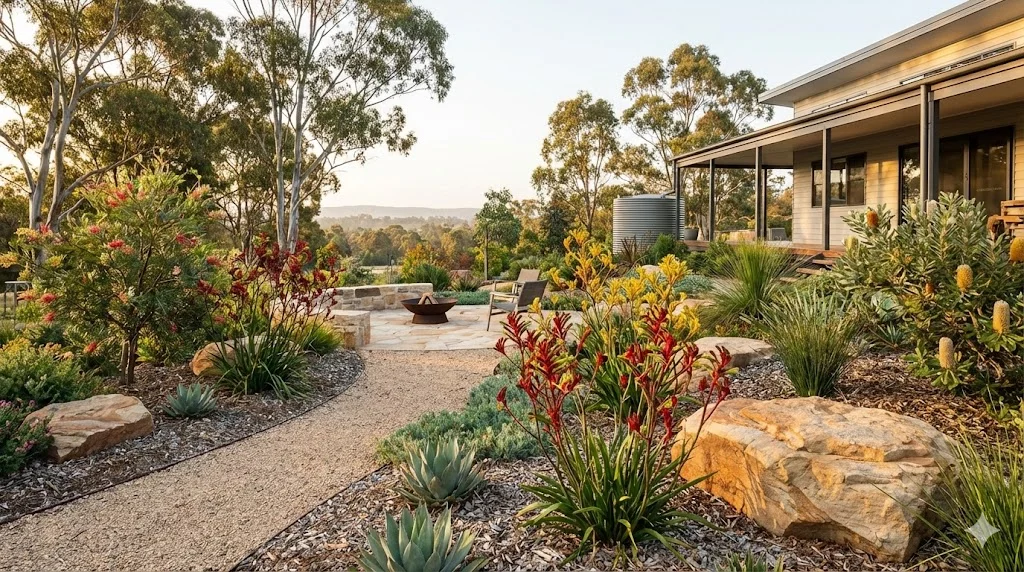
Garden Design for Australian Conditions
Design a resilient Australian garden with native plants, bushfire-safe landscaping, water-wise strategies, and solutions for subtropical to arid climates.
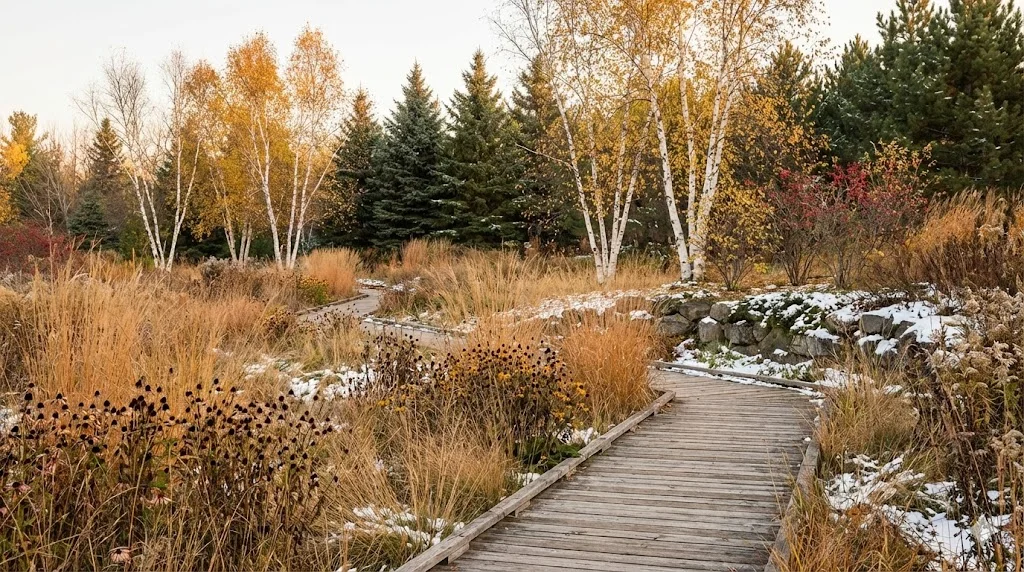
Garden Design for Canada
Design a resilient Canadian garden with extreme cold strategies, native prairie and boreal plants, short season planting, and wildlife-friendly garden design.
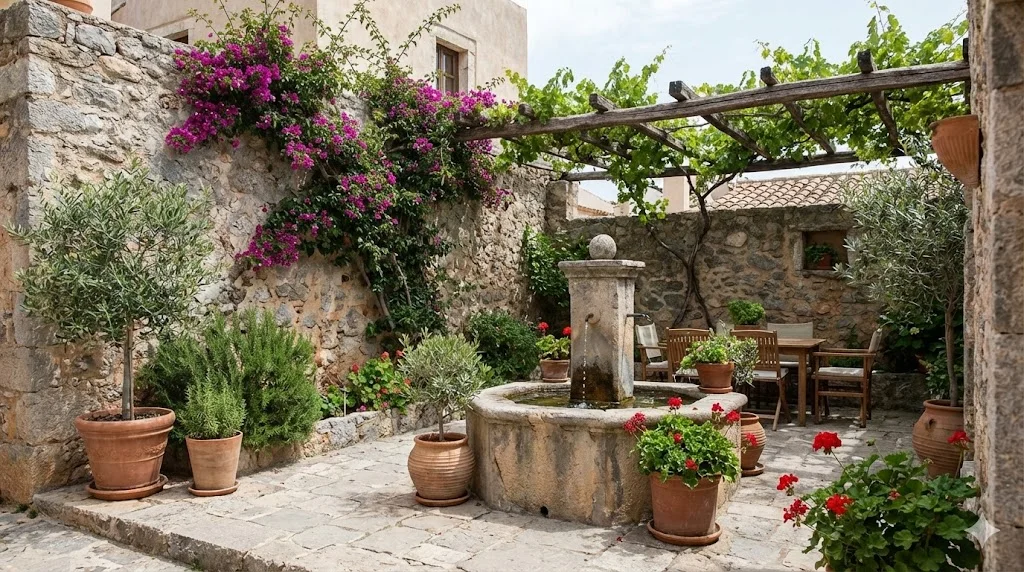
Garden Design for Coastal Mediterranean (Spain, Italy, Greece)
Design a stunning coastal Mediterranean garden with bougainvillea, citrus, courtyards, dry stone walls, and irrigation strategies for Spain, Italy, and Greece.