
Garden Design for the Midwest (USDA Zones 4–6)
Design a beautiful Midwest garden for Zones 4-6 with prairie plants, clay soil solutions, tornado-resistant trees, and four-season planting strategies.
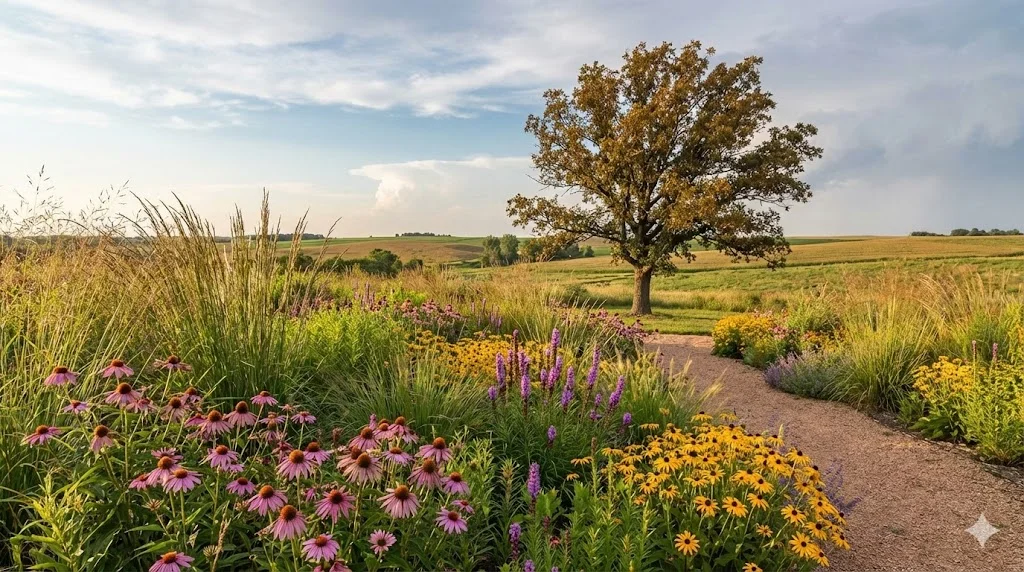
Garden Design for the Midwest (USDA Zones 4–6)
The American Midwest is a land of extremes. Bitterly cold winters give way to searing summers, gentle spring rains can turn to tornado-spawning storms in minutes, and the heavy clay soils that challenge every gardener also nurture some of the richest agricultural land on earth. Gardening here demands resilience, patience, and a willingness to work with the land rather than against it.
But the Midwest also possesses extraordinary garden potential. The native prairie ecosystem — one of the most diverse plant communities in North America — provides a design vocabulary of grasses and wildflowers that is both ecologically rich and visually stunning. The strong four-season rhythm rewards designers who plan for every phase, from the first crocuses breaking through March snow to the last ornamental grass catching December frost.
This guide is part of our Garden Design for Your Climate Zone series. It covers the specific strategies, plant choices, and design approaches that make Midwest gardens successful and beautiful.
Understanding the Midwest Climate
The Midwest climate (spanning roughly from Ohio to the Dakotas, Minnesota to Missouri) is classified as humid continental, characterized by:
- Extreme temperature range: Summer highs of 32–38 C (90–100 F) and winter lows of -29 to -18 C (-20 to 0 F) are common. The annual range can exceed 55 C (100 F). Northern Midwest gardens in Zone 4 share many of the same plant selections and winter strategies covered in our guide to gardening in cold climates (Zones 3-5).
- USDA Zones 4–6: Zone 4 in northern Minnesota, Wisconsin, and Michigan; Zone 5 across much of Iowa, Illinois, Indiana, and Ohio; Zone 6 in southern sections.
- Heavy clay soil: The legacy of glaciation. Dense, nutrient-rich but poorly draining clay dominates much of the region.
- Variable precipitation: 600–1,000 mm (24–40 inches) annually, with most falling in spring and early summer. Summer droughts and winter ice are both common.
- Strong winds: The flat terrain offers little wind protection. Severe storms, including tornadoes, are a regular threat from April through July.
- Distinct seasons: The Midwest experiences all four seasons with dramatic transitions.
The Midwest gardener works with the most dramatic seasonal contrast in North America. This is both the challenge and the reward — a garden that transforms completely four times a year.
Prairie-Inspired Design
The tallgrass prairie that once covered the Midwest is the natural model for the region's best gardens. Prairie plants are adapted to exactly the conditions Midwest gardeners face — extreme cold, extreme heat, heavy clay, drought, wind, and fire. A garden that draws on the prairie palette is a garden that belongs.
Key Prairie Plants
Grasses (the backbone of any prairie design):
- Big bluestem (Andropogon gerardii) — The signature tallgrass, 1.5–2.4 m (5–8 ft), turns bronze in fall
- Switchgrass (Panicum virgatum) — Airy seed heads, excellent fall color, Zone 4
- Little bluestem (Schizachyrium scoparium) — Compact, brilliant orange-red fall color, Zone 3
- Prairie dropseed (Sporobolus heterolepis) — Fine-textured, fragrant, Zone 3
- Indian grass (Sorghastrum nutans) — Golden plumes, vertical habit, Zone 4
Wildflowers (the color among the grasses):
- Purple coneflower (Echinacea purpurea) — The Midwest icon, pink-purple daisies, Zone 3
- Black-eyed Susan (Rudbeckia hirta) — Golden yellow, long-blooming, Zone 3
- Blazing star (Liatris spicata) — Purple bottle-brush spikes, butterfly magnet, Zone 3
- Wild bergamot (Monarda fistulosa) — Lavender flowers, fragrant, bee-friendly, Zone 3
- Cup plant (Silphium perfoliatum) — Tall, yellow flowers, leaves hold water for birds, Zone 4
- Compass plant (Silphium laciniatum) — Towering stems, deeply cut leaves, historic navigation aid. For a comprehensive exploration of this design approach, see our guide to prairie garden design with grasses and native plants.
- Prairie phlox (Phlox pilosa) — Pink spring flowers, ground-level bloom, Zone 4
Prairie Design Principles
- Mass for impact — Prairie plants look best in drifts and sweeps, not as individual specimens. Plant in groups of 5–15 or more.
- 60/40 grass-to-flower ratio — This mirrors the natural prairie structure and provides year-round texture.
- Layer heights — Short plants at the front, tall grasses at the back, with mid-height wildflowers between.
- Design for succession — Choose plants that bloom at different times so the garden changes from spring through fall.
- Let it stand in winter — Do not cut back prairie plants until late winter. Their dried forms provide winter interest, bird food, and insect habitat.
When you arrange prairie plant combinations in your garden layout, you can visualize how the drifts and layers will look in each season before you plant.
Conquering Midwest Clay Soil
Midwest clay soil is the region's great challenge. It is heavy, sticky when wet, brick-hard when dry, and poorly draining. But it is also nutrient-rich and, once improved, capable of supporting an enormous range of plants.
Clay Improvement Strategies
- Organic matter — The most effective amendment. Add 7–10 cm (3–4 inches) of compost to new beds and till in. Repeat annually with surface applications.
- Gypsum — Helps flocculate (break up) clay particles without changing pH. Not a cure-all, but useful as part of a broader strategy.
- Raised beds — Bypass the worst clay by building beds 20–30 cm (8–12 inches) above grade and filling with a quality soil mix.
- Avoid working wet clay — Never dig, till, or walk on clay when it is saturated. Wait until it crumbles rather than smears.
- Mulch year-round — 7–10 cm of organic mulch moderates soil temperature, retains moisture in summer, and gradually improves clay structure as it decomposes.
Plants That Love Clay
Many excellent plants thrive in clay without amendment:
- Aster — Native, fall-blooming, loves clay
- Ironweed (Vernonia) — Tall, deep purple, Zone 4
- Joe Pye weed (Eutrochium) — Massive mauve flower heads, attracts butterflies, Zone 3
- Sedge (Carex) — Native grass alternatives for shade and wet clay
- Swamp milkweed (Asclepias incarnata) — Pink flowers, monarch butterfly host, Zone 3
- New England aster (Symphyotrichum novae-angliae) — Vibrant purple, Zone 3
Tornado-Resistant Trees and Wind Management
Severe storms are a fact of Midwest life. Tree selection can mean the difference between a garden that survives and one that is devastated:
Wind-Resistant Trees for the Midwest
- Bur oak (Quercus macrocarpa) — Perhaps the toughest tree in the Midwest. Deep-rooted, massive, long-lived, Zone 3.
- Kentucky coffeetree (Gymnocladus dioicus) — Open canopy, deep roots, extremely wind-resistant, Zone 3.
- Hackberry (Celtis occidentalis) — Adaptable, tough, provides food for birds, Zone 3.
- Swamp white oak (Quercus bicolor) — Tolerates clay and periodic flooding, Zone 4.
- Bald cypress (Taxodium distichum) — Surprisingly hardy to Zone 4, excellent wind resistance.
- Ironwood (Ostrya virginiana) — Incredibly strong wood, compact size, Zone 3.
Trees to Avoid in Storm-Prone Areas
- Silver maple — Brittle wood, shallow roots, notorious for storm damage
- Bradford pear — Weak branch structure, splits in wind and ice
- Siberian elm — Brittle, short-lived, invasive
- Boxelder — Weak wood, messy, pest-prone
Plant trees for the storms, not just the sunny days. A tornado-resistant tree is an investment that pays dividends for generations.
Four-Season Design for the Midwest
The Midwest's dramatic seasons demand a garden that delivers year-round:
Spring (March–May)
The awakening. After months of dormancy, the garden erupts:
- Early bulbs: crocuses, snowdrops, daffodils
- Flowering trees: redbud, crabapple, serviceberry
- Woodland perennials: Virginia bluebells, bloodroot, trillium
- Spring-blooming shrubs: lilac (the Midwest's beloved signature shrub), forsythia, viburnum
Summer (June–August)
Peak season. Long days, intense heat, and concentrated bloom:
- Prairie wildflowers: coneflower, black-eyed Susan, blazing star, bee balm
- Daylilies, phlox, and lilies
- Ornamental grasses reaching full height
- Vegetable gardens at peak productivity
Fall (September–November)
The Midwest's secret best season:
- Asters and goldenrod in the prairie garden
- Fall foliage: sugar maple, red oak, bur oak, birch
- Ornamental grasses at their peak — backlit by low autumn sun
- Sedums, dahlias (lifted before frost), and hardy mums
Winter (December–February)
The structural season:
- Dried grass plumes catching snow and frost
- Evergreen conifers providing color and shelter
- Red-twig and yellow-twig dogwood stems against snow
- Bird activity at feeders and berry-bearing shrubs
- Bark interest from birch, sycamore, and cherry
Dealing with Midwest Pests and Diseases
- Japanese beetles — A major summer pest. Hand-pick, use traps cautiously (they can attract more beetles), and choose resistant plants.
- Deer — Increasingly problematic in suburban areas. Use deer-resistant plants (most prairie natives) and fencing where necessary.
- Emerald ash borer — Has devastated Midwest ash trees. Do not plant ash; remove dead ash safely.
- Powdery mildew — Common on phlox, bee balm, and lilac. Choose resistant cultivars and provide good air circulation.
Getting Started: Your Midwest Garden Plan
- Test your clay soil — Know your pH, drainage rate, and composition before buying plants.
- Start with trees — Plant wind-resistant species first. They anchor the garden and take the longest to mature.
- Embrace the prairie — Even a small prairie planting connects your garden to the Midwest's native landscape and provides habitat for pollinators.
- Plan for four seasons — Sketch what you want to see in each season and work backwards to a plant list.
- Improve your clay gradually — Annual compost additions and deep mulching transform clay over time.
- Plant in spring or fall — Avoid summer planting in the Midwest. Spring and early fall give plants time to establish before the extremes hit.
- Leave the garden standing in winter — Dried grasses, seed heads, and berries provide winter beauty, bird food, and insect habitat. Cut back in late February or early March.
The Midwest garden, at its best, tells the story of its place — the sweeping grasses of the prairie, the sturdy oaks that have weathered centuries of storms, the wildflowers that return each spring with reliable exuberance. It is a landscape of honest, unpretentious beauty that deepens with each passing year.
Garden Design Team
Expert garden designers sharing tips, inspiration, and practical advice for creating beautiful outdoor spaces.
Explore professional garden design
Gardenly3D is a paid professional garden-design application. See plans for included capabilities and availability.
Join the waitlistRelated articles
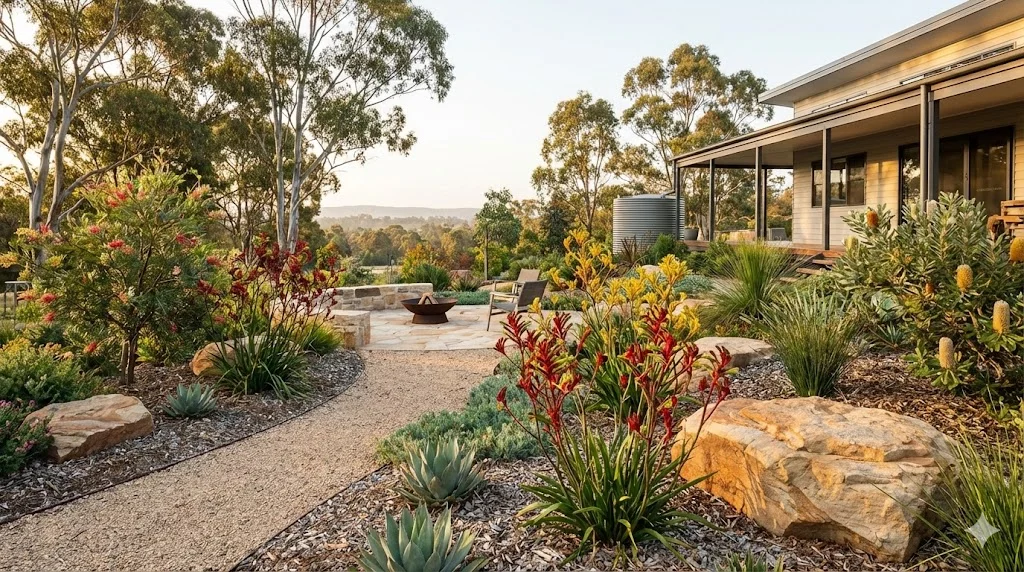
Garden Design for Australian Conditions
Design a resilient Australian garden with native plants, bushfire-safe landscaping, water-wise strategies, and solutions for subtropical to arid climates.
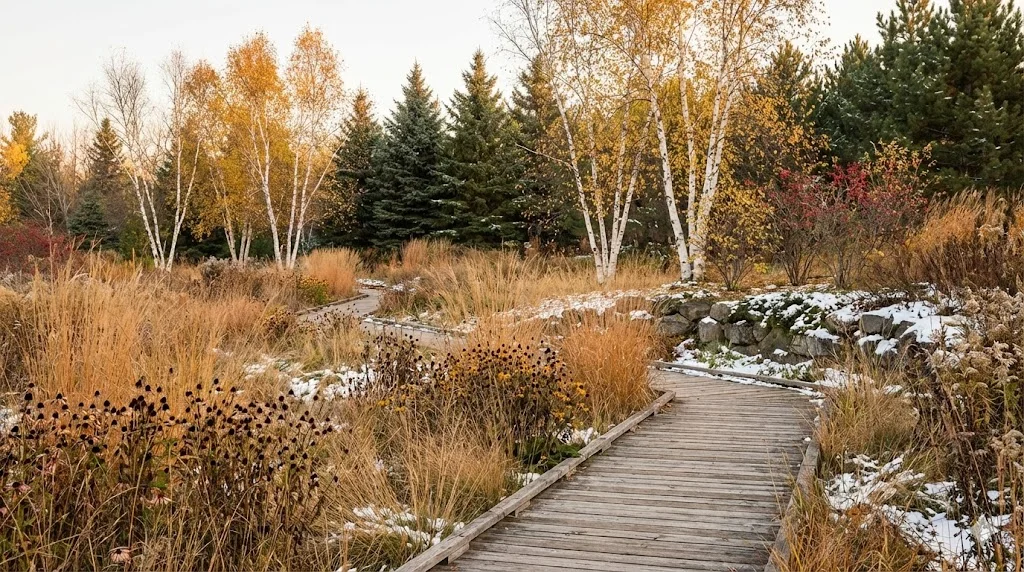
Garden Design for Canada
Design a resilient Canadian garden with extreme cold strategies, native prairie and boreal plants, short season planting, and wildlife-friendly garden design.
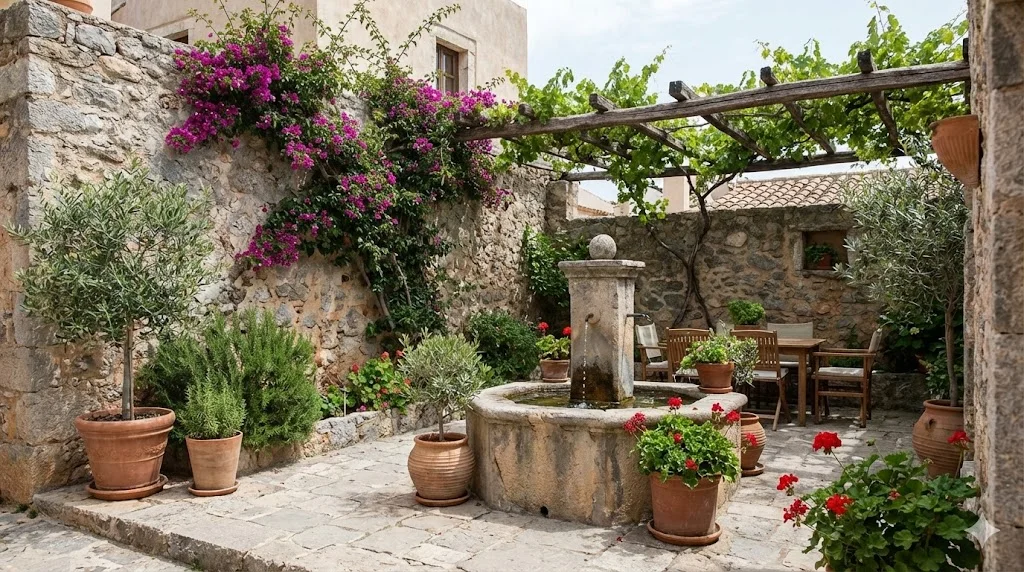
Garden Design for Coastal Mediterranean (Spain, Italy, Greece)
Design a stunning coastal Mediterranean garden with bougainvillea, citrus, courtyards, dry stone walls, and irrigation strategies for Spain, Italy, and Greece.