
Garden Design for Germany and Central Europe
Design a beautiful German garden with Kleingarten traditions, four-season borders, allotment garden ideas, and structured naturalistic planting for Central Europe.
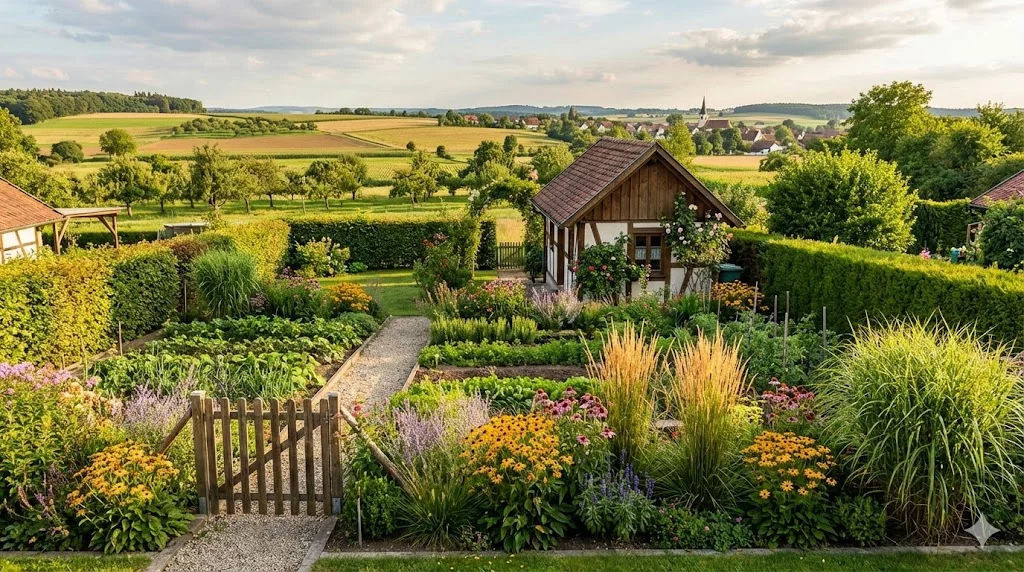
Garden Design for Germany and Central Europe
Germany and Central Europe — encompassing Austria, Switzerland, the Czech Republic, Poland, and the Benelux countries — occupy one of the most productive and diverse gardening zones in the world. The humid continental to oceanic climate provides enough warmth for a vast perennial palette, enough cold for proper dormancy, and enough rainfall for lush growth without the waterlogging of wetter maritime regions. Add to this a gardening culture that is deeply embedded in national identity — from the Kleingarten (allotment) movement to the New German Style of naturalistic planting — and you have a region where gardening is both a serious pursuit and a way of life.
This guide is part of our Garden Design for Your Climate Zone series. It covers the climate, traditions, plant palettes, and design strategies that define gardening in Central Europe.
Understanding the Central European Climate
Central Europe's climate sits between the mild maritime west and the continental east:
- Four distinct seasons: Cold winters (December–February), a slow spring (March–May), warm summers (June–August), and a golden autumn (September–November).
- USDA Zones 5b–8a: Zone 5b–6 in Poland, eastern Germany, and alpine areas; Zone 7 across most of central and western Germany; Zone 8a in the Rhine Valley and sheltered urban areas.
- Moderate rainfall: 500–900 mm (20–35 inches) annually, distributed fairly evenly across the year with a slight summer peak.
- Cold winters: Average January lows of -5 to -10 C (14–23 F) in most areas, colder in eastern and alpine regions. Snow cover varies from weeks in the west to months in the east and at altitude.
- Warm summers: Average July highs of 22–28 C (72–82 F). Heatwaves above 35 C (95 F) are becoming more common.
- Heavy, fertile soils: Glacial till and loess deposits produce clay and loamy soils across much of the region — nutrient-rich but often heavy and slow-draining.
Central European gardens benefit from a Goldilocks climate — cold enough for proper dormancy, warm enough for a long growing season, and wet enough for lush growth. The challenge is not survival but design: making a garden that is beautiful across all four seasons.
The Kleingarten Tradition
The Kleingarten (small garden) or Schrebergarten (allotment garden) is one of Germany's great cultural contributions to gardening. With approximately one million allotment plots across Germany alone, the Kleingarten tradition shapes how millions of Central Europeans relate to their gardens.
Kleingarten Design Principles
- Productive and ornamental — The traditional Kleingarten combines vegetables, fruit, and flowers in roughly equal proportions
- Structured layout — Neat paths, defined beds, clipped hedges, and a small Laube (garden house or summerhouse)
- Community ethos — Kleingarten colonies operate under shared rules about maintenance, planting, and appearance
- Food production — Fruit trees, berry bushes, vegetable beds, and herb gardens are central
- Seasonal celebration — The garden changes with the seasons and is actively used from March through October
Modern Kleingarten Design
Contemporary allotment gardeners are updating the tradition while respecting its roots:
- Naturalistic underplanting — Prairie-style perennials and grasses beneath fruit trees
- Ecological focus — Wildflower areas, insect hotels, native hedgerows, and ponds for biodiversity
- Relaxation space — More emphasis on comfortable seating, outdoor cooking, and social gathering
- Less formal maintenance — Allowing more natural growth patterns while maintaining overall tidiness
The New German Style: Naturalistic Planting
Germany has been at the forefront of the naturalistic planting movement, pioneered by designers and researchers at institutions like Weihenstephan, Hermannshof, and the work of Cassian Schmidt, Piet Oudolf (Dutch, but deeply connected to the German school), and others.
Key Principles
- Plant communities over individual specimens — Design around how plants grow together in nature, not as isolated decorative objects
- Seasonal dynamics — The garden changes throughout the year. Winter structure is as important as summer bloom.
- Low-input sustainability — Choose plants adapted to site conditions that need minimal watering, feeding, and intervention
- Grasses as structural backbone — Ornamental grasses provide year-round structure, movement, and transparency
- Self-sustaining systems — Once established, naturalistic plantings maintain themselves with minimal intervention — an annual cut-back in late winter and occasional editing
Plants for the New German Style
Grasses:
- Miscanthus sinensis — Silver plumes, tall, architectural, Zone 5
- Molinia caerulea — Transparent, elegant, Zone 4
- Stipa gigantea — Golden oat grass, light-catching, Zone 6
- Calamagrostis x acutiflora — Karl Foerster grass, the gold standard of upright grasses, Zone 4
- Panicum virgatum — Switchgrass, native American, excellent fall color, Zone 4
Perennials:
- Echinacea — Coneflower, pink, white, or orange, Zone 3
- Salvia nemorosa — Compact blue-purple spikes, long-blooming, Zone 4
- Rudbeckia — Golden yellow, late summer, Zone 3
- Sedum — Succulent, drought-tolerant, late-season bloom, Zone 3
- Aster — Fall-blooming, essential for late-season color, Zone 3
- Eupatorium — Joe Pye weed, towering pink-purple, butterfly magnet, Zone 3
- Sanguisorba — Burnet, airy burgundy bobbles, Zone 4
- Veronicastrum — Pale blue-purple spires, elegant, Zone 3
When you arrange naturalistic plant combinations in your layout, you can test how grasses and perennials interact through the seasons before committing to your design.
Four-Season Border Design
Central Europe's four distinct seasons demand a garden that delivers interest year-round:
Spring (March–May)
- Bulbs: Snowdrops, crocuses, narcissus, tulips, alliums — the spring backbone
- Flowering trees: Cherry, apple, magnolia, amelanchier
- Shrubs: Forsythia, spiraea, viburnum, lilac (May)
- Perennials: Hellebore, brunnera, pulmonaria, bleeding heart
Summer (June–August)
- Roses: Central Europe is rose country. Shrub roses, climbing roses, and rambling roses
- Perennial borders: Delphinium, phlox, campanula, salvia, hemerocallis, echinacea
- Grasses: Reaching full height and beginning to flower
- Herbs: Lavender, sage, thyme, oregano in the kitchen garden
Autumn (September–November)
- Aster and Chrysanthemum: Fall-blooming essentials
- Ornamental grasses: Peak beauty — backlit plumes, golden foliage
- Fall color: Deciduous trees in gold, orange, and red. Japanese maples particularly prized.
- Fruit harvest: Apples, pears, plums, quince in the Streuobstwiese (meadow orchard) tradition
Winter (December–February)
- Evergreen structure: Yew, box, holly, spruce provide green architecture
- Bark and stems: Birch (white), dogwood (red), willow (golden)
- Hellebores: Blooming through snow in late winter
- Witch hazel: Fragrant flowers on bare branches, January–March
- Garden structures: Pergolas, gates, and walls most visible in winter
Hedges: Central Europe's Signature Feature
Hedging is central to German and Central European garden design, serving functional and aesthetic roles:
- Yew (Taxus baccata) — The premier formal hedging plant. Dense, dark green, takes pruning beautifully.
- Beech (Fagus sylvatica) — Retains copper-brown leaves through winter when clipped, providing year-round screening.
- Hornbeam (Carpinus betulus) — Similar to beech but tolerates heavier, wetter soil.
- Boxwood (Buxus sempervirens) — Traditional low hedging for parterre and border edging. Under pressure from box blight and box tree moth — Ilex crenata is an increasingly popular alternative.
- Mixed native hedges — Hawthorn, blackthorn, hazel, wild rose, and elder provide biodiversity and seasonal interest. The hedging traditions of Central Europe share deep roots with those of the UK and northern Europe, where similar species and pruning techniques have been refined over centuries.
A Central European garden without a hedge is like a room without walls. Hedges define space, create rooms, provide shelter, and give the garden its structure across all four seasons.
Dealing with Central European Soil
The heavy loam and clay soils of Central Europe are fertile but challenging:
- Organic matter — Regular compost additions improve both drainage and structure
- Autumn digging — Traditional Central European practice: turn heavy soil in late autumn and let winter frost break up clods
- Raised beds — Popular in vegetable gardens for improved drainage and earlier soil warming
- Cover crops — Green manures (phacelia, clover, mustard) improve soil biology during fallow periods
- Mulching — Bark mulch and compost mulch suppress weeds and improve soil gradually
Climate Change Adaptation
Central Europe is warming faster than the global average. Summers are hotter and drier; heavy rainfall events are more frequent:
- Drought-tolerant species — Include Mediterranean and steppe plants alongside traditional border perennials. Gardeners in Scandinavia face similar warming trends and are adopting comparable adaptive strategies.
- Rain gardens — Capture and absorb heavy rainfall events rather than letting them run off
- Trees for shade — As summers warm, shade becomes increasingly valuable. Plant trees now for future comfort.
- Reduce lawn — Replace water-hungry turf with drought-tolerant meadow, gravel gardens, or ground cover perennials
- Diverse plantings — Mixed plantings with species from multiple climate origins are more resilient than monocultures
Getting Started: Your Central European Garden Plan
- Assess your soil — Clay, loam, or sand? pH? Drainage? This determines your plant palette.
- Plan for four seasons — Design each season deliberately. Write down what you want to see in every month.
- Start with hedging and trees — They provide the permanent structure that everything else is built around.
- Embrace the Kleingarten spirit — Even in a private garden, the mix of ornamental, productive, and ecological elements is both practical and beautiful.
- Explore naturalistic planting — The New German Style offers a low-maintenance, high-impact approach that works perfectly in Central European conditions.
- Mulch and improve soil — Annual compost application and consistent mulching transform heavy Central European soils over time.
- Include a productive area — Fruit trees, berry bushes, herbs, and vegetables connect you to the Central European gardening tradition.
- Design for winter — Evergreen structure, colorful bark, and hellebores ensure your garden is beautiful even in the coldest months.
Central European garden design sits at a fascinating intersection of tradition and innovation. The disciplined structure of the formal garden, the productive abundance of the Kleingarten, and the ecological beauty of naturalistic planting all coexist in a climate that supports them all. The result is a gardening culture that is among the richest and most rewarding in the world.
Garden Design Team
Expert garden designers sharing tips, inspiration, and practical advice for creating beautiful outdoor spaces.
Explore professional garden design
Gardenly3D is a paid professional garden-design application. See plans for included capabilities and availability.
Join the waitlistRelated articles
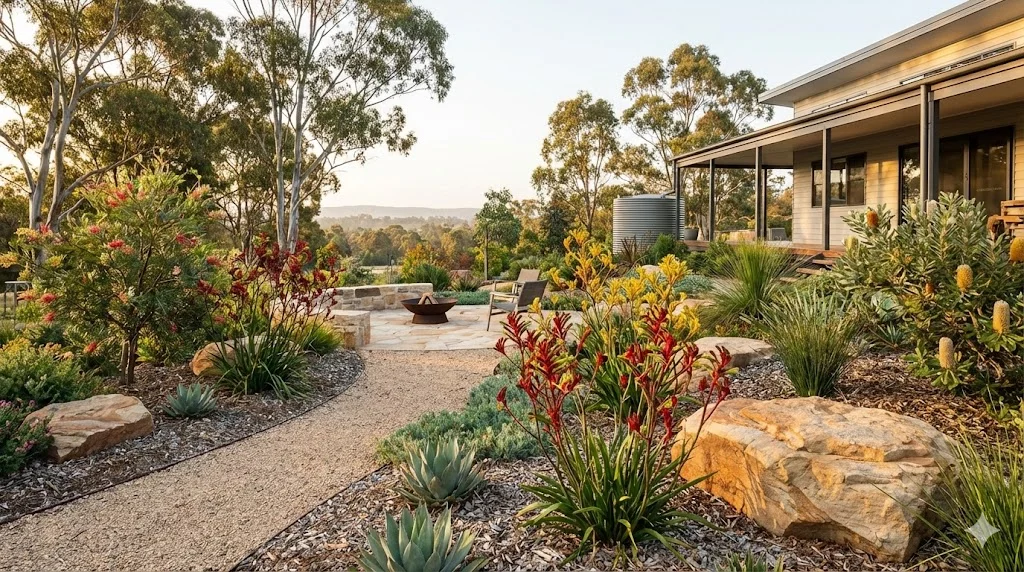
Garden Design for Australian Conditions
Design a resilient Australian garden with native plants, bushfire-safe landscaping, water-wise strategies, and solutions for subtropical to arid climates.
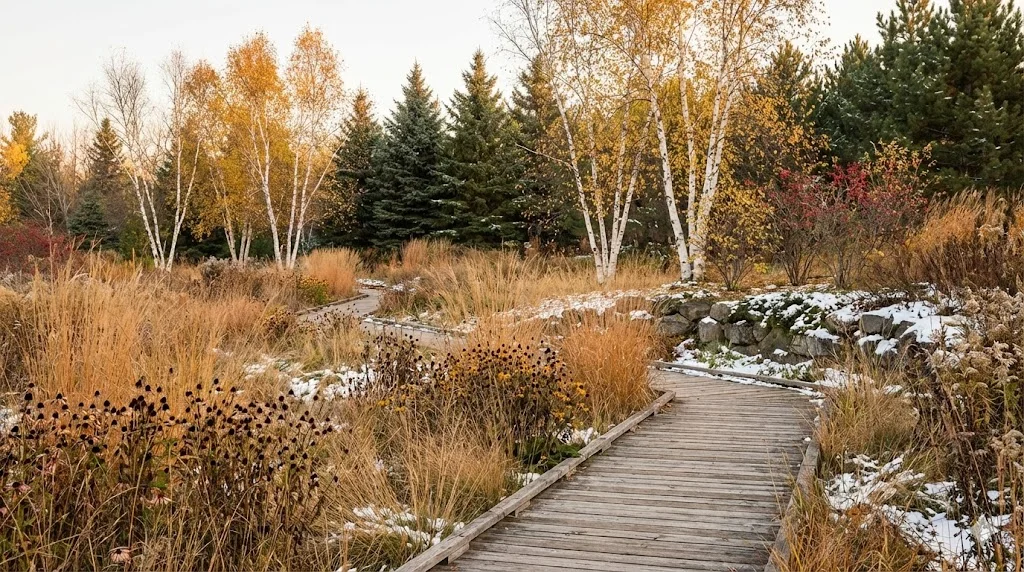
Garden Design for Canada
Design a resilient Canadian garden with extreme cold strategies, native prairie and boreal plants, short season planting, and wildlife-friendly garden design.
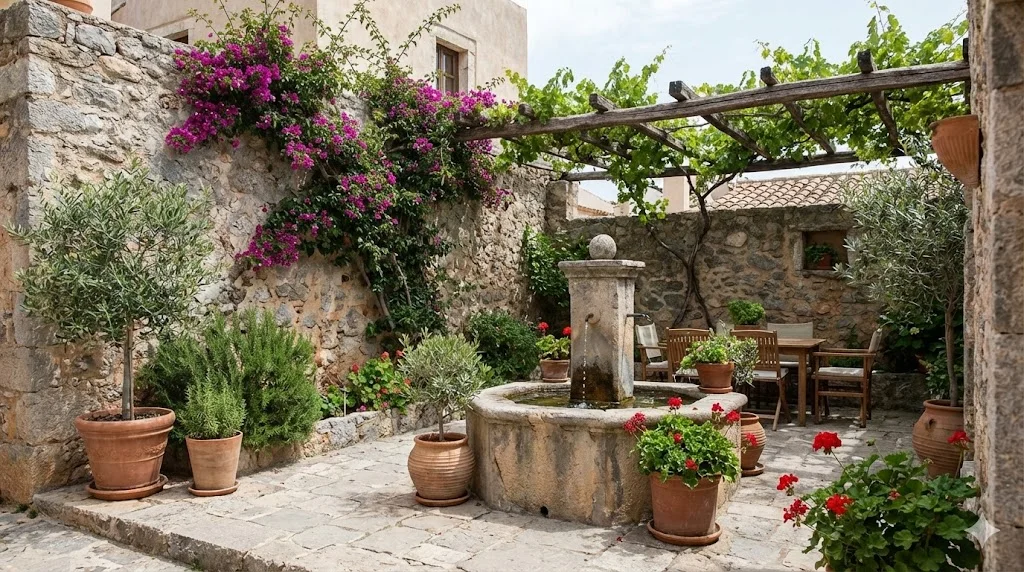
Garden Design for Coastal Mediterranean (Spain, Italy, Greece)
Design a stunning coastal Mediterranean garden with bougainvillea, citrus, courtyards, dry stone walls, and irrigation strategies for Spain, Italy, and Greece.