
Garden Design for the UK and Northern Europe
Plan a year-round garden for the UK and northern Europe with maritime planting, mixed borders, wet-winter strategies, and cottage garden traditions.
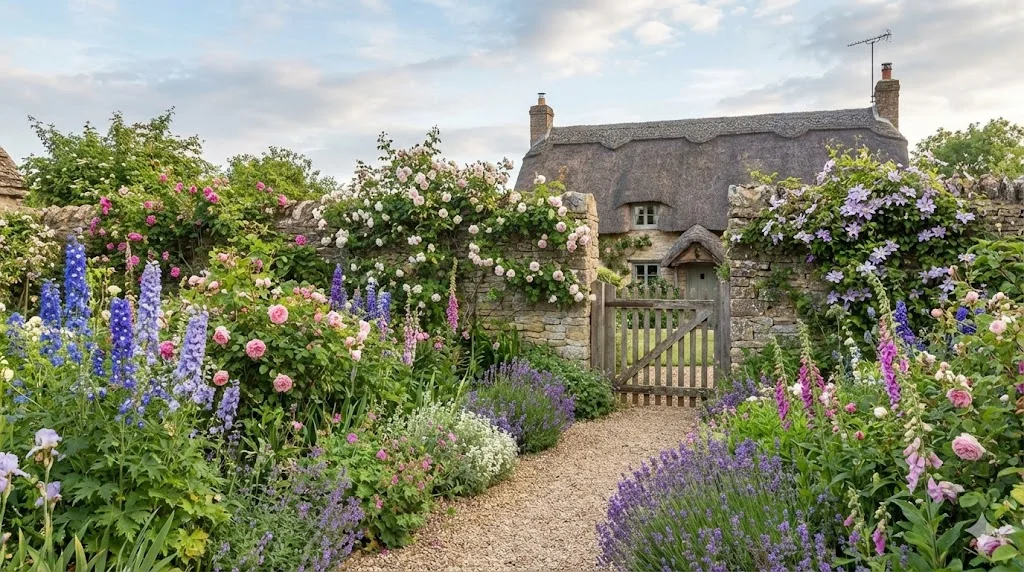
Garden Design for the UK and Northern Europe
The maritime climates of the UK, Ireland, the Netherlands, Belgium, and northern France have produced some of the world's most celebrated garden traditions. The combination of mild winters, cool summers, reliable (often generous) rainfall, and long day length during the growing season creates conditions that support an extraordinarily wide range of plants. It is no coincidence that the English border, the Dutch bulb garden, and the Irish woodland garden are admired and imitated worldwide — these traditions grew from a climate that is, in many ways, a gardener's paradise.
Yet maritime gardening comes with its own distinctive challenges: waterlogged winter soil, grey skies that demand careful color planning, persistent slugs, wind exposure on coastal and elevated sites, and the need to maintain visual interest across twelve months rather than just a sunny summer peak.
This guide is part of our Garden Design for Your Climate Zone series. It covers the specific strategies, traditions, and plant choices that make gardens in the UK and northern Europe so rewarding.
Understanding the Maritime Climate
The maritime climate of northwest Europe is defined by proximity to the Atlantic Ocean and the Gulf Stream. Key characteristics include:
- Mild winters: Average lows of -2 C to 5 C (28–41 F) depending on location. Hard frosts below -10 C (14 F) are uncommon in coastal areas.
- Cool summers: Average highs of 18–25 C (64–77 F). Heatwaves above 30 C (86 F) are becoming more common but remain the exception.
- Reliable rainfall: 600–1,500 mm (24–60 inches) per year, distributed across all seasons with a slight winter peak.
- Cloud cover: Overcast skies for much of the year soften light and create gentle, even illumination — flattering for pastel colors.
- Long summer days: 16–18 hours of daylight at midsummer in the UK, even longer in Scotland and Scandinavia.
- Short winter days: 7–8 hours of daylight at midwinter, demanding evergreen structure and plants with winter interest.
This climate translates to RHS Hardiness ratings of H4 to H7 for most of England and Wales, with exposed Scottish and Scandinavian sites dropping to H5–H6. The USDA equivalent ranges from Zone 7b–9a for sheltered southern and coastal sites to Zone 6–7 for exposed inland and northern positions.
The maritime gardener's greatest luxury is choice. The mild, moist climate supports plants from five continents — a design palette so vast that the challenge is editing, not finding, suitable species.
Year-Round Border Design
The mixed herbaceous border is the signature achievement of British garden design, and the key to a great border in a maritime climate is planning for twelve months of interest rather than a single summer peak.
The Four-Season Border Framework
Spring (March–May): Bulbs and early perennials provide the first color. Tulips, daffodils, hyacinths, and alliums combine with emerging perennial foliage, forget-me-nots, and wallflowers.
Summer (June–August): The peak. Roses, delphiniums, peonies, geraniums, salvias, campanulas, and dozens more create the classic border display.
Autumn (September–November): Japanese anemones, asters, sedums, dahlias, and ornamental grasses extend color well into November. Fall foliage from deciduous shrubs and trees adds warmth.
Winter (December–February): Evergreen structure, colored bark (dogwood, birch, willow), winter-flowering shrubs (mahonia, viburnum, witch hazel), hellebores, and snowdrops carry the garden through the darkest months.
Color Planning for Overcast Skies
The soft, diffused light of maritime climates demands a particular approach to color:
- Pastel shades glow — Pinks, lavenders, soft blues, and creamy whites look luminous under grey skies. They would wash out in harsh Mediterranean sun but come alive in English light.
- Hot colors add energy — Use oranges, reds, and strong yellows as accents to prevent the garden from feeling flat on dull days.
- White is transformative — A white garden (in the Sissinghurst tradition) catches every scrap of available light and glows at dusk.
- Silver and grey foliage — Provides relief and contrast, particularly effective alongside purples and blues.
When you plan your border layout and color combinations, you can test how different palettes will look across the seasons before planting.
Dealing with Wet Winters
The wet maritime winter is both a blessing (it keeps the soil moist for spring growth) and a curse (waterlogged soil kills more plants than cold). Effective drainage is the foundation of successful northern European garden design.
Drainage Strategies
- Raised beds — Even a 15–20 cm (6–8 inch) raise above natural grade dramatically improves winter drainage for Mediterranean and South African plants
- Grit and gravel — Add sharp grit to planting holes for plants that resent wet feet (lavender, rosemary, cistus, many silver-leaved plants)
- French drains — Underground gravel channels direct excess water away from planted areas
- Sloped grading — Subtle grading away from borders prevents water pooling at the base of walls and hedges
Plants That Thrive in Winter Wet
Not all plants struggle with damp winters. These species are built for it:
- Astilbe — Feathery plumes, loves moisture, shade-tolerant
- Ligularia — Bold foliage, yellow flowers, needs constant moisture
- Primula — Candelabra primulas are spectacular in damp woodland settings
- Rodgersia — Architectural leaves, bronze-tinted, boggy conditions
- Iris sibirica — Elegant, tough, thrives in heavy clay
Cottage Garden Tradition
The English cottage garden is perhaps the most globally influential garden style, and it originated in the maritime climate as a practical, beautiful way to grow flowers, herbs, and food together in a small space.
Key cottage garden design principles:
- Abundant, informal planting — Plants are densely packed, spilling over edges and self-seeding freely
- Mixed planting — Ornamentals, herbs, vegetables, and fruit mingle together
- Structural framework — Paths, low hedging (box, lavender), and arches provide order within the abundance
- Climbing plants — Roses, clematis, honeysuckle, and jasmine on walls, fences, and arches add vertical interest
- Repeated rhythms — A handful of key plants repeated through the border creates unity without uniformity
Classic cottage garden plants that thrive in maritime conditions:
- Roses — David Austin English roses are specifically bred for the maritime climate
- Delphiniums — Towering spires of blue, the quintessential cottage garden plant
- Foxgloves (Digitalis) — Self-seeding biennials for part shade
- Hollyhocks (Alcea rosea) — Tall, old-fashioned charm against walls
- Sweet peas (Lathyrus odoratus) — Fragrant climbing annuals, thrive in cool summers
- Lupins — Colorful spires, easy from seed
- Geraniums (hardy, not pelargoniums) — The backbone of the cottage border
Formal Garden Traditions
Northern Europe also has a strong formal garden tradition, from the parterre gardens of France and the Netherlands to the symmetrical designs of grand English country houses.
Formal elements that work well in maritime climates:
- Hedging — Box (Buxus), yew (Taxus), hornbeam (Carpinus), and beech (Fagus) all thrive. Yew is the gold standard for formal hedging in the UK.
- Topiary — Clipped evergreens add year-round structure and architecture
- Symmetrical layouts — Paired borders, central axes, and mirrored plantings
- Gravel gardens — Formal gravel gardens with clipped specimens are both elegant and low-maintenance
- Water features — Formal pools, rills, and fountains add reflection and sound
The finest northern European gardens often blend formal structure with informal planting — a strategy sometimes called "the bones and the flesh." The bones (hedges, paths, walls) provide year-round architecture; the flesh (perennials, annuals, bulbs) provides seasonal color and movement.
Wind and Coastal Exposure
Many UK and northern European gardens face significant wind exposure, whether coastal, elevated, or in funneling urban corridors. Wind management is critical for plant survival and garden enjoyment:
- Hedgerows — The traditional solution. Mixed native hedgerows of hawthorn, blackthorn, hazel, and holly filter wind and support wildlife
- Permeable fences — Hit-and-miss fencing or willow hurdles slow wind without creating turbulence
- Tiered planting — Tall, wind-tolerant plants on the windward side shelter shorter, more delicate species behind
- Ground-hugging plants — In very exposed sites, use prostrate shrubs, creeping ground covers, and dwarf varieties that stay below the wind
For coastal gardens in the UK, see our companion guide to coastal garden design with salt-tolerant plants.
A Northern European Plant Palette
The maritime climate supports an enormous range of plants. Here is a selected group of well-proven performers:
Trees: English oak, silver birch, ornamental cherry, crabapple, hornbeam, Scots pine, magnolia
Shrubs: Hydrangea, viburnum, mahonia, lavender, rosemary, philadelphus, deutzia, cornus
Perennials: Geranium, delphinium, lupin, peony, Japanese anemone, aster, echinacea, nepeta, salvia, agapanthus (sheltered sites)
Grasses: Miscanthus, Stipa gigantea, Molinia, Hakonechloa
Climbers: Clematis, climbing rose, wisteria, honeysuckle, jasmine, ivy
Bulbs: Snowdrops, crocuses, daffodils, tulips, alliums, bluebells, cyclamen
Ferns: Hart's tongue, lady fern, male fern, polypody — essential for shade and texture
Designing for Climate Change in Northern Europe
Maritime climates are shifting. Summers are becoming hotter and drier; winter storms are becoming more intense. Forward-thinking garden designers are responding by:
- Diversifying plant palettes — Including more Mediterranean and South African species alongside traditional northern European plants
- Improving drainage — Designing for both drought and deluge
- Reducing lawn — Replacing thirsty, high-maintenance lawn with drought-tolerant meadow plantings or gravel gardens
- Planting for resilience — Choosing deep-rooted, tough plants that can handle both wet winters and dry summers
- Installing rainwater harvesting — Even in the famously wet UK, summer water shortages are increasingly common
When you visualize how different plant combinations will perform across seasons, you can build a border that is both beautiful now and resilient for years to come.
Getting Started: Your Northern European Garden Plan
- Assess your soil — Is it clay, sandy, chalky, or loam? This determines your plant palette more than almost any other factor in the UK.
- Check your exposure — Note sun, shade, and wind patterns through the seasons.
- Choose your style — Cottage, formal, naturalistic, or a blend. The maritime climate supports all of them.
- Plan for four seasons — Sketch what you want to see in each season and work backwards to build a plant list.
- Start with structure — Plant hedges, trees, and evergreen shrubs first. They take longest to mature and provide the framework for everything else.
- Layer your planting — Bulbs beneath perennials beneath shrubs. Density is a feature, not a problem, in maritime borders.
- Embrace the rain — Instead of fighting wet conditions, include moisture-loving plants and rain-garden features that turn water into an asset.
The maritime climate of the UK and northern Europe is one of the richest gardening environments on the planet. With thoughtful design, there is no week of the year when your garden cannot offer something beautiful to see, smell, or harvest. That is the privilege — and the pleasure — of gardening in a climate where plants genuinely want to grow.
Garden Design Team
Expert garden designers sharing tips, inspiration, and practical advice for creating beautiful outdoor spaces.
Explore professional garden design
Gardenly3D is a paid professional garden-design application. See plans for included capabilities and availability.
Join the waitlistRelated articles
Garden Design for Australian Conditions
Design a resilient Australian garden with native plants, bushfire-safe landscaping, water-wise strategies, and solutions for subtropical to arid climates.

Garden Design for Canada
Design a resilient Canadian garden with extreme cold strategies, native prairie and boreal plants, short season planting, and wildlife-friendly garden design.
Garden Design for Coastal Mediterranean (Spain, Italy, Greece)
Design a stunning coastal Mediterranean garden with bougainvillea, citrus, courtyards, dry stone walls, and irrigation strategies for Spain, Italy, and Greece.