
Best Spring Bulbs for Garden Design Impact
Discover the best spring bulbs for garden design impact, from tulips and alliums to layered bulb planting techniques for weeks of spectacular colour.
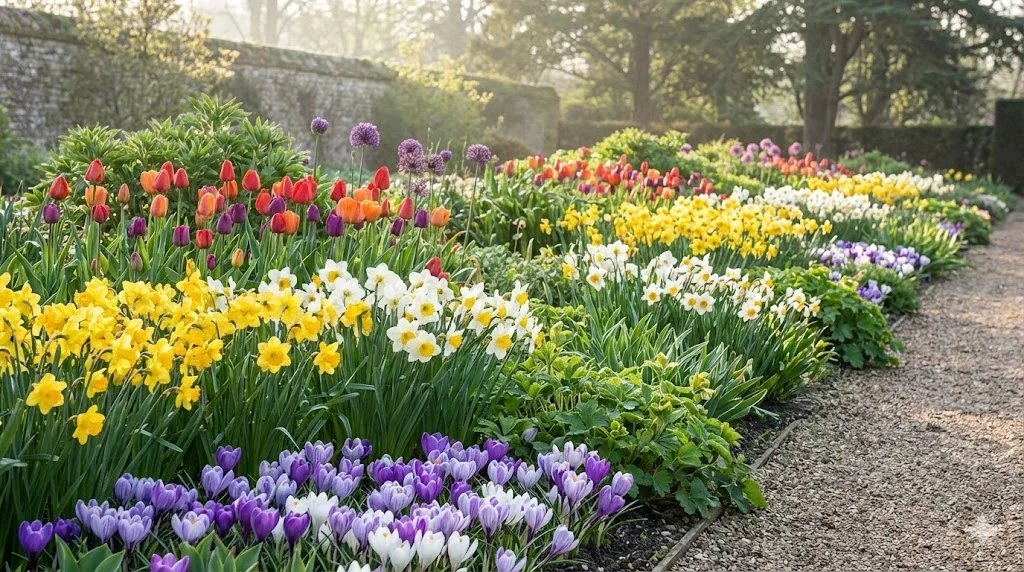
Best Spring Bulbs for Garden Design Impact
Spring bulbs are the fireworks of the garden year. After months of grey skies and bare branches, they explode from the soil with colour, energy, and the unmistakable promise that warmth is returning. No other group of plants delivers such transformative impact with such minimal effort. A few hours of planting in October can create a spring display that takes your breath away the following March.
But the difference between a mediocre bulb display and a truly stunning one lies in the choice of varieties, the planting technique, and the design thinking behind it. Scattered handfuls of daffodils along a path are pleasant. A carefully orchestrated succession of crocuses, tulips, alliums, and narcissi, layered for weeks of overlapping bloom, is magnificent. This guide covers the best spring bulbs for garden design impact and the techniques that turn good into extraordinary.
The Design Principles of Bulb Planting
Before choosing specific varieties, understand the design principles that create impact:
Plant Generously
The single most important rule of bulb planting is: plant more than you think you need. A drift of one hundred daffodils has ten times the impact of ten. Bulbs are relatively inexpensive, and their visual power is directly proportional to quantity.
Plant in Drifts, Not Lines
Nature does not plant in rows. Scatter bulbs by hand and plant them where they land for a natural, flowing effect. Avoid the temptation to space them evenly — irregular spacing creates the most convincing natural look.
Choose a Colour Story
A focused colour palette creates more impact than a rainbow. Consider:
- Hot: Red and orange tulips with golden daffodils
- Cool: Purple and white tulips with blue muscari
- Soft: Pale pink tulips with white narcissi and soft-yellow primroses
- Bold: Deep purple alliums with acid-green euphorbias
Layer for Succession
The most sophisticated bulb displays use layered planting to extend the season from February to June. Plant deep bulbs first, then medium, then shallow, all in the same area. As one layer finishes, the next begins.
"Spring bulbs are not decoration — they are the opening act of the garden year. Make it a performance worth remembering."
The Essential Spring Bulbs
Crocuses (February–March)
Crocuses are the earliest mainstream spring bulbs and one of the most emotionally powerful. After months of grey, those first purple, white, and gold cups emerging from frost-hardened ground are genuinely moving.
Best for design impact:
- Crocus tommasinianus — delicate purple flowers that naturalise prolifically in grass and borders. Plant hundreds for a carpet effect.
- Crocus 'Remembrance' — large, deep purple flowers. Excellent in groups at the front of borders.
- Crocus chrysanthus 'Cream Beauty' — soft cream with a golden throat. Beautiful in containers.
Design tip: Plant crocuses in lawns for a naturalised meadow effect. Simply scatter the corms and plant where they fall. Within a few years, they will spread to create a stunning early-spring display.
Daffodils and Narcissi (March–April)
Daffodils are the backbone of the spring garden. They are tough, reliable, perennial, and available in a far wider range than most people realise — from the classic golden trumpet to tiny, multi-headed species narcissi.
Best for design impact:
- Narcissus 'Thalia' — pure white, multi-headed, elegant. Superb for white-themed gardens and woodland planting.
- Narcissus 'Hawera' — tiny, nodding yellow flowers in clusters. Exquisite in rock gardens and containers.
- Narcissus 'Jetfire' — golden petals with a vivid orange cup. Reliable, early, and excellent for naturalising.
- Narcissus poeticus var. recurvus — the old pheasant's eye narcissus. Late-flowering, fragrant, and perfect for meadow planting.
Design tip: Avoid mixing too many daffodil varieties in one area. A mass of a single variety is far more effective than a mosaic of different types. Use different varieties in different areas of the garden for a successional effect.
Tulips (April–May)
Tulips are the glamour stars of the bulb world. No other bulb offers such a range of colour, form, and height. They are also the most design-flexible, working in formal beds, informal borders, and containers alike.
Best for design impact:
- Tulipa 'Queen of Night' — the deepest, darkest purple-black. Stunning planted with orange wallflowers or white tulips.
- Tulipa 'Ballerina' — scented, lily-flowered tulip in warm orange with a pointed petal. Graceful and unusual.
- Tulipa 'Spring Green' — white with green flames. Elegant and long-lasting. Perfect for sophisticated schemes.
- Tulipa 'Apricot Beauty' — soft apricot-pink. Beautiful in pastel combinations with forget-me-nots.
- Tulipa 'Abu Hassan' — mahogany-red edged with gold. Rich and warm, excellent with bronze fennel.
Design tip: In formal settings, plant tulips in blocks of a single colour for maximum drama. In informal borders, weave them through emerging perennial foliage so the tulip flowers emerge from a supporting cast of fresh green growth.
Alliums (May–June)
Alliums bridge the gap between spring and summer, flowering just as tulips fade and before most summer perennials hit their stride. Their globe-shaped flower heads add a completely different form to the garden — architectural, modern, and long-lasting.
Best for design impact:
- Allium 'Purple Sensation' — deep purple globes on tall stems. The workhorse allium — reliable, affordable, and spectacular in masses.
- Allium 'Globemaster' — enormous purple spheres up to 20 cm across on sturdy stems. A statement plant.
- Allium cristophii — large, open star-shaped globes in metallic lilac. Superb dried seed heads.
- Allium sphaerocephalon — drumstick allium with dense, oval, burgundy heads. Beautiful with grasses.
- Allium 'Mount Everest' — large white globes. Striking in a white garden or as contrast to purple varieties.
Design tip: Alliums look best planted among low-growing perennials — geraniums, salvias, nepetas — whose foliage conceals the allium's less-than-attractive dying leaves. The globes appear to float above the border.
Muscari (March–April)
Grape hyacinths are invaluable for their intense cobalt-blue colour, which has almost no equal in the spring garden. They naturalise well and create carpets of colour under trees and in borders.
Best for design impact:
- Muscari armeniacum — the classic grape hyacinth. Plant in large drifts under deciduous trees.
- Muscari 'Valerie Finnis' — pale, icy blue. Exquisite in containers and refined schemes.
Fritillaries (April)
Less commonly planted but supremely beautiful, fritillaries add sophistication and surprise:
- Fritillaria meleagris — the snake's head fritillary, with its extraordinary chequered pattern. Best naturalised in moist grass.
- Fritillaria imperialis — the crown imperial. Bold, architectural, and impossible to ignore.
The Layered Bulb Planting Technique
Layered planting — sometimes called the "lasagna" or "sandwich" method — is the most effective technique for creating a long-lasting bulb display from a single planting area.
How It Works
- Dig the entire planting area to a depth of 25–30 cm.
- Place the deepest bulbs first (tulips, at about 20 cm deep). Space them about 10 cm apart.
- Cover with a layer of soil (about 5 cm).
- Place mid-depth bulbs (daffodils, alliums, at about 15 cm deep).
- Cover with another layer of soil.
- Place shallow bulbs on top (crocuses, muscari, at about 8 cm deep).
- Fill with soil and water well.
The Result
The shallow bulbs emerge and flower first (February–March), followed by the mid-depth bulbs (March–April), and finally the deep bulbs (April–May). You get three months of bloom from a single planting area, with each wave of colour seamlessly replacing the last.
Best Layered Combinations
- Classic: Crocus 'Remembrance' (shallow) + Narcissus 'Thalia' (mid) + Tulipa 'Queen of Night' (deep)
- Warm sunset: Muscari armeniacum (shallow) + Narcissus 'Jetfire' (mid) + Tulipa 'Ballerina' (deep)
- Cool elegance: Crocus chrysanthus 'Cream Beauty' (shallow) + Narcissus 'Thalia' (mid) + Tulipa 'Spring Green' (deep)
"Layered planting is the closest thing to magic in the garden. From one planting hole, you get three months of colour."
Naturalising Bulbs
Naturalised bulbs — those allowed to spread and multiply year after year — create some of the most beautiful spring moments in any garden.
Best Bulbs for Naturalising
Not all bulbs naturalise equally well. The best for long-term, spreading displays:
- Narcissus (most species) — incredibly reliable naturalisers. Plant and forget.
- Crocus tommasinianus — spreads by seed and offsets. Can colonise a lawn within five years.
- Galanthus (snowdrops) — best planted "in the green" (while in leaf) for establishment.
- Anemone blanda — blue, pink, or white daisy flowers that create carpets under trees.
- Cyclamen coum — self-seeds freely in shady, well-drained spots.
- Muscari — can be vigorous spreaders, so plant where you are happy for them to roam.
Naturalising in Grass
Bulbs naturalised in grass create a meadow effect that is among the most evocative spring scenes. Key rules:
- Do not mow until bulb foliage has died back (typically six weeks after flowering).
- Choose robust bulbs that can compete with grass — daffodils, crocuses, and Fritillaria meleagris work well.
- Plant at realistic depths — shallow planting in grass leads to bulbs being damaged by mowers.
Designing Bulb Displays for Specific Settings
Containers
Bulbs in pots provide targeted, moveable colour. Use layered planting in large containers for weeks of succession. Place containers where they will have the most impact — by the front door, on a terrace, or flanking a garden entrance.
Borders
Interplant bulbs among perennials in borders. The emerging perennial foliage provides a fresh green backdrop for bulb flowers and then conceals the dying bulb leaves after flowering. When you plan your borders digitally, you can map out where bulbs will go and ensure they are positioned for maximum visual effect against emerging perennial companions.
Woodland and Shade
Shade-tolerant bulbs — snowdrops, bluebells, cyclamen, erythroniums, wood anemones — create enchanting spring displays beneath trees. Plant in drifts that follow the natural contours of the ground.
Getting Started with Spring Bulbs
Bulbs are planted in autumn for spring flowers, so the best time to act on this guide is October. For a broader look at what to plant alongside your bulbs, see our guide on spring garden planning and what to plant. But you can start planning now:
- Choose your colour story. Decide on a palette for your spring display and stick to it. Cohesion creates drama.
- Order early. The best varieties sell out quickly. Order in late summer for the widest selection.
- Plant generously. Whatever number you had in mind, double it. You will not regret planting too many bulbs — only too few.
Spring bulbs are the most generous investment in garden design. For a few hours of autumn planting and a modest budget, they deliver weeks of colour that transforms your garden and lifts your spirits after the long winter. For the complete seasonal picture, see our year-round garden design guide.
Garden Design Team
Expert garden designers sharing tips, inspiration, and practical advice for creating beautiful outdoor spaces.
Explore professional garden design
Gardenly3D is a paid professional garden-design application. See plans for included capabilities and availability.
Join the waitlistRelated articles
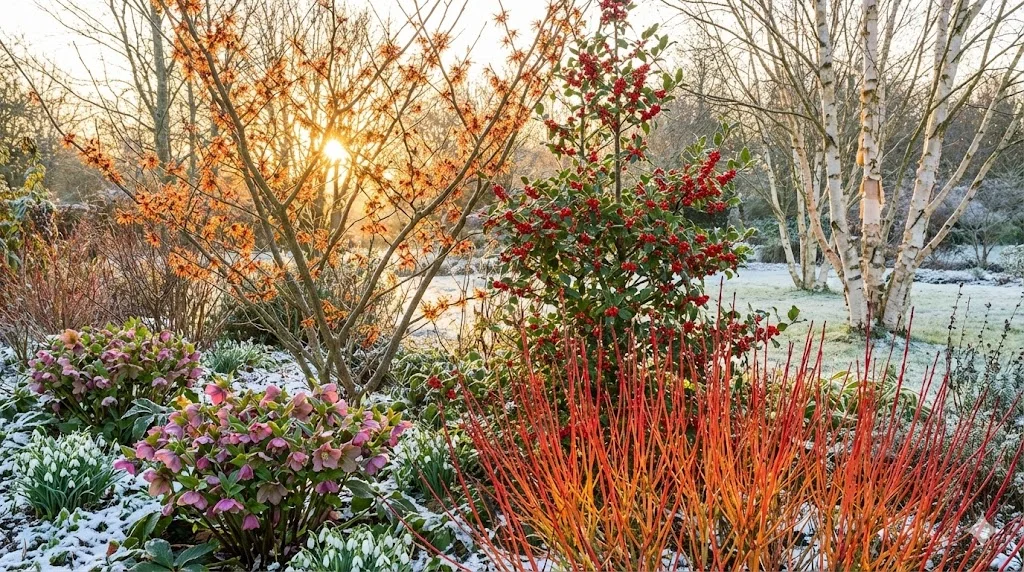
Best Plants for Winter Color and Berries
Discover the best plants for winter color and berries, including winterberry holly, dogwood stems, witch hazel, snowdrops, hellebores, and ornamental bark.
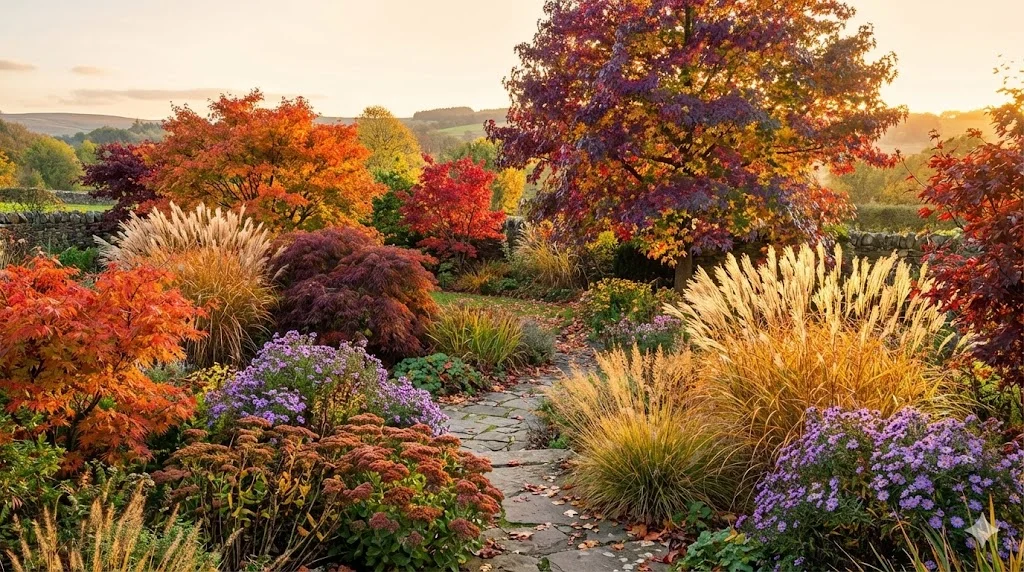
Designing for Autumn Color: Trees, Shrubs, and Perennials
Design for spectacular autumn color with the best trees, shrubs, and perennials for fall foliage including Japanese maples, ornamental grasses, and warm palettes.
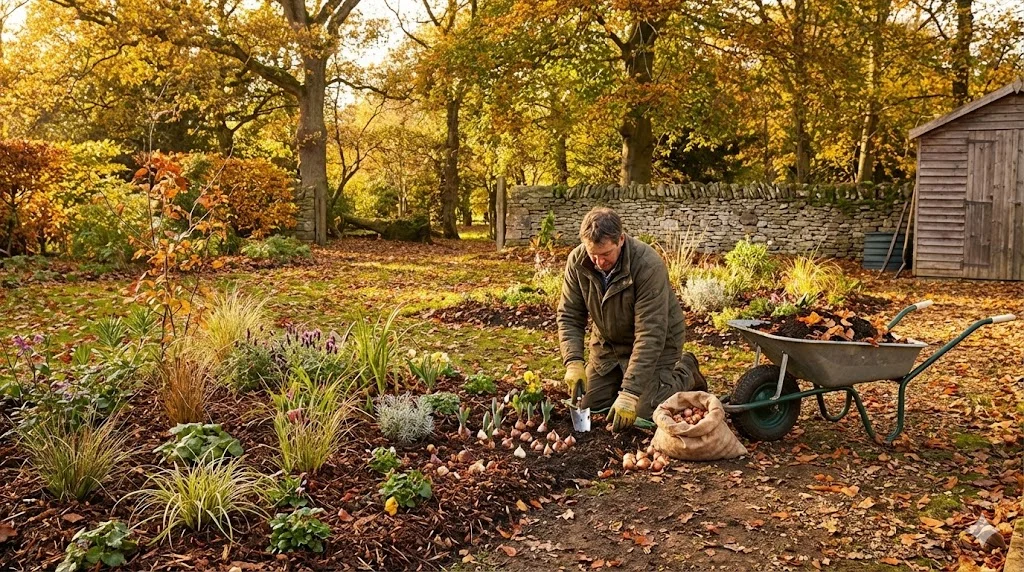
Fall Garden Preparation: Design and Planning for Next Year
Prepare your fall garden with expert advice on autumn planting, bulb installation, design evaluation, soil amendment, and planning for next year.