
Woodland Garden Design: Shade, Layers, and Naturalistic Planting
Create a tranquil woodland garden with layered planting, spring bulbs, ferns, and winding bark paths. A complete guide to naturalistic shade gardening.
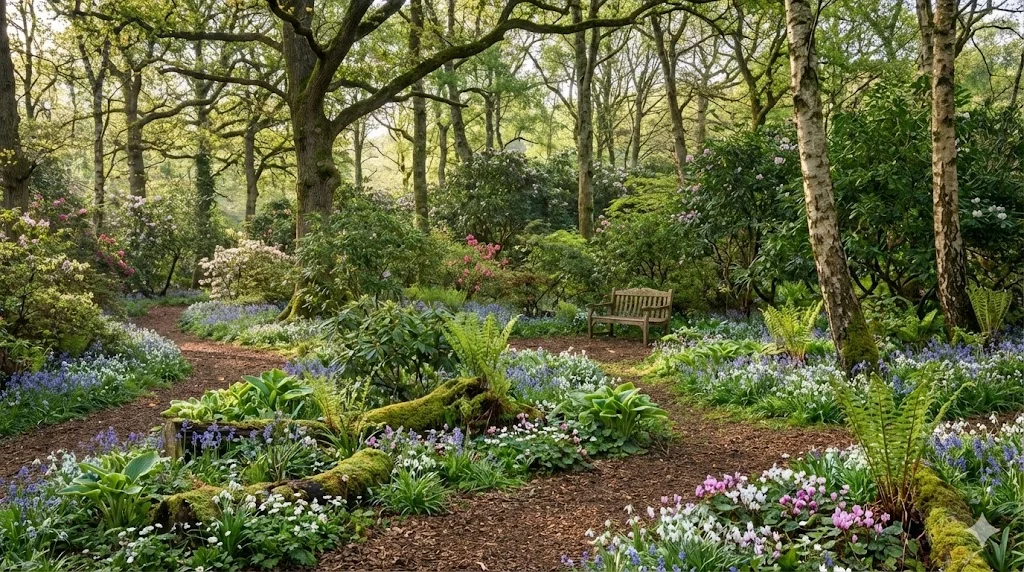
Woodland Garden Design: Shade, Layers, and Naturalistic Planting
There is something deeply calming about stepping into a woodland garden. The light softens. The air cools. Birdsong fills the canopy above while ferns uncurl at your feet and spring bulbs thread through the leaf litter in rivers of blue and white. Of all the garden styles, woodland gardening feels the most like a collaboration with nature — because it is. You are not imposing a design on the land so much as guiding what already wants to grow.
A woodland garden works with shade rather than against it. Instead of fighting for sunlight, you celebrate the dappled canopy, creating a garden that changes dramatically through the seasons: carpeted with snowdrops and bluebells in spring, lush with ferns and hostas in summer, glowing with autumn color, and revealing beautiful bark and evergreen structure in winter.
Whether you have a mature oak wood, a few birch trees at the back of the garden, or no trees at all, you can create a woodland garden. This guide covers the full process — from understanding natural woodland structure to laying bark paths, choosing spring ephemerals, and building a garden that supports wildlife from ground level to the treetops.
Understanding Natural Woodland Structure
Every successful woodland garden design borrows its structure from nature, and that structure is built on layers.
The canopy layer is the roof of the woodland. Large trees — oak, beech, birch, or maple — form a high ceiling that intercepts the strongest sunlight. A dense beech canopy creates deep, dry shade; an open birch canopy lets in far more light. The canopy you have (or create) dictates which plants thrive below.
The understory layer consists of smaller trees and large shrubs: dogwood (Cornus), hazel (Corylus), holly, witch hazel (Hamamelis), and Japanese maples. They add flower interest, autumn color, and winter silhouette without competing with the canopy.
The shrub layer fills the space between head height and the ground. Rhododendrons, azaleas, hydrangeas, and mahonias provide seasonal flowers, evergreen structure, and shelter for nesting birds.
The herb layer is where the magic happens. Knee-height and below, this is where spring bulbs, ferns, hostas, and woodland perennials create the tapestry of foliage and flower that defines the woodland garden style.
The ground layer — mosses, creeping groundcovers, and leaf litter — completes the picture. A generous mulch of leaf mould or bark chips is not untidiness; it is the foundation of the ecosystem.
Creating a Woodland Garden from Scratch
You do not need an existing wood to create a woodland garden. The key is choosing fast-growing, light-canopied trees that cast dappled rather than dense shade.
The best choices include silver birch (Betula pendula) for its white bark and light shade; rowan (Sorbus aucuparia) for its compact habit and autumn berries; wild cherry (Prunus avium) for spring blossom; amelanchier for copper new growth and vivid autumn foliage; and hazel (Corylus avellana), which can be coppiced to create an open structure.
Plant trees in irregular groups, not rows, varying the spacing between 2.5 and 4 meters to create clearings and denser areas. Leave deliberate open glades — these sun-dappled clearings will become the most species-rich parts of your garden.
When you are planning tree positions and visualizing how canopy shade will fall across your garden, it is worth experimenting with different groupings before committing to the ground. Moving a tree on paper costs nothing; moving a five-year-old birch is another matter.
Do not try to plant everything at once. Establish canopy and understory trees in year one, add shrubs in year two, and introduce woodland perennials, ferns, and bulbs from year three onward as shade develops. This phased approach mirrors natural succession.
Spring Bulb Carpets: The Woodland's Greatest Spectacle
The defining moment of a woodland garden is spring. Before the canopy comes into full leaf, light floods the floor and triggers an explosion of bloom from bulbs and ephemerals dormant underground since summer. These spring ephemerals complete their entire above-ground cycle — emerge, flower, set seed, retreat — in the brief window before the canopy closes.
The essential shade woodland planting for spring includes snowdrops (Galanthus nivalis), the first flowers of the year; bluebells (Hyacinthoides non-scripta), unmatched in late April drifts; wood anemones (Anemone nemorosa), with delicate white flowers that open in sunshine; winter aconites (Eranthis hyemalis), bright yellow cups flowering alongside snowdrops; and cyclamen (C. coum for late winter, C. hederifolium for autumn), which bookend the season beautifully under trees.
For collectors, trilliums and erythroniums are aristocratic woodland gems worth every year of patience as they establish.
The key to a convincing display is to avoid straight lines. Scatter bulbs by hand and plant them where they fall. Mix species so flowering waves overlap: snowdrops into crocuses, then wood anemones and bluebells, creating continuous color from February through May. Plant generously — five hundred snowdrops make a drift; a hundred look thin.
Fern and Hosta Collections: The Summer Stars
Once spring ephemerals retreat, ferns and hostas take the stage as the backbone of the woodland garden through summer and autumn.
Ferns look completely at home in a woodland setting. Key species include hart's tongue fern (Asplenium scolopendrium) for glossy evergreen fronds, male fern (Dryopteris filix-mas) for reliability, lady fern (Athyrium filix-femina) for delicacy, Japanese painted fern (Athyrium niponicum var. pictum) for silvery-purple color, and royal fern (Osmunda regalis) for dramatic scale in moist soil.
Hostas offer extraordinary variety in leaf size, shape, and color. Mix large architectural varieties like 'Sum and Substance' as focal points, medium types such as 'Halcyon' in groups, and miniatures like 'Blue Mouse Ears' along path edges. The combination of blue, gold, green, and variegated foliage creates as much visual interest as any flower display. For slug control, encourage natural predators — thrushes, hedgehogs, frogs — and choose thick-leaved varieties.
Bark Chip Paths: The Woodland Walkway
Paths are essential in a woodland garden. Bark chip paths are the natural choice — they look right, feel right underfoot, suppress weeds, and slowly break down to feed the soil.
To lay a bark path: mark a gently curving route (avoid straight lines), excavate 10 to 15 cm of soil, add optional log edging, lay a permeable weed membrane, and fill with coarse bark chips to a depth of 8 to 10 cm. Top up annually as bark decomposes.
Main paths should be at least 90 cm wide; secondary paths can narrow to 60 cm, creating a sense of discovery. Vary the width — let paths narrow between shrubs and widen at junctions. Where paths meet or open into clearings, consider a different surface — gravel or natural stone — to mark the transition.
If you are designing your path layout and checking that the route flows naturally through your planting, try viewing it from above as well as at eye level. A path that looks beautiful on paper but feels monotonous on the ground needs more curves.
Woodland Seats and Clearings
Every woodland garden needs at least one place to stop and sit. A clearing is a deliberate opening in the canopy — created by leaving gaps in tree planting or by crown-lifting an existing tree. Clearings are the best spots for a bench or stump seat, and extra light makes them the richest areas for spring bulbs, hellebores, primroses, and foxgloves.
Keep furniture simple and natural. A rustic oak bench, tree stumps, or a flat stone suit the woodland character far better than painted metal. Position seating to face the most interesting view — a winding path, a drift of bluebells, or a beautiful trunk.
Wildlife Value of the Woodland Garden
A woodland garden is one of the most wildlife-friendly habitats you can create. The layered structure provides food, shelter, and nesting at every level.
Birds nest in the canopy and understory, while berry-bearing shrubs — holly, hazel, rowan — supply autumn and winter food. Insects and pollinators depend on early-flowering woodland plants for nectar when little else is available; fallen timber and log piles shelter beetles and solitary bees. Mammals and amphibians — hedgehogs, wood mice, frogs, and newts — shelter in leaf litter and log piles, and are valuable allies against slugs. Fungi and mycorrhizal networks are essential to woodland health; encourage them by leaving leaf litter in place and avoiding fungicides. For more on building ecologically rich gardens, see our guide to native plant garden design.
Dappled Light: Working with Shade
Not all shade is the same. Dappled shade — light filtered through a deciduous canopy — is the ideal for the widest range of woodland plants. Partial shade suits woodland edges and north-facing borders. Full shade under dense evergreens limits choices to ferns, ivy, and epimedium. Dry shade under mature trees with competing root systems is the toughest challenge; rely on Vinca, Epimedium, and Geranium macrorrhizum.
If your woodland is too dark, crown-lift canopy trees (remove the lowest branches) or thin the understory selectively. The goal is dappled, shifting light — not full sun. If you are drawn to shade gardening more broadly, our guide to shade garden design for thriving low-light spaces covers north-facing borders, urban courtyards, and other low-light scenarios.
Maintaining a Woodland Garden
Woodland gardening is relatively low maintenance because you are working with nature, not against it. For a deeper look at how the woodland style compares with other approaches, see our complete guide to garden design styles.
Late winter: Cut back dead perennial stems before new growth emerges. Top up bark paths. Divide snowdrops "in the green."
Spring: Enjoy the display. Leave bulb foliage to die back naturally. Weed sparingly, but let foxgloves and primroses self-sow.
Summer: Water newly planted trees in dry spells during their first two years. Mulch with leaf mould or bark chips to conserve moisture.
Autumn: Plant spring bulbs. Leave fallen leaves where they lie — they are free mulch, slug deterrent, and the foundation of next year's soil fertility. Only clear leaves from paths and areas where they smother small evergreens.
Winter: Appreciate bare tree structure and bark. Plant bare-root trees and shrubs while dormant.
The Leaf Litter Question
Many gardeners instinctively rake every fallen leaf. In a woodland garden, this is counterproductive. Leaf litter feeds the soil, protects roots from frost, provides habitat for insects and fungi, and suppresses weeds. Let it lie everywhere except on paths, ponds, and small plants that could be smothered. It is the woodland's self-renewing mulch.
Bringing It All Together
The most successful woodland gardens combine all of these elements into a cohesive, naturalistic whole. The canopy sets the mood. The understory adds middle-height interest. Spring bulbs provide the seasonal climax. Ferns and hostas carry the garden through summer. Bark paths invite exploration, and clearings offer places to pause.
The most important principle of woodland garden design is patience. Trees take years to mature. Bulbs take seasons to multiply. Ferns need time to colonize. But the reward for that patience is a garden that grows more beautiful with every passing year — a living, breathing woodland that you have shaped, but that nature has made its own.
Garden Design Team
Expert garden designers sharing tips, inspiration, and practical advice for creating beautiful outdoor spaces.
Explore professional garden design
Gardenly3D is a paid professional garden-design application. See plans for included capabilities and availability.
Join the waitlistRelated articles
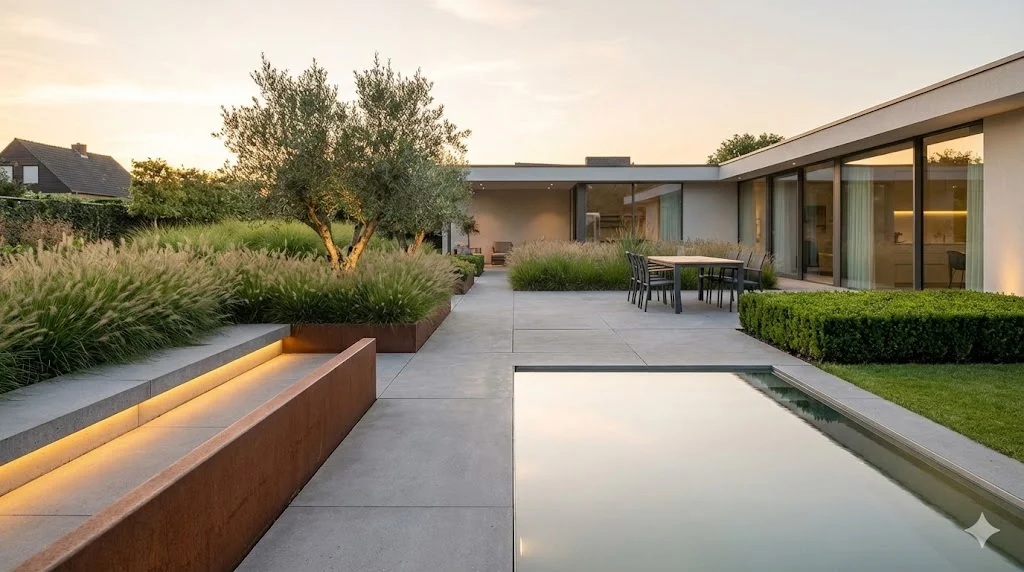
Garden Design Styles: The Complete Guide
Explore every major garden design style from cottage to Japanese, modern to Mediterranean. Find the perfect style for your space, climate, and taste.
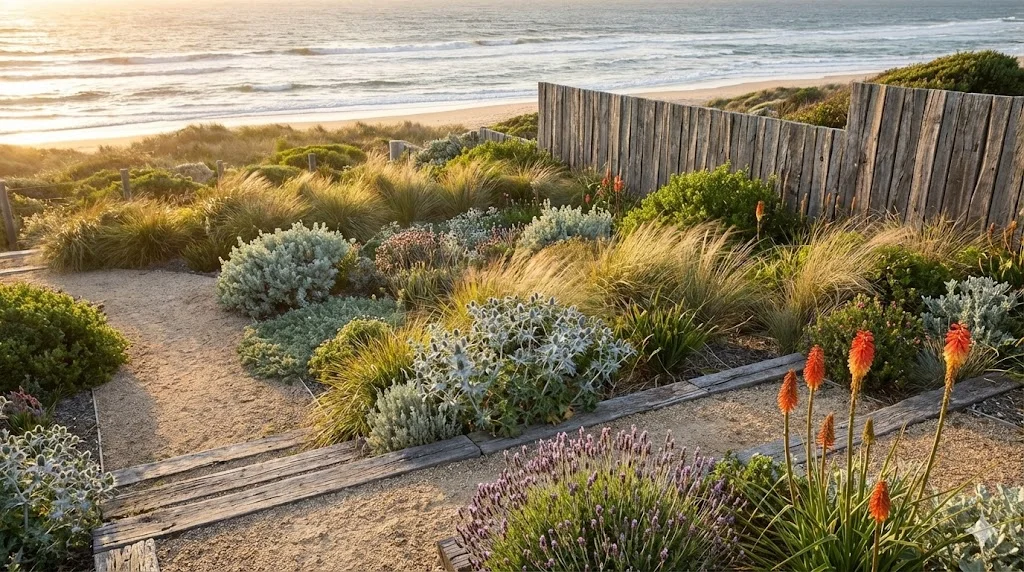
Coastal Garden Design: Salt-Tolerant Beauty
Design a beautiful coastal garden that thrives in salt spray, wind, and sandy soil. Discover the best seaside garden plants and design techniques for exposed sites.
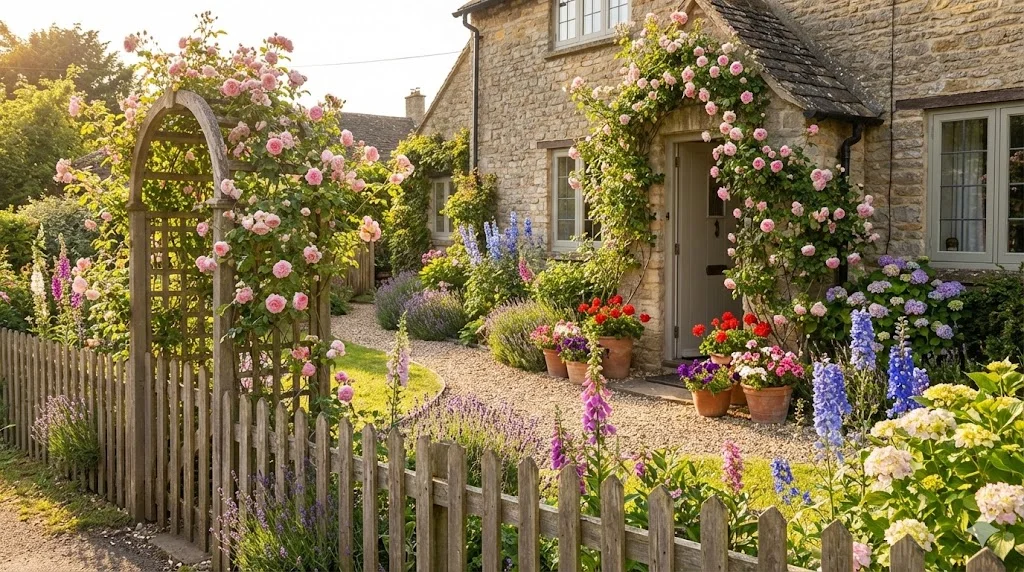
Cottage-Style Front Garden: Welcoming and Colorful
Transform your front garden into a welcoming cottage paradise with climbing roses, flower-lined paths, and seasonal color. Design tips for maximum curb appeal.