
Rooftop Garden Design: Creating Gardens in the Sky
Transform your rooftop into a thriving garden. Discover weight-conscious planting, wind-resistant design, container strategies, and the best plants for rooftop growing.
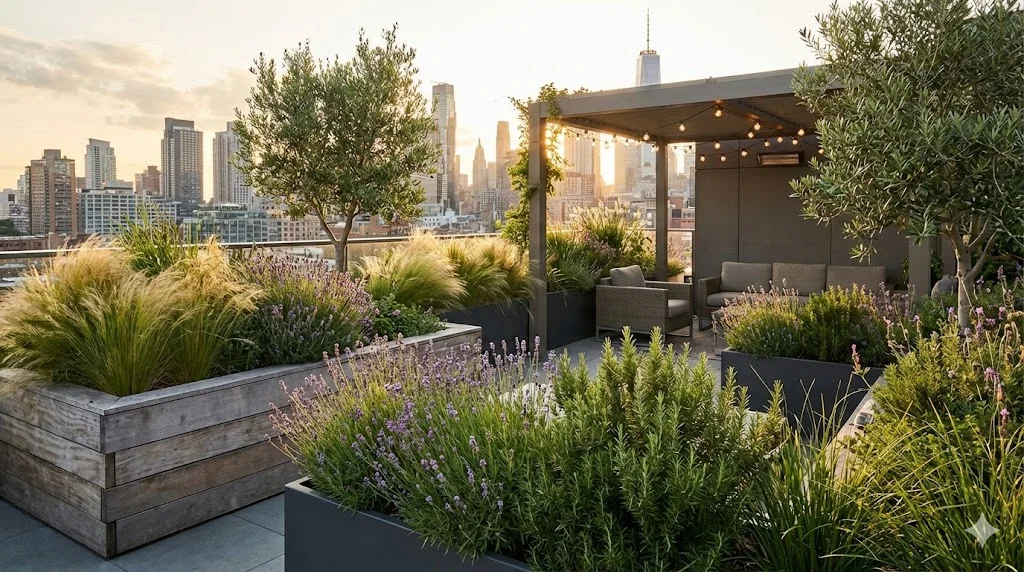
Rooftop Garden Design: Creating Gardens in the Sky
A rooftop is one of the most challenging places to make a garden -- and one of the most rewarding. Above the noise and shade of street level, you inherit the full sweep of the sky, uninterrupted sunlight, and views that no ground-level plot can match. But you also inherit wind, weight limits, extreme temperature swings, and the knowledge that every litre of soil and every drop of water had to be carried up there. Designing well for a rooftop means respecting those constraints and then turning them into assets.
The best rooftop gardens do not try to replicate a traditional garden transported upward. They develop their own character -- a character shaped by exposure, lightweight materials, and a focused plant palette that thrives rather than merely survives in elevated conditions. This guide covers the structural, horticultural, and design thinking you need to create a rooftop garden that genuinely works, from first assessment through to seasonal planting and lighting for evening entertaining.
For a broader view of how rooftop and urban garden styles compare to other approaches, our complete guide to garden design styles provides useful context.
Understanding the Rooftop Environment
Before selecting a single plant or container, you need to understand what makes a rooftop fundamentally different from any other garden site. The constraints are real, but once understood they become the framework within which creative design happens.
Weight: The Non-Negotiable Constraint
Every rooftop has a maximum load capacity, and exceeding it is not a design choice -- it is a structural failure. A saturated growing medium is significantly heavier than a dry one, so you must calculate loads at their worst-case scenario: containers full of wet substrate after heavy rain, with mature plants and any accumulated snow load for your climate.
Traditional garden soil is far too heavy for most rooftops. Instead, rooftop gardens use lightweight engineered substrates -- blends of expanded clay aggregate, pumice, perlite, composted bark, and a small proportion of organic matter. These mixes typically weigh between 800 and 1,000 kilograms per cubic metre when saturated (50 to 62 pounds per cubic foot), compared with 1,600 kilograms per cubic metre (100 pounds per cubic foot) for wet garden soil. The difference is enormous when multiplied across dozens of square metres of planting.
Before any design work begins, engage a structural engineer to confirm the load capacity of your roof. They will distinguish between the allowable load on the structural beams and columns (usually higher) and the allowable load on the deck between supports (often the limiting factor). Position your heaviest containers and raised beds directly over load-bearing walls and columns wherever possible.
Wind Exposure
Wind speed increases with height. A rooftop even three or four storeys above ground level will experience significantly stronger and more turbulent winds than a sheltered garden below. Wind desiccates foliage, rocks containers, shreds soft-leaved plants, and makes dining outdoors unpleasant unless you plan for it.
Solid barriers are not the answer. A solid wall creates a low-pressure zone on its leeward side that generates fierce turbulence. Instead, use permeable screens -- slatted timber, woven willow, tensioned wire with climbing plants, or metal mesh panels -- that filter wind and reduce its speed without creating damaging eddies. A 50-percent-permeable screen reduces wind speed for a distance of roughly ten to fifteen times the screen height, which is more effective than a solid wall.
Sun, Heat, and Exposure
Most rooftops receive full sun for the majority of the day, with no tree canopy overhead and reflected heat from surrounding buildings and the roof surface itself. This is a gift for sun-loving plants, but it also means that summer temperatures on a rooftop can be ten to fifteen degrees Celsius higher than at street level. Containers heat up from all sides, baking roots in a way that in-ground planting never does.
Choose light-coloured containers to reduce heat absorption, or double-pot -- placing a growing pot inside a slightly larger decorative one with an air gap between them. Mulching the substrate surface with gravel or expanded clay pebbles reduces moisture loss from evaporation and keeps root zones cooler.
Structural Preparation and Waterproofing
The roof membrane is your most valuable and most vulnerable asset. A single puncture can cause leaks that are expensive and disruptive to repair. Before placing anything on the roof, ensure the waterproof membrane is in good condition and that a root barrier layer is installed above it. Many modern membranes include root-barrier properties, but if yours does not, a separate high-density polyethylene (HDPE) sheet should be laid first.
Install a drainage layer above the root barrier -- typically a dimpled plastic sheet or a layer of lightweight expanded clay aggregate. This layer allows excess water to flow freely to the roof drains without pooling beneath your containers or raised beds. Blocked drains on a rooftop can result in ponding water that adds enormous unplanned weight and risks structural damage.
All containers and raised beds should sit on feet, pedestals, or a proprietary paving-pedestal system that keeps them off the membrane surface and allows water to flow underneath. This also protects the membrane from abrasion and point loads.
Green Roof vs Rooftop Garden: Knowing the Difference
The terms are often used interchangeably, but they describe different things. A green roof is an integrated system -- a continuous planted layer installed directly on the roof structure with engineered drainage, substrate, and planting, typically sedum or low-growing perennials. Green roofs are lightweight, low-maintenance, and primarily ecological in purpose: they manage stormwater, insulate the building, and support biodiversity.
A rooftop garden, by contrast, is a designed outdoor living space that happens to be on a roof. It uses containers, raised beds, furniture, lighting, and a diverse range of plants to create a place for people. A rooftop garden can include green-roof elements -- a planted sedum area around the perimeter, for example -- but its primary purpose is amenity rather than ecology. For more on the ecological approach to succulent rooftop planting, see our guide to succulent garden design, which covers sedum green roof principles in detail.
Container and Raised Bed Strategies
Containers are the backbone of rooftop garden design. They define spaces, create height, and -- critically -- keep the planted weight concentrated over structural supports where you want it.
Choosing Containers
Fibreglass, fibre-cement, and powder-coated aluminium are the materials of choice for rooftop planters. They are lightweight, durable, and frost-resistant. Avoid terracotta and thick-walled stone, which add unnecessary weight and can crack in freeze-thaw cycles. Timber raised beds work well when built from treated softwood or naturally durable species like larch or western red cedar, lined internally with pond liner to protect the wood from constant soil moisture.
Size matters more than quantity. A few large containers -- 60 centimetres (24 inches) deep and as wide as you can manage -- will grow healthier plants with less watering than a crowd of small pots. Larger soil volumes insulate roots against temperature extremes and hold moisture longer between waterings.
Raised Bed Design
For extensive planting areas, modular raised beds built directly on the roof deck (with appropriate protection layers beneath) are more efficient than individual containers. Keep bed depth between 20 and 40 centimetres (8 to 16 inches) for most perennials, grasses, and herbs. Only go deeper -- up to 60 centimetres (24 inches) -- for small trees or large shrubs, and position those deeper sections over structural supports.
When you are planning your rooftop layout, consider organising containers and beds to create distinct zones: a sunny planting border along the south-facing parapet, a sheltered seating area screened from the prevailing wind, and a transition zone with lower planting that preserves views.
Irrigation and Drainage
No rooftop garden survives on rainfall alone, particularly during summer. The combination of full sun, wind, and limited soil volume means containers can dry out astonishingly fast -- sometimes within a single hot day.
A drip irrigation system connected to an automatic timer is not a luxury; it is essential. Run a main supply line around the perimeter of the garden and branch off with drip emitters or micro-sprinklers into each container and raised bed. Drip irrigation delivers water directly to the root zone with minimal waste from evaporation or wind drift. Install a pressure regulator and filter at the supply point to protect the emitters from clogging.
Drainage deserves equal attention. Every container must have drainage holes, and the roof surface must slope towards the building's drainage points. Inspect roof drains at least twice a year -- in autumn after leaf fall and in spring before the growing season -- to ensure they are clear. A blocked roof drain with standing water is a serious structural risk.
Best Plants for Rooftop Gardens
The ideal rooftop plant is drought-tolerant, wind-resistant, lightweight in its root system, and happy in full sun. Fortunately, this describes a rich and beautiful group of plants.
Ornamental Grasses
Grasses are perhaps the finest rooftop plants of all. They are light, flexible in the wind rather than damaged by it, and they bring movement and sound to a space that might otherwise feel static. Stipa tenuissima (Nassella tenuissima) creates flowing, hair-like drifts that catch every breeze. Miscanthus sinensis varieties -- particularly compact cultivars like 'Morning Light' or 'Kleine Silberspinne' -- provide tall, graceful screens that double as wind filters. Calamagrostis x acutiflora 'Karl Foerster' is strictly upright and tolerant of exposure, making it an excellent structural accent.
Sedums and Succulents
Sedum species are the proven survivors of rooftop conditions worldwide. Low-growing varieties like Sedum album, Sedum acre, and Sedum spurium form dense mats that suppress weeds, retain moisture, and provide nectar for pollinators. Taller hybrids such as Sedum 'Herbstfreude' (Autumn Joy) bring late-season flower heads in dusty pink and copper. Other succulents -- Sempervivum (houseleeks) and Delosperma (ice plant) -- thrive in the same lean, well-drained conditions.
Mediterranean and Aromatic Plants
The conditions on most rooftops -- full sun, sharp drainage, lean soil, reflected heat -- closely mimic the Mediterranean hillsides where lavender, rosemary, thyme, and sage evolved. Lavender (Lavandula angustifolia) is a rooftop essential, combining silvery foliage, summer fragrance, and excellent drought tolerance. Rosemary (Salvia rosmarinus) can be clipped into low hedges or left to cascade over container edges. Thyme (Thymus spp.) carpets the surface of containers and raised beds, releasing scent when brushed against.
Compact Shrubs and Small Trees
For height and structure, choose naturally compact or slow-growing species. Olive trees (Olea europaea) are classic rooftop specimens in mild climates -- evergreen, drought-tolerant, and sculptural in form. In colder regions, Japanese maples (Acer palmatum) in large containers bring elegant leaf form and spectacular autumn colour, though they will need protection from the worst wind. Box (Buxus sempervirens) and pittosporum provide evergreen structure that can be clipped into formal shapes.
Creating Living Spaces
A rooftop garden that is merely a collection of plants in pots is missing its greatest opportunity. The real value of a rooftop is as an outdoor room -- a place to eat, read, entertain, and simply sit above the city.
Seating and Dining Areas
Position your main seating area in the most sheltered part of the rooftop, typically the corner furthest from the prevailing wind direction and closest to the access point (so you are not carrying plates and glasses across the entire roof). Use lightweight but stable furniture -- aluminium frames, marine-grade fabric, and tables with weighted bases or fixing points so they cannot be lifted by gusts.
Define the seating zone with a change of surface -- timber decking over the existing roof surface, for example, or outdoor porcelain tiles on a pedestal system. This signals that the space is a room, not just a gap between planters.
Privacy Screening
Urban rooftops are overlooked from neighbouring buildings, and a sense of enclosure is important for comfort. Tall grasses, pleached trees, bamboo in troughs, and slatted screens all create privacy without the solidity and wind problems of high walls. Layer your screening: a permeable fence at parapet height to cut wind, with tall planters of grasses or bamboo set inside it to add visual softness and additional height where needed.
For a design approach that complements rooftop screening with clean lines, our guide to modern minimalist garden design covers material choices and structural planting in detail.
Seasonal Interest and Year-Round Planting
A rooftop garden that only looks good in July is a wasted opportunity for the other eleven months. Plan for a succession of interest across the full year.
Spring bulbs -- crocuses, dwarf narcissi, tulips -- can be planted among grasses and perennials for early colour. They take up virtually no space, add negligible weight, and die back neatly once the summer plants take over. Summer brings the full display: grasses in their prime, lavender in flower, sedums building their bloom heads, and container annuals like pelargoniums and verbena for concentrated colour.
Autumn is when ornamental grasses truly shine, with seed heads catching the low sun and foliage turning copper, gold, and russet. Leave the seed heads standing through winter -- they look beautiful touched with frost, and they feed seed-eating birds. Evergreen structure from box, pittosporum, or rosemary ensures the garden has presence even in the coldest months. Winter-flowering plants like Helleborus and winter-flowering heather (Erica carnea) bring quiet colour to sheltered corners.
Lighting for Rooftop Entertaining
After dark, a rooftop garden without lighting is unusable and slightly dangerous -- unlit steps, raised edges, and container rims become trip hazards. Good lighting extends the usable hours of the space and transforms the garden's character entirely.
Use warm-white LED lighting (2700K to 3000K) to create an inviting atmosphere. Position lights at three levels: low-level path and step lights for safety, mid-level uplights within planting to create drama and shadow, and overhead string lights or a pendant above the dining table for ambient warmth. Solar-powered fixtures work well on a rooftop that receives ample sunlight for charging. Avoid floodlights or any fixture that creates glare -- the whole point of rooftop evening lighting is intimacy, not illumination.
When visualising how your rooftop garden will look across different times of day, consider how the lighting plan interacts with your planting: translucent grass seed heads glow when backlit, and the silvery foliage of lavender and artemisia catches even low light beautifully.
Bringing It All Together
Rooftop garden design is an exercise in working intelligently within constraints. Respect the weight limits, plan for wind, install proper irrigation and drainage, and choose plants that are adapted to the conditions rather than fighting them. Do those things well, and you gain something that most urban gardeners can only dream of: a private garden with open sky, full sun, and a view that stretches to the horizon.
The rooftop will never behave like a garden at ground level, and it should not try to. Its beauty lies in the contrast -- the roughness of weathered timber and wind-blown grasses against the geometric skyline, the scent of rosemary and lavender drifting above the city, the quiet satisfaction of sitting among plants you have grown in a place where nothing was supposed to grow at all.
Garden Design Team
Expert garden designers sharing tips, inspiration, and practical advice for creating beautiful outdoor spaces.
Explore professional garden design
Gardenly3D is a paid professional garden-design application. See plans for included capabilities and availability.
Join the waitlistRelated articles
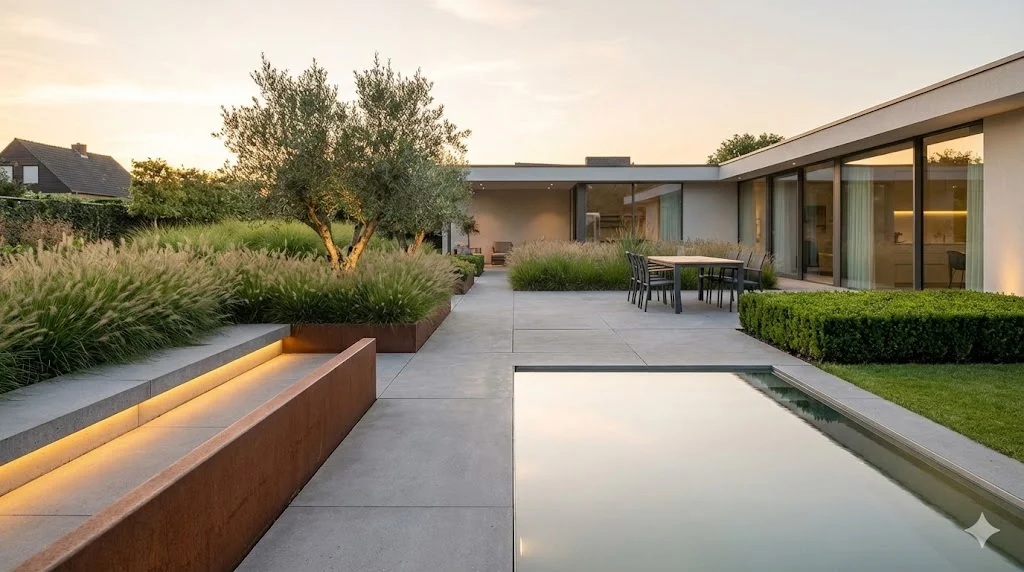
Garden Design Styles: The Complete Guide
Explore every major garden design style from cottage to Japanese, modern to Mediterranean. Find the perfect style for your space, climate, and taste.
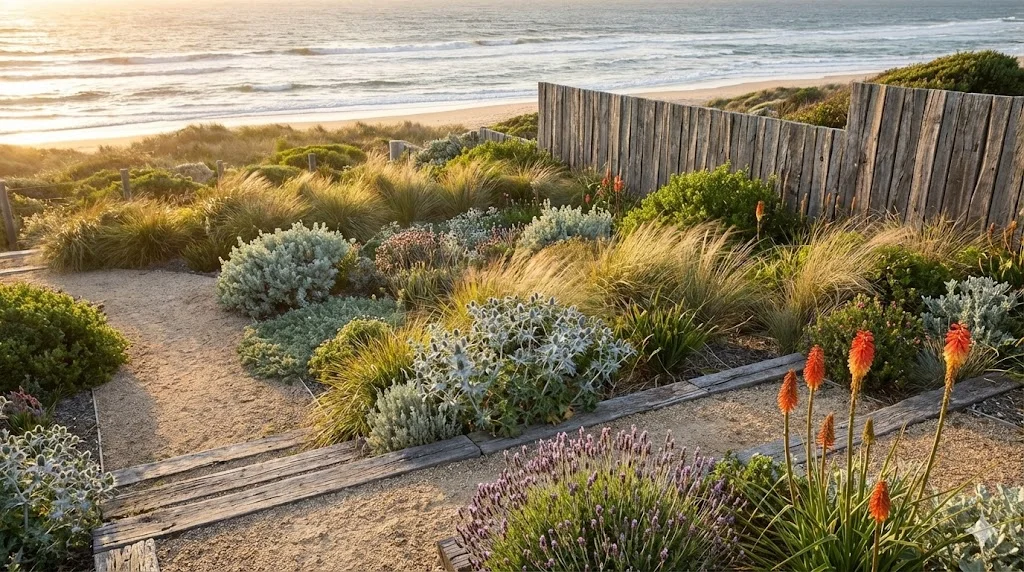
Coastal Garden Design: Salt-Tolerant Beauty
Design a beautiful coastal garden that thrives in salt spray, wind, and sandy soil. Discover the best seaside garden plants and design techniques for exposed sites.
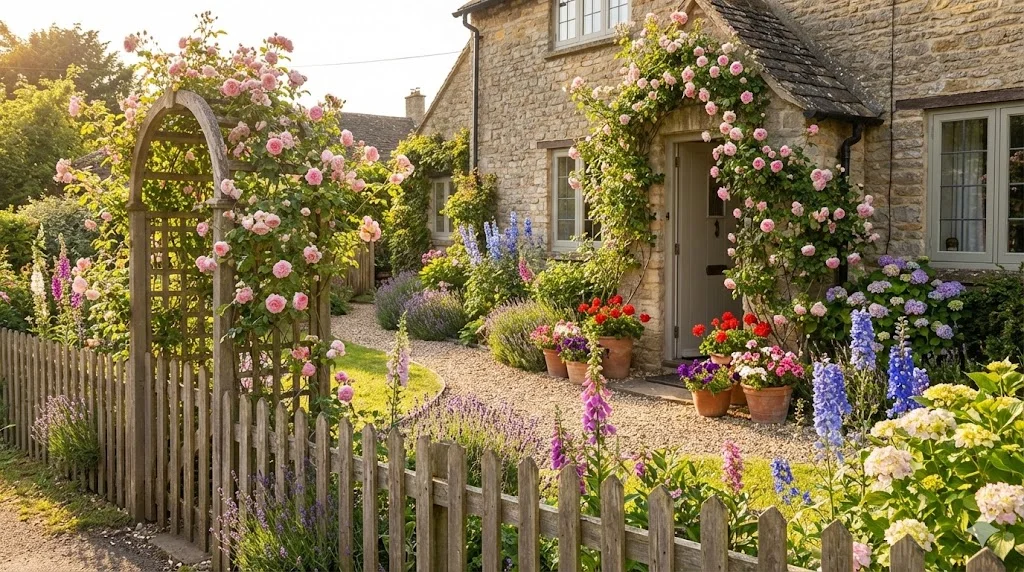
Cottage-Style Front Garden: Welcoming and Colorful
Transform your front garden into a welcoming cottage paradise with climbing roses, flower-lined paths, and seasonal color. Design tips for maximum curb appeal.