
Garden Design for the Mid-Atlantic US
Design a four-season Mid-Atlantic garden with native deciduous plants, clay and loam soil strategies, humid summer solutions, and year-round garden interest.
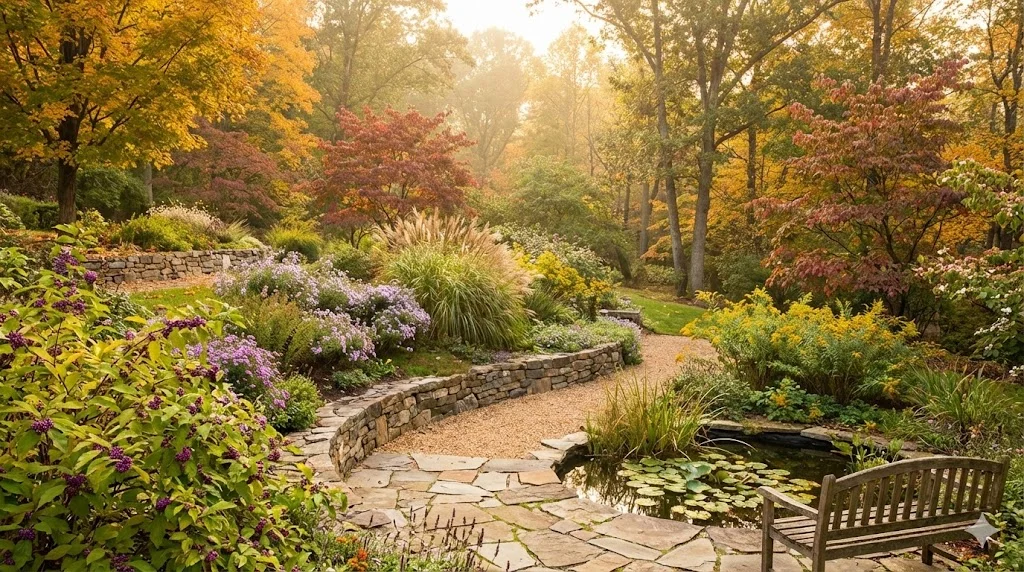
Garden Design for the Mid-Atlantic US
The Mid-Atlantic region — stretching from southern New York through New Jersey, Pennsylvania, Delaware, Maryland, Virginia, and the District of Columbia — is one of America's most versatile gardening zones. Four distinct seasons, generally reliable rainfall, rich soils, and a climate that supports plants from both northern and southern origins give Mid-Atlantic gardeners an enormous palette to work with. The challenge is not finding plants that will grow — it is designing a garden that performs beautifully through the entire range of the region's variable, sometimes extreme, conditions.
This guide is part of our Garden Design for Your Climate Zone series. It covers the strategies, plant palettes, and design approaches that make Mid-Atlantic gardens beautiful year-round.
Understanding the Mid-Atlantic Climate
The Mid-Atlantic climate is classified as humid subtropical in its southern reaches and humid continental in its northern sections:
- USDA Zones 6a–8a: Zone 6a in the mountains of Pennsylvania and western Virginia; Zone 7a–7b across most of the lowland region; Zone 8a in the Norfolk/Virginia Beach area and along the southern Chesapeake.
- Humid summers: July and August bring temperatures of 30–35 C (86–95 F) with humidity often above 70%. Heat index values frequently exceed 38 C (100 F).
- Variable winters: Average lows of -12 to -4 C (10–25 F) depending on location. Snow is common but inconsistent — some winters bring heavy, persistent snow; others are mild and wet.
- Reliable rainfall: 1,000–1,200 mm (40–48 inches) annually, distributed fairly evenly across all seasons with a slight summer peak.
- Transitional location: The Mid-Atlantic sits at the boundary between northern and southern plant ranges, which means gardeners can grow many plants from both zones — as long as they choose wisely. To the north, New England gardens share many of the same cold-hardy perennials, while to the south the palette expands into the lush world of the Southeast.
Key challenges:
- Summer humidity — Promotes fungal disease, mildew, and pest pressure
- Clay and compacted soils — Common throughout the Piedmont region
- Deer pressure — Increasingly severe in suburban and exurban areas
- Variable winters — Warm spells followed by sudden cold snaps can damage plants that break dormancy too early
- Invasive species — Many non-native plants thrive too well in the Mid-Atlantic and have become ecological problems
The Mid-Atlantic gardener's advantage is range. You can grow delphiniums from cool New England and crepe myrtles from the warm South. The art lies in selecting plants tough enough for the full spectrum of conditions.
Four-Season Design for the Mid-Atlantic
The Mid-Atlantic's four distinct seasons reward a design approach that plans deliberately for every quarter of the year:
Spring (March–May)
Spring in the Mid-Atlantic is long and dramatic — often lasting ten weeks or more:
- March: Snowdrops, crocuses, and winter aconite. Witch hazel finishes. Hellebores peak.
- April: Daffodils, tulips, bleeding heart, Virginia bluebells. Dogwood, redbud, and serviceberry bloom.
- May: Azaleas, rhododendrons, peonies, iris, wisteria. The transition to summer begins.
Summer (June–August)
The most demanding season. Heat, humidity, and afternoon thunderstorms:
- June: Roses, daylilies, baptisia, catmint, hydrangea begins
- July: Coneflower, black-eyed Susan, bee balm, butterfly weed. Peak heat.
- August: Phlox, Joe Pye weed, ironweed, ornamental grasses gaining height. Late-summer color.
Fall (September–November)
The Mid-Atlantic's second spring — a long, mild fall with spectacular color:
- September: Asters, goldenrod, ornamental grasses at peak. Japanese anemones.
- October: Fall foliage from maples, oaks, sweetgums. Late-blooming camellias (Zone 7+). Chrysanthemums.
- November: Beautyberry, winterberry holly setting berries. Last flowers fade. Garden cleanup begins.
Winter (December–February)
The structural season. Without snow cover, the Mid-Atlantic winter can feel exposed:
- Evergreen structure: Hollies, yew, boxwood, and southern magnolia provide green architecture
- Bark interest: River birch (peeling cinnamon), red-twig dogwood, crape myrtle (mottled, exfoliating)
- Berries: Winterberry holly (Ilex verticillata), nandina, beautyberry (persist into winter)
- Winter flowers: Witch hazel (January–March), winter jasmine (Zone 7+), Edgeworthia (Zone 7+)
- Ornamental grasses: Left standing, their bleached forms catch winter light beautifully
When you plan your four-season garden layout, you can test how plants look across all seasons before committing to a design.
Native Deciduous Forest Plants
The Mid-Atlantic's native deciduous forest ecosystem provides a rich palette for garden design:
Native Trees
- White oak (Quercus alba) — Majestic, long-lived, brilliant fall color, essential wildlife tree
- Red maple (Acer rubrum) — Fast-growing, vivid scarlet fall color, adaptable
- Tulip poplar (Liriodendron tulipifera) — Tall, fast, tulip-shaped flowers, golden fall color
- Flowering dogwood (Cornus florida) — White or pink spring flowers, red fall berries and foliage
- Eastern redbud (Cercis canadensis) — Purple-pink spring flowers on bare branches, heart-shaped leaves
- River birch (Betula nigra) — Peeling cinnamon bark, multi-stemmed, tolerates wet or dry conditions
- Sweetgum (Liquidambar styraciflua) — Spectacular multi-colored fall foliage, star-shaped leaves
Native Shrubs
- Winterberry holly (Ilex verticillata) — Deciduous holly, vivid red berries, spectacular in winter
- Virginia sweetspire (Itea virginica) — White flower racemes, brilliant red-purple fall color
- Oakleaf hydrangea (Hydrangea quercifolia) — White flowers, burgundy fall foliage, peeling bark
- Mountain laurel (Kalmia latifolia) — Evergreen, clusters of pink-white flowers, shade-tolerant
- Ninebark (Physocarpus opulifolius) — Purple foliage varieties, peeling bark, adaptable
- Beautyberry (Callicarpa americana) — Vivid purple berries in fall, arching form
Native Perennials
- Coneflower (Echinacea purpurea) — Pink-purple daisies, Zone 3, long-blooming
- Black-eyed Susan (Rudbeckia fulgida) — Golden yellow, Zone 3, the Mid-Atlantic's garden workhorse
- Joe Pye weed (Eutrochium purpureum) — Towering pink-purple flower heads, butterfly magnet
- Butterfly weed (Asclepias tuberosa) — Vivid orange, monarch host plant, drought-tolerant
- Blue mistflower (Conoclinium coelestinum) — Soft blue, late-season, attracts butterflies
- Cardinal flower (Lobelia cardinalis) — Brilliant red spikes, hummingbird magnet, moist conditions
- Golden Alexander (Zizia aurea) — Early spring yellow flowers, native to the entire Mid-Atlantic
Dealing with Clay and Loam Soils
The Mid-Atlantic's Piedmont region is defined by its heavy clay soil, while coastal areas tend toward sandy loam:
Clay Soil Strategies
- Compost incorporation — Add 7–10 cm (3–4 inches) of compost to new beds and work into the top 20–30 cm
- Never add sand — Sand mixed with clay creates concrete-like conditions
- Raised beds — For vegetable gardens and plants that demand perfect drainage
- Clay-loving plants — Many native plants thrive in clay: aster, ironweed, Joe Pye weed, switchgrass, river birch
- Mulch continually — Organic mulch breaks down and improves clay structure gradually over years
- Avoid compaction — Stay off beds when soil is saturated
Sandy Coastal Soils
- Improve with compost — Sandy soil needs organic matter for water and nutrient retention
- Salt-tolerant selections — Coastal gardens face salt spray from the Chesapeake and Atlantic
- Wind management — Coastal exposure requires windbreaks and salt-tolerant boundary plantings
Managing Summer Humidity
The Mid-Atlantic's summer humidity is a persistent design challenge:
- Air circulation — Space plants generously. Do not crowd borders.
- Disease-resistant cultivars — Choose mildew-resistant phlox, black spot-resistant roses, and powdery mildew-resistant dogwoods
- Morning sun — Orient borders to receive morning sun, which dries dew quickly and reduces fungal disease
- Avoid overhead watering — Use drip irrigation or soaker hoses to keep foliage dry
- Pruning for airflow — Thin dense shrubs and remove lower branches to improve air circulation
- Mulch to reduce splash — Mulch prevents soil-borne fungal spores from splashing onto foliage during rain
The Deer Challenge
White-tailed deer are the Mid-Atlantic's most significant garden pest. With limited predators in suburban areas, populations have exploded:
Deer-Resistant Plants
No plant is truly deer-proof, but these are rarely browsed:
- Ornamental grasses — Almost all species
- Daffodils and alliums — Toxic bulbs, reliably avoided
- Lavender, rosemary, sage — Aromatic herbs
- Ferns — Most species
- Hellebores — Toxic, avoided
- Boxwood and hollies — Usually left alone
- Russian sage, catmint, salvia — Strongly aromatic
Deer Management Strategies
- Fencing — 2.4 m (8 ft) fencing is the only reliable exclusion method
- Deer netting — Lightweight, nearly invisible protection for borders
- Repellent sprays — Effective but require regular reapplication
- Design in layers — Place deer-resistant plants at the garden's perimeter and more vulnerable plants in protected interior zones
Many of the humidity management and long-season planting techniques used in the Mid-Atlantic overlap with Southeast US garden design, where the growing season extends even further and the palette expands to include more Southern species.
The deer question shapes every Mid-Atlantic garden design. Accepting their presence and designing around it — rather than being perpetually frustrated — is the path to a beautiful, sustainable garden.
Getting Started: Your Mid-Atlantic Garden Plan
- Assess your soil — Clay, loam, or sand? pH? This determines your starting plant palette.
- Plan for four seasons — Sketch the garden in January, April, July, and October. Fill each season with deliberate beauty.
- Start with native trees and shrubs — They provide the most reliable, lowest-maintenance framework.
- Address deer from the start — Choose deer-resistant plants or install fencing before planting vulnerable species.
- Improve clay gradually — Compost and mulch year after year create better soil without dramatic intervention.
- Choose disease-resistant cultivars — Humidity means disease pressure is constant. Start with resistant genetics.
- Plant in fall — October through early November is the ideal planting season in the Mid-Atlantic. Mild fall and winter conditions allow excellent root establishment.
- Leave structure standing — Do not cut back grasses, seed heads, and berries until late winter. They provide winter interest and wildlife food.
The Mid-Atlantic is a gardener's garden region — a place where knowledge, design skill, and plant selection matter deeply because the climate supports so much. A well-designed Mid-Atlantic garden draws on the region's rich native flora, manages its humidity and variable weather with grace, and delivers beauty in every season — from the first hellebore of February to the last aster of November.
Garden Design Team
Expert garden designers sharing tips, inspiration, and practical advice for creating beautiful outdoor spaces.
Explore professional garden design
Gardenly3D is a paid professional garden-design application. See plans for included capabilities and availability.
Join the waitlistRelated articles
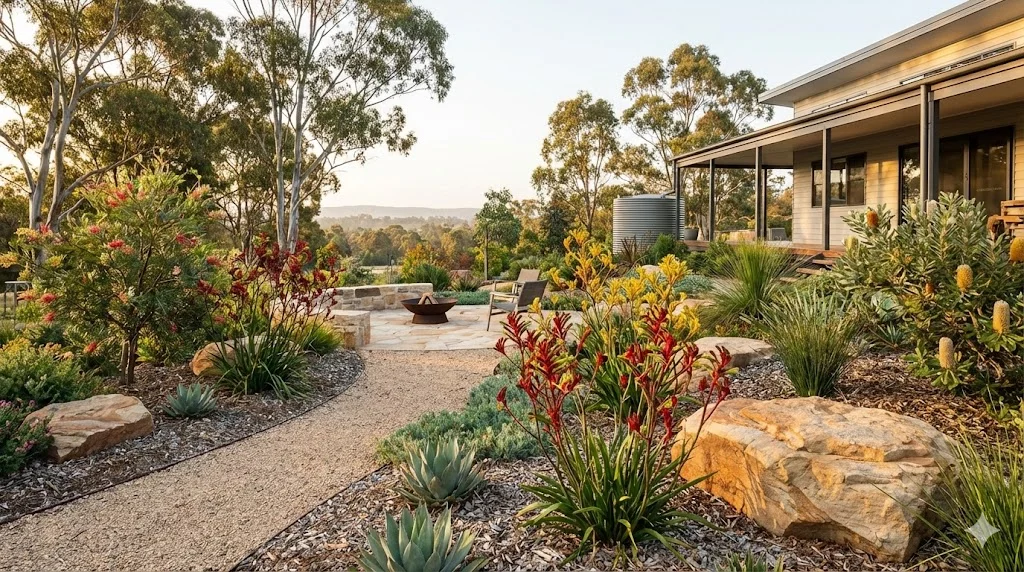
Garden Design for Australian Conditions
Design a resilient Australian garden with native plants, bushfire-safe landscaping, water-wise strategies, and solutions for subtropical to arid climates.
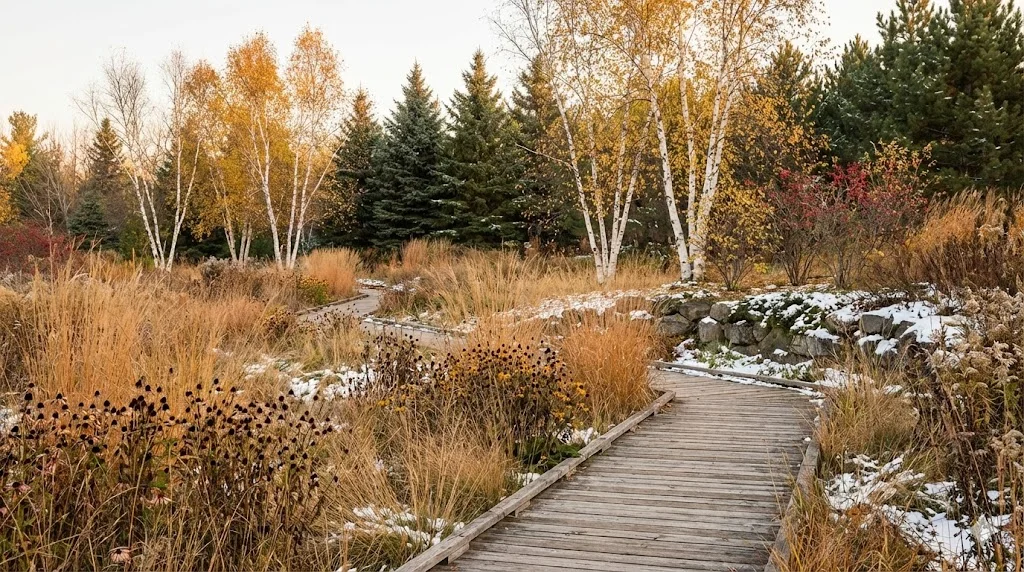
Garden Design for Canada
Design a resilient Canadian garden with extreme cold strategies, native prairie and boreal plants, short season planting, and wildlife-friendly garden design.
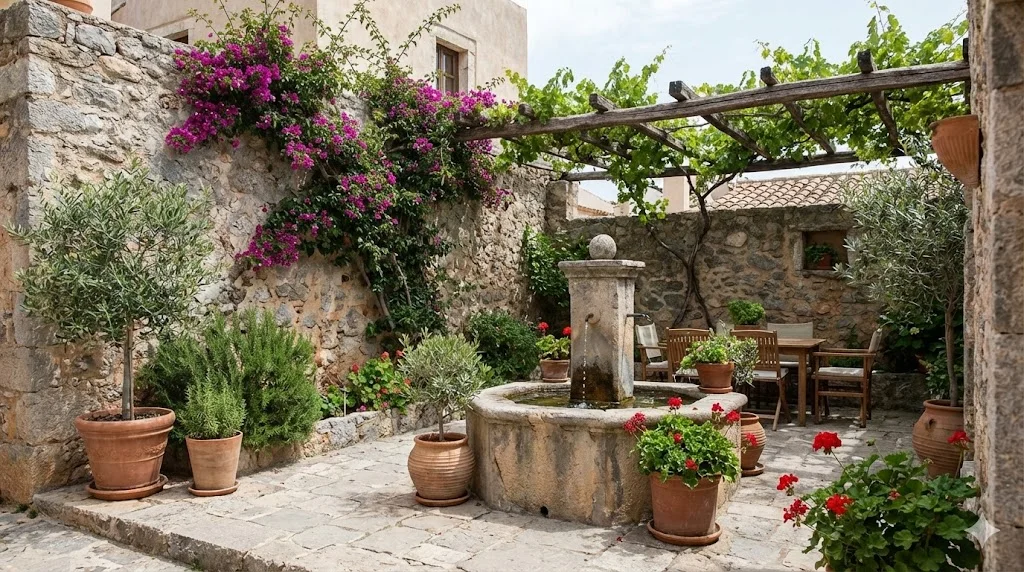
Garden Design for Coastal Mediterranean (Spain, Italy, Greece)
Design a stunning coastal Mediterranean garden with bougainvillea, citrus, courtyards, dry stone walls, and irrigation strategies for Spain, Italy, and Greece.