
Composting and Soil Health for Garden Designers
Master composting and soil health for better garden design with guidance on the soil food web, composting methods, mulch types, no-dig gardening, and more.
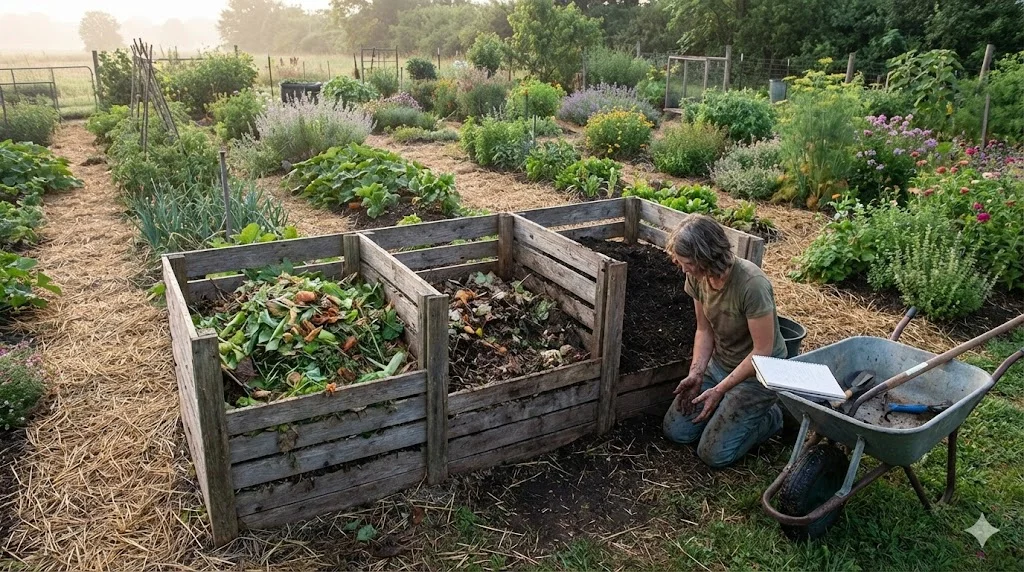
Composting and Soil Health for Garden Designers
Every great garden begins beneath the surface. Soil is not just the medium in which plants grow — it is a living ecosystem, teeming with billions of organisms that break down organic matter, cycle nutrients, fight disease, and build the structure that allows roots to breathe, water to drain, and plants to thrive. Understanding soil health, and knowing how to build and maintain it through composting and careful management, is perhaps the most valuable knowledge any gardener can possess.
For the garden designer, soil health is the invisible foundation of everything visible above ground. The most thoughtful planting plan, the most beautiful colour scheme, the most elegant layout — all depend on healthy soil to deliver their potential. This guide covers the soil food web, composting methods, mulch types, no-dig gardening, and the principles of soil stewardship that underpin sustainable garden design.
The Soil Food Web
Healthy soil is not inert. A single teaspoon of garden soil contains billions of bacteria, millions of fungi, thousands of protozoa, and hundreds of nematodes. Together with earthworms, mites, springtails, and other creatures, they form the soil food web — a complex community of organisms that:
- Decompose organic matter into nutrients plants can absorb
- Fix atmospheric nitrogen into plant-available forms
- Suppress plant diseases through competition and predation
- Build soil structure by binding particles into aggregates
- Cycle nutrients from deep in the soil profile to the root zone
- Sequester carbon in stable organic compounds
Fungi: The Underground Network
Mycorrhizal fungi are among the soil's most important inhabitants. They form symbiotic partnerships with plant roots, extending the root system's reach by up to 700 times. In exchange for sugars from the plant, mycorrhizal fungi provide water, phosphorus, and other nutrients from far beyond what the plant's roots could access alone.
These fungal networks also connect plants to each other, allowing the transfer of nutrients and even chemical signals between individuals — the so-called "wood wide web."
Why Soil Health Matters for Design
When soil is healthy, plants are healthier, more vigorous, and more resistant to drought, pests, and disease. This means:
- Less watering, less feeding, less intervention
- Better growth and more abundant flowering
- Greater resilience to extreme weather
- Less need for chemical inputs
"Feed the soil, and the soil feeds the plants. Feed the plants, and you skip the most important step."
Composting: Closing the Loop
Composting is the process of converting organic waste into a nutrient-rich soil amendment. It is the cornerstone of sustainable garden management — closing the loop between what the garden produces and what it consumes.
Hot Composting
Hot composting produces finished compost in as little as eight to twelve weeks through managed decomposition.
How it works:
- Build a pile at least 1 cubic metre in volume (smaller piles do not retain enough heat).
- Layer "greens" (nitrogen-rich: grass clippings, kitchen scraps, fresh weeds) and "browns" (carbon-rich: cardboard, straw, dried leaves, woody prunings).
- Aim for roughly two-thirds browns to one-third greens by volume.
- Turn the pile every one to two weeks to introduce oxygen.
- The pile should heat up to 55 to 65 degrees Celsius — hot enough to kill weed seeds and pathogens.
- Compost is ready when it is dark, crumbly, and earthy-smelling.
Cold Composting
Cold composting is simpler but slower — taking six to eighteen months to produce finished compost.
How it works:
- Add materials to a bin or heap as they become available.
- Occasional turning speeds up the process but is not essential.
- The bottom layers break down first; harvest from the base of the pile.
Cold composting does not reach temperatures high enough to kill weed seeds or pathogens, so avoid adding perennial weed roots or diseased plant material.
Worm Composting (Vermicomposting)
Worm bins use composting worms (typically Eisenia fetida) to process kitchen waste into rich worm castings — one of the finest soil amendments available.
Benefits:
- Ideal for small gardens and balconies
- Processes kitchen waste year-round
- Produces concentrated, nutrient-rich castings and liquid feed
- Compact — a worm bin takes up less than a square metre
Leaf Mould
Fallen leaves, collected and stored separately from other compost, break down into leaf mould — a crumbly, dark, woodland-scented material that is the finest soil conditioner and mulch available.
How to make it:
- Collect fallen leaves in autumn.
- Store in wire mesh bins or black bags with holes punched for air.
- Leave for twelve months for coarse mulch, or eighteen to twenty-four months for fine seed compost.
Leaf mould improves soil structure, retains moisture, and supports soil biology. It costs nothing and requires almost no effort.
Bokashi Composting
Bokashi is a fermentation process that pre-treats food waste (including cooked food, meat, and dairy — which cannot go in conventional compost) before burial in the garden.
How it works:
- Add food waste to an airtight bucket with bokashi bran (inoculated with beneficial microorganisms).
- Drain liquid every few days (dilute and use as plant feed).
- Once full, bury the fermented waste in a garden trench. It breaks down completely in two to four weeks.
Mulching: Protecting and Feeding the Soil
Mulching is the practice of covering soil with a protective layer of material. It is one of the most beneficial things you can do for soil health.
Benefits of Mulching
- Reduces water evaporation by up to 70 percent
- Suppresses weeds by blocking light
- Regulates soil temperature (cooler in summer, warmer in winter)
- Prevents soil erosion from heavy rain
- Feeds soil biology as organic mulches decompose
- Improves soil structure over time
Organic Mulch Types
- Garden compost: Rich in nutrients, excellent for borders and vegetable gardens. Apply 5 to 8 cm in spring.
- Bark mulch: Long-lasting, attractive, and effective. Best for permanent borders and around trees and shrubs.
- Wood chips: Free from tree surgeons, excellent for paths and woodland areas.
- Straw: Good for vegetable gardens. Decomposes relatively quickly.
- Leaf mould: The finest mulch for borders. Light, crumbly, and full of beneficial organisms.
Inorganic Mulch Types
- Gravel and pebbles: Ideal for Mediterranean-style and xeric planting. Permanent and weed-suppressing.
- Slate chips: Dark, attractive, long-lasting.
How to Apply Mulch
- Clear weeds from the area first.
- Water the soil well if dry.
- Apply a 5 to 10 cm layer of mulch, keeping it away from plant stems and tree trunks (direct contact can cause rot).
- Top up annually as organic mulches decompose.
No-Dig Gardening
No-dig (or no-till) gardening is a soil management approach that avoids turning the soil. Instead, organic matter is added to the surface and incorporated by earthworms and other soil organisms over time.
Why No-Dig Works
Digging — particularly deep digging and rotavating — disrupts the soil food web, destroys fungal networks, exposes soil carbon to oxidation, and damages soil structure. No-dig avoids all of this:
- Preserves mycorrhizal networks that connect plants and cycle nutrients
- Maintains soil structure built by worms, roots, and fungi
- Reduces weed germination (digging brings buried weed seeds to the surface where they germinate)
- Saves enormous effort (no digging — just mulching)
- Builds soil organic matter year on year, improving fertility and water retention
How to Start No-Dig
- Existing borders: Simply stop digging. Apply a thick layer (10 to 15 cm) of compost on the surface each autumn. Plant through the compost. Worms and soil organisms will incorporate it over time.
- New beds on grass: Lay cardboard over the grass to suppress it, then pile 15 to 20 cm of compost on top. Plant directly into the compost. The grass decomposes beneath the cardboard over several months.
- Raised beds: Fill with a mix of compost and topsoil. Each year, top up with fresh compost. Never dig.
No-Dig and Garden Design
No-dig principles are fully compatible with beautiful garden design. The approach favours:
- Permanent planting (perennials, shrubs, trees) over annual bedding
- Mulched surfaces that look neat and well-maintained
- Healthy, vigorous plants that need less staking, feeding, and intervention
"No-dig gardening is not laziness — it is respect for the soil ecosystem that makes everything else possible."
Carbon Sequestration Through Soil
Healthy soil is one of the largest carbon stores on Earth — containing more carbon than the atmosphere and all plant life combined. Every gardener has the opportunity to contribute to carbon sequestration through soil management:
- Add compost annually: Compost adds stable organic carbon to the soil.
- Practice no-dig: Avoiding soil disturbance prevents carbon oxidation and release.
- Grow cover crops: Green manures (clover, phacelia, field beans) fix carbon through their roots.
- Plant trees: Tree roots add enormous amounts of carbon to the soil over their lifetimes.
- Use biochar: Biochar — charcoal produced by slow pyrolysis — locks carbon in the soil for hundreds or even thousands of years. See our guide to carbon-positive garden design.
Soil Testing for Designers
Understanding your soil's current health helps you design appropriate planting and management strategies. When you plan a new garden design, soil knowledge informs plant selection, amendment strategies, and realistic expectations.
What to Test
- pH: Affects nutrient availability. Most plants prefer pH 6.0 to 7.0. Test with a simple kit from any garden centre.
- Texture: Is your soil clay, sand, silt, or loam? This determines drainage, nutrient retention, and workability.
- Organic matter content: Higher is better. Dark, crumbly soil with a sweet, earthy smell is rich in organic matter.
- Nutrient levels: Nitrogen, phosphorus, and potassium levels guide feeding strategies.
- Biological activity: Worm count, fungal presence, and root health indicate soil food web activity.
Getting Started with Soil Health
Three actions that will improve your soil starting this week:
- Start composting. Any method — hot, cold, worm, or leaf mould — starts the journey of returning organic matter to your soil. Begin with whatever materials you have available.
- Mulch one border. Apply 5 to 8 cm of compost, bark, or leaf mould to one border. The soil beneath will begin improving immediately — retaining more moisture, feeding soil organisms, and building structure.
- Stop digging. For at least one area of your garden, commit to no-dig management. Top-dress with compost annually and let the soil food web do the work of incorporation. Within two years, you will see a visible difference in plant health and soil quality.
Soil health is not glamorous, but it is fundamental. Every aspect of garden design — plant vigour, flower abundance, drought resilience, pest resistance — traces back to what is happening beneath the surface. Invest in your soil, and your garden will repay you many times over. For the complete sustainable design framework, visit our sustainable garden design guide.
Garden Design Team
Expert garden designers sharing tips, inspiration, and practical advice for creating beautiful outdoor spaces.
Explore professional garden design
Gardenly3D is a paid professional garden-design application. See plans for included capabilities and availability.
Join the waitlistRelated articles
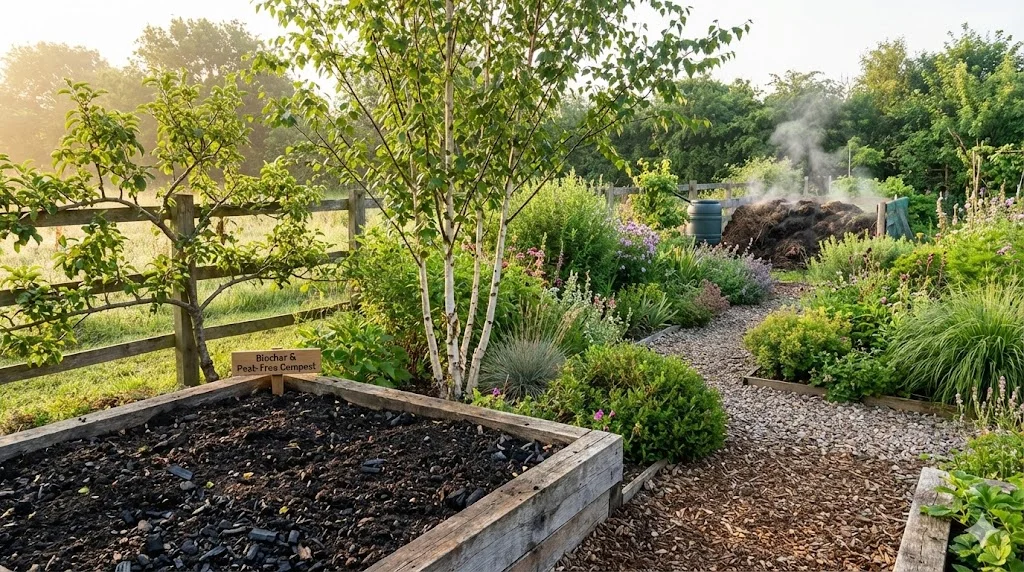
Carbon-Positive Garden Design: Sequestering Carbon at Home
Design a carbon-positive garden that sequesters carbon through tree planting, biochar, peat-free growing, reduced hardscape, and soil health strategies.
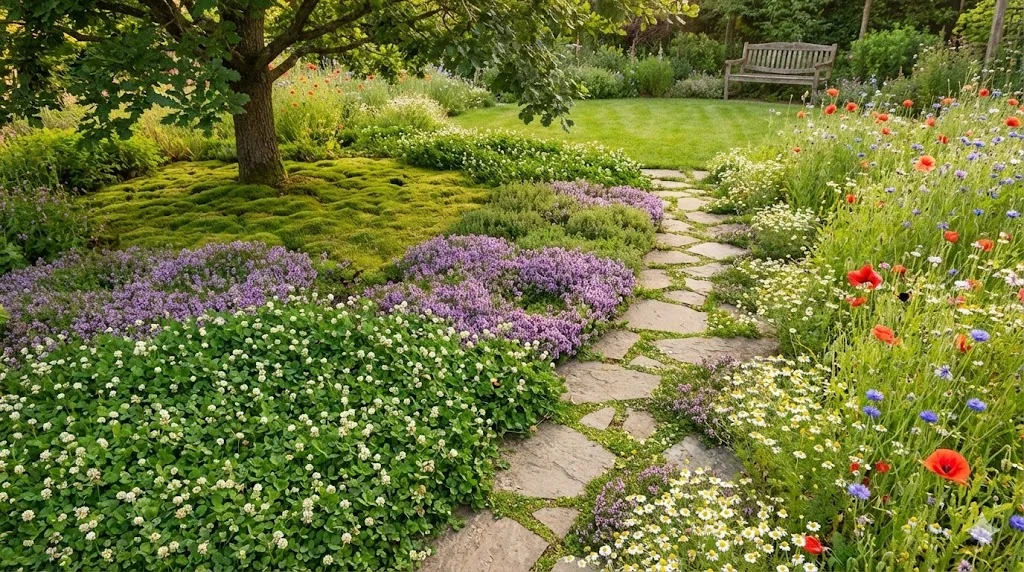
No-Mow Garden Design: Lawn Alternatives That Thrive
Explore no-mow garden design with lawn alternatives that thrive, including clover lawns, creeping thyme, moss gardens, meadow patches, and ground covers.
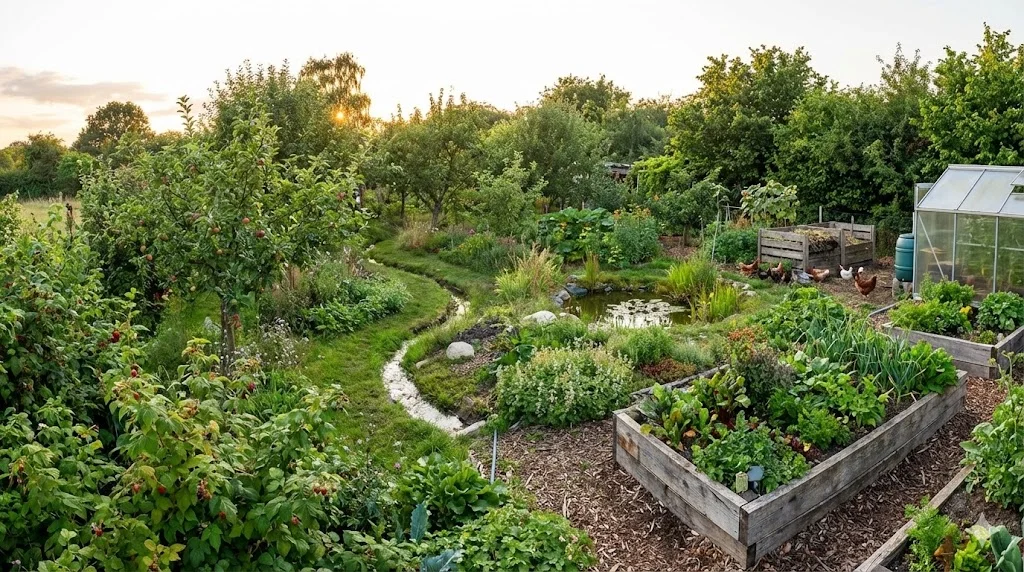
Permaculture Garden Design: Principles and Practices
Learn permaculture garden design principles and practices including food forests, guilds, zones, swales, polyculture, and closed-loop sustainable systems.