
Side Yard Garden Design: Unlocking Hidden Space
Transform a forgotten side passage into a beautiful garden feature. Narrow-space solutions, vertical planting, utility screening, and shade-loving plants.
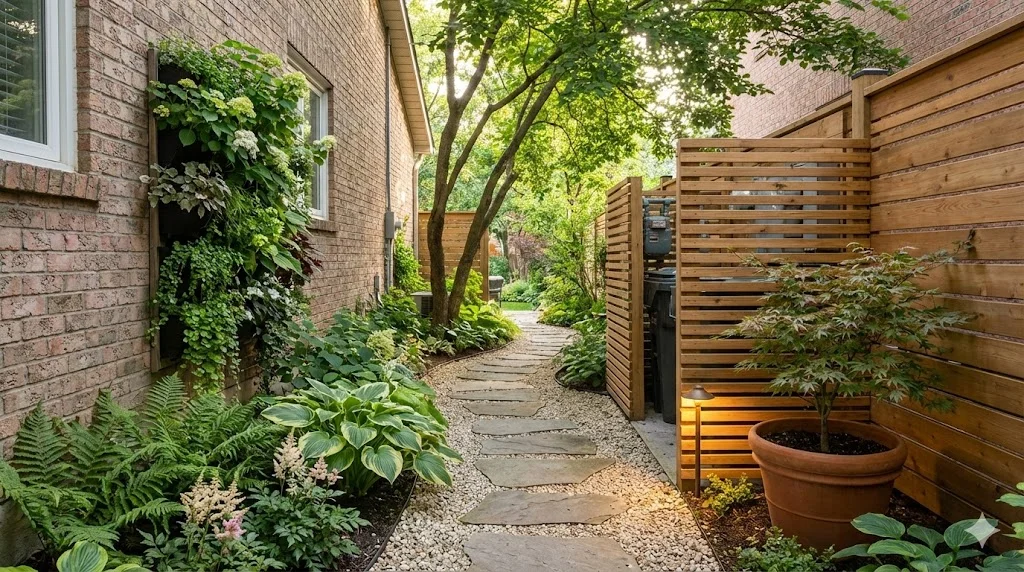
Side Yard Garden Design: Unlocking Hidden Space
Almost every house has one -- a narrow strip of land running along the side wall, hemmed in by a fence on one side and brickwork on the other. In most homes, this passage is little more than a neglected corridor used to wheel the bins from back to front. Weeds push up through cracked concrete. The meter cupboard hides behind an overgrown shrub nobody planted on purpose. It is, by any measure, dead space.
But it does not have to be. Side yards are some of the most underused areas in residential gardens, and they represent a genuine opportunity. A passage as narrow as ninety centimetres can be transformed into something worth walking through rather than rushing past. With the right approach to planting, surfaces, screening, and lighting, a side yard becomes a transitional garden space that connects front and back while offering its own distinct character.
This guide covers everything you need to plan and plant a side yard garden -- from dealing with deep shade and awkward widths to hiding utility areas and choosing surfaces that work in tight quarters.
Understanding Your Side Yard
Before making any changes, spend time observing the space. Side yards vary enormously, and the constraints of yours will shape every decision that follows. The critical factors are width, length, light, and purpose.
Width determines what is physically possible. A passage under one metre wide limits you to wall-mounted planting and a single walkway. Between one and two metres, you can introduce narrow raised beds or container planting along one side while keeping a clear path. Anything wider than two metres opens up more traditional border planting and even small seating areas.
Light is usually the dominant constraint. Most side yards sit between two vertical surfaces -- a house wall and a boundary fence -- and many face north or are overshadowed by neighbouring buildings. Track the sunlight through the day and across the seasons. Even a passage that seems permanently dark may receive a few hours of direct light in midsummer, and that changes which plants will thrive.
Purpose ranges from purely functional (access, bins, utilities) to aspirational (a secret garden, a fern-filled retreat, a lit pathway that impresses visitors). Most successful side yard designs serve both ends, keeping the space practical while making it beautiful enough that you enjoy using it.
If you are working with limited width as well as limited light, our guide to narrow garden design covers many complementary strategies for creating a sense of space in tight dimensions.
Screening Utility Areas
The single biggest visual problem in most side yards is utility clutter. Wheelie bins, gas meters, electricity boxes, compost bins, air conditioning units, and recycling crates all tend to congregate in side passages because there is nowhere else to put them. Screening these elements is often the first and most impactful improvement you can make.
Effective screening options for narrow spaces include:
- Slatted timber screens -- A vertical screen of treated softwood or cedar slats can hide bins without blocking airflow. Keep slats spaced at 15--25 mm to allow ventilation and prevent trapped moisture. Mount the screen on posts set into the ground or bolted to an existing wall.
- Living screens -- Evergreen climbers trained on horizontal wires or trellis create a green wall that conceals whatever sits behind. Trachelospermum jasminoides (star jasmine) works well in sheltered spots. For shadier passages, Hydrangea anomala subsp. petiolaris (climbing hydrangea) tolerates low light and self-clings to walls.
- Woven willow or hazel hurdles -- These provide an instant rustic screen and last three to five years before needing replacement. They are lightweight and can be attached to existing fence posts.
- Purpose-built bin stores -- A simple slatted enclosure on castors allows you to wheel the entire unit out for collection day and tuck it back afterwards. Paint or stain it to match your fence for a cohesive look.
Always check that meter readers and utility engineers can still access what they need. A hinged screen or a gate panel is better than a permanent barrier in front of a meter.
Choosing Surfaces and Paths
The ground surface in a side yard matters more than in any other part of the garden, because it occupies such a large proportion of the visible area. A cracked concrete slab dominates a narrow passage in a way it never would in a wide lawn garden.
Stepping stones set into gravel are one of the most effective solutions for side yards. They create a clear walkway, introduce rhythm and visual interest, and allow rainwater to drain freely -- important in a space that often sits in a rain shadow with poor drainage. Natural stone such as slate, York stone, or limestone works well. Set each stone at a comfortable stride length (roughly 600 mm centre to centre) and fill between them with a pale gravel like Cotswold buff or silver-grey granite chippings to reflect available light upward.
Narrow pavers laid in a stretcher bond pattern along the length of the passage can make the space feel longer and more intentional. Herringbone or basket-weave patterns work where you want to slow the eye down and add texture. Porcelain pavers are excellent for shady, damp side yards because they resist algae growth far better than natural stone.
Resin-bound gravel offers a permeable, low-maintenance surface that looks neat and drains well. It is particularly good for side yards where you want a clean, uniform finish without joints or gaps for weeds to colonise.
Whatever surface you choose, ensure it slopes gently away from the house wall (a fall of roughly 1 in 60) to prevent water pooling against the building.
Vertical Planting and Green Walls
When the ground is too narrow for conventional borders, go upward. Vertical planting transforms bare walls and fences into living surfaces, and in a side yard it achieves two things at once: it softens the hard boundaries that make the space feel oppressive, and it introduces planting without stealing precious floor width.
Wall-mounted planters and troughs fixed at varying heights create layers of foliage. Use lightweight fibreglass or powder-coated steel troughs rather than heavy terracotta, and fix them into masonry with adequate wall plugs. Plant with trailing species like Hedera helix (common ivy), Vinca minor (lesser periwinkle), or small ferns such as Asplenium scolopendrium (hart's tongue fern).
Trellis with climbers is the classic approach. Fix trellis panels to the fence side of the passage (leaving the house wall clear for maintenance access) and plant a mix of evergreen and deciduous climbers for year-round interest. In a shady passage, reliable choices include Hydrangea anomala subsp. petiolaris, Pileostegia viburnoides (an evergreen self-clinging climber), and shade-tolerant clematis cultivars from the Atragene group.
Green wall systems with modular felt pockets or grid-mounted planting modules offer a more contemporary look. These need irrigation -- either a small drip system or regular hand watering -- but they pack an extraordinary amount of greenery into a very small footprint. They work best on a wall that receives at least a couple of hours of indirect light.
When you are planning vertical planting alongside ground-level layout, mapping the space digitally helps you visualise how wall planting and path widths interact before you commit to any fixed structures.
Shade-Loving Plants for Side Yards
Plant selection is where many side yard projects stumble. Gardeners reach for the same sun-loving favourites they use elsewhere, only to watch them stretch, yellow, and fail in a shaded passage. The key is to embrace shade rather than fight it. Some of the most elegant and texturally interesting plants in the horticultural palette are shade specialists.
Ferns are the backbone of any shady side yard planting. Dryopteris filix-mas (male fern) and Dryopteris erythrosora (autumn fern) are tough, reliable, and visually striking. Polystichum setiferum (soft shield fern) has a graceful, arching habit that softens hard edges. For a bold architectural statement, Dicksonia antarctica (tree fern) thrives in sheltered, humid passages -- though it needs winter protection in colder regions.
Hostas deliver bold foliage in a range of blues, greens, and variegated patterns. Slugs are the main challenge in damp, shaded passages; choose thicker-leaved cultivars like Hosta 'Sum and Substance' or Hosta 'Halcyon' which show better slug resistance.
Woodland perennials like Brunnera macrophylla (Siberian bugloss), Epimedium species, Tiarella cordifolia (foam flower), and Hakonechloa macra (Japanese forest grass) all perform well in partial to full shade and tolerate the dry conditions that often occur at the base of walls.
Evergreen structure plants prevent the space looking bare in winter. Sarcococca confusa (Christmas box) and Fatsia japonica both tolerate deep shade and provide year-round foliage. Sarcococca has the added benefit of powerfully fragrant winter flowers -- a lovely surprise in a passage you walk through daily.
For more detailed guidance on planting in low-light conditions, our north-facing garden design guide covers shade strategies in depth.
Connecting Front Garden to Back Garden
A side yard is fundamentally a transition space. It links two distinct areas of your property, and the best designs acknowledge and celebrate that role rather than treating the passage as something to endure between the interesting bits.
Create a sense of journey. Even in a short passage, you can introduce a beginning, middle, and end. A simple gate or arch at the entrance signals arrival. A change in surface material or a slight widening halfway along provides a pause point. A glimpse of the back garden -- framed by planting or an opening in a screen -- draws you forward.
Maintain a visual thread. If your front garden uses a particular material or plant, echo it in the side yard to create continuity. A front garden with lavender edging might transition into a side passage with shade-tolerant Nepeta (catmint) along the base of the wall. A front path in buff sandstone could continue as stepping stones of the same material through the side yard gravel.
Consider access practicality. If you regularly move large items through the side yard -- lawnmowers, garden furniture, building materials -- keep at least 900 mm of clear, unobstructed width along the entire length. Planting that narrows the passage below this threshold will frustrate you every time you need to get something through.
Lighting Dark Passages
A side yard that works well in daylight but vanishes into darkness at night is only doing half its job. Good lighting makes the passage safe, extends the hours you can enjoy it, and creates atmosphere that transforms the space after dark.
Low-level path lights are the most practical starting point. Solar-powered stake lights work in passages that receive some direct sun, but in deeply shaded side yards you will need mains-powered or low-voltage LED options. Flush-mounted deck lights set into the path surface are unobtrusive and effective.
Uplighting is where a side yard truly comes alive at night. A single warm-white LED spotlight aimed upward through the fronds of a tree fern or the canopy of a climbing hydrangea creates dramatic shadows on the walls and transforms the passage into something almost theatrical. Two or three uplights spaced along the length of the passage are usually enough.
Wall-mounted down lights provide even, functional illumination for the path while highlighting the texture of brick or stone walls. Choose warm white (2700K--3000K) to avoid a harsh, clinical feel.
Festoon or string lights strung overhead between walls add a relaxed, sociable quality. They work particularly well in wider side yards where you might add a small bench or a couple of chairs.
Wire lighting circuits along the house wall rather than the fence, and use IP65-rated fittings throughout -- side yards are exposed to rain and often remain damp for long periods.
Practical Design Tips
A handful of small details make an outsized difference in side yard design:
- Paint or render walls in a pale colour. White, soft grey, or warm cream walls bounce light into a shaded passage and make it feel wider. A single painted wall can double the perceived brightness of the space.
- Use mirrors with caution. A well-placed mirror on a side wall can create an illusion of width, but it must be positioned where it reflects planting or sky, not a blank fence or the back of the house. Outdoor mirrors need to be weatherproof and securely fixed.
- Raise planting off the ground. Narrow raised beds, wall-mounted troughs, and tiered pot stands keep foliage at eye level where you notice and enjoy it, rather than at ankle level where it just gets in the way.
- Add fragrance. In an enclosed, sheltered passage, scent lingers beautifully. Sarcococca, Daphne odora, jasmine, and shade-tolerant Nicotiana sylvestris (tobacco plant) all release fragrance that you will walk through rather than past.
- Keep maintenance access clear. Leave enough room behind screens and planters to reach the house wall for painting, repairs, and gutter clearing. Hinged trellis panels that fold away from the wall on top hinges are a classic solution.
Start With a Plan
A side yard might be the smallest part of your garden, but it rewards careful planning just as much as any other space. Measure the width and length accurately. Note where utilities sit, which direction the passage faces, and how much light reaches the ground at different times of year. Sketch a simple layout showing the path, any screening, and where planting will go.
The best side yard gardens feel intentional. They look as though someone cared about this space -- because they did. Even modest changes, such as replacing cracked concrete with stepping stones, adding a climber to a bare fence, and installing a couple of uplights, can turn a forgotten passage into one of the most characterful parts of your garden.
If you are designing multiple areas of your property at once, our Garden Design for Any Space pillar guide will help you see how the side yard fits into the bigger picture and connects with every other space type around your home. Planning the whole site together ensures consistency and avoids the common mistake of designing each area in isolation.
Garden Design Team
Expert garden designers sharing tips, inspiration, and practical advice for creating beautiful outdoor spaces.
Explore professional garden design
Gardenly3D is a paid professional garden-design application. See plans for included capabilities and availability.
Join the waitlistRelated articles
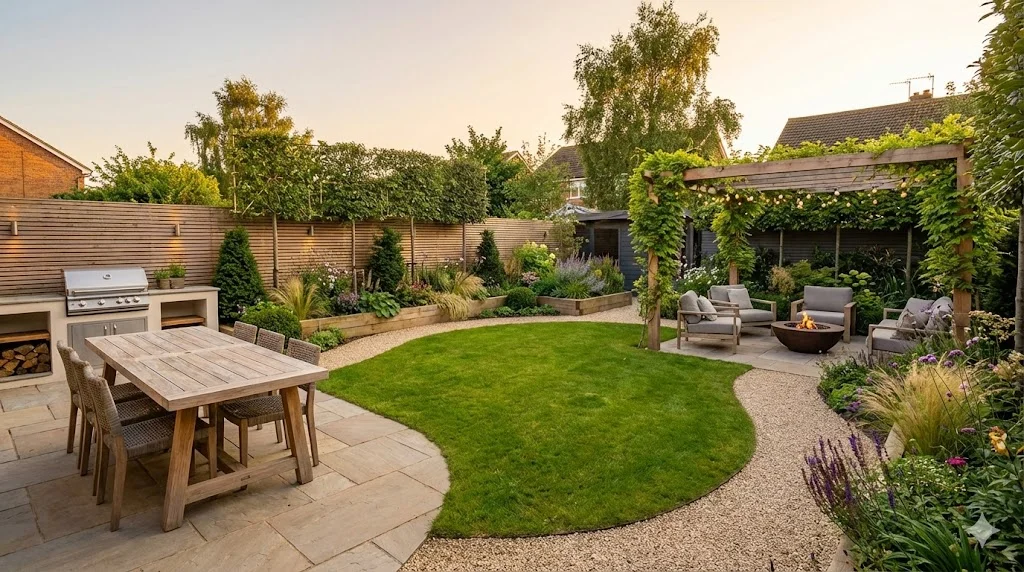
Backyard Garden Design: Creating Your Outdoor Sanctuary
Design a backyard that works as an outdoor living space. Zoning for dining, relaxation, and play, with privacy screening and year-round planting.
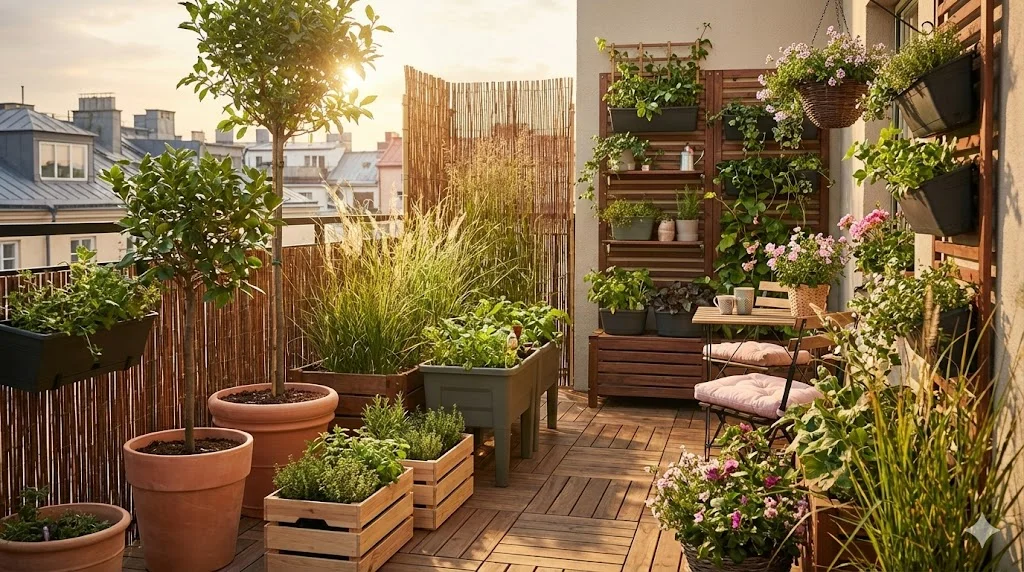
Balcony Garden Design: Growing in Containers
Create a thriving balcony garden with smart container choices, wind-resistant plants, vertical systems, and self-watering solutions for high-rise growing.
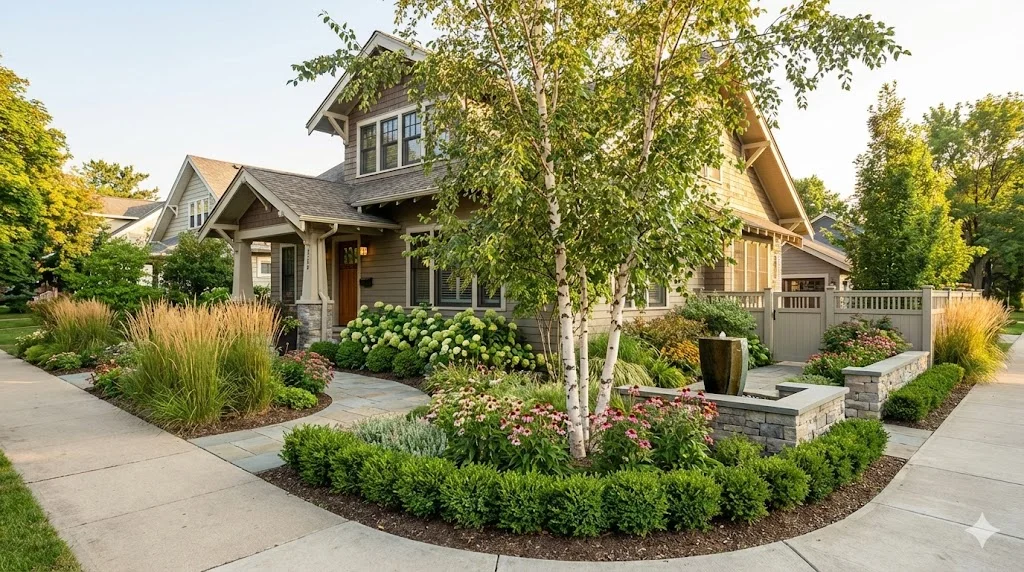
Corner Lot Garden Design: Two-Sided Curb Appeal
Design a corner lot garden that impresses from both streets. Dual frontage planting, visibility sightlines, wraparound beds, and privacy from two directions.