
How to Design a Garden Fence: Style, Materials, and Privacy
Design the right garden fence with expert guidance on fence types, height regulations, materials, planting alongside fences, gates, and screening tips.
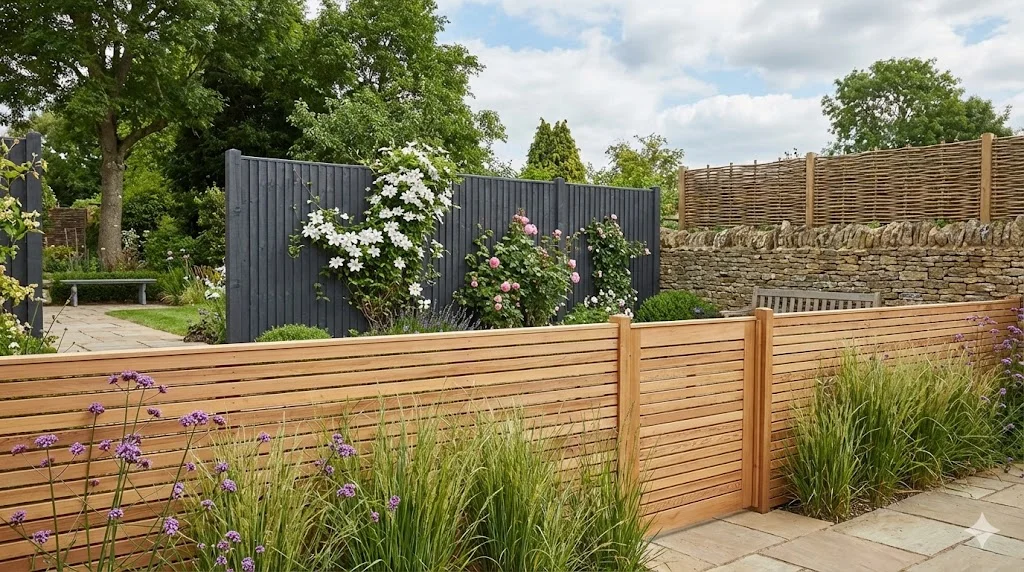
How to Design a Garden Fence: Style, Materials, and Privacy
A fence is the frame around everything else in your garden. Get it right, and it provides the perfect backdrop for planting, ensures privacy, defines your boundaries, and contributes to the overall style of the space. Get it wrong, and it dominates the garden with the wrong material, insufficient height, or a style that clashes with everything around it.
Fence design is often treated as a practical decision -- what is the cheapest way to enclose the garden? But a fence is visible from almost everywhere in your garden and from inside your home. It deserves the same design attention as your patio or planting. This guide covers every aspect of fence design, from style and materials to regulations and planting alongside. For the full garden design process, see our beginner's guide to designing a garden from scratch.
Choosing a Fence Style
Your fence should complement the style of your house and garden. Here are the main styles and where they work best:
Close-Board (Featheredge)
Vertical overlapping boards nailed to horizontal rails. The most common privacy fence. Clean-looking, durable, and provides complete visual screening. Works with every house style. Can be painted or stained to any color.
Best for: Rear and side boundaries where maximum privacy is needed.
Hit-and-Miss
Boards alternated on each side of the rails so there are no direct sightlines, but the fence is not solid. Allows air circulation while providing privacy. More expensive than close-board due to the extra timber.
Best for: Windy sites (reduces turbulence compared to solid fences), boundaries where you want privacy with airflow.
Slatted Screens
Horizontal or vertical slats with uniform gaps between them. Clean, contemporary, and semi-transparent. The size of the gaps determines the level of privacy and light transmission.
Best for: Modern and contemporary gardens, front gardens where complete enclosure would feel oppressive, areas where you want a design feature rather than just a barrier.
Picket Fencing
Short (typically 90-120 cm / 3-4 feet) pointed or rounded vertical boards with gaps between. Friendly, open, and traditional. Does not provide privacy but defines boundaries attractively.
Best for: Front gardens, cottage gardens, low boundaries between garden zones within a larger space.
Panel Fencing
Prefabricated panels in various styles (lap panels, waney-edge, trellis-top). The most affordable option for large runs of fencing. Quality varies enormously -- cheap panels deteriorate quickly.
Best for: Budget-friendly rear boundaries. Choose mid-range or better quality for longevity.
Metal Railings and Wire
Steel railings, iron railings, or wire mesh. Open and transparent. Range from ornate Victorian-style railings to simple agricultural fencing.
Best for: Front boundaries where openness is required or desirable, contemporary designs, boundaries where the view beyond is worth preserving.
Woven Panels
Willow, hazel, or bamboo panels woven between uprights. Natural, textured, and attractive. Relatively short-lived (5-8 years) but affordable and biodegradable.
Best for: Cottage gardens, wildlife gardens, temporary screening while hedges establish.
Materials and Longevity
| Material | Typical Lifespan | Maintenance | Cost |
|---|---|---|---|
| Pressure-treated softwood | 15-20 years | Stain or treat every 3-5 years | Low-Medium |
| Cedar | 20-25 years | Optional treatment (weathers naturally) | Medium |
| Oak | 25-30+ years | None required | High |
| Composite | 25+ years | None | Medium-High |
| Corten steel | 50+ years | None (rust is the finish) | High |
| Powder-coated aluminum | 30+ years | Occasional cleaning | High |
Posts: The Critical Component
Fence posts fail before panels in almost every case. Invest in quality posts:
- Concrete posts: Last indefinitely. Functional rather than attractive but can be hidden behind planting.
- Concrete spur with timber post: A short concrete post is set in the ground, and the timber post is bolted to it above ground level. The timber never touches the soil, dramatically extending its life.
- Oak posts: Naturally rot-resistant and beautiful. Use 100 x 100 mm (4 x 4 inches) minimum.
- Metal post spikes: Galvanized metal spikes driven into the ground, with a socket that holds a timber post above soil level. Quick installation and good post protection.
Height Regulations
Most jurisdictions have rules about fence height:
- Front boundary: Typically limited to 1 meter (3 feet) without planning permission
- Side and rear boundary: Typically limited to 2 meters (6.5 feet) without planning permission
- Trellis additions: Adding trellis on top of a fence may or may not count toward the height limit -- check locally
- Conservation areas: May have stricter requirements regarding materials and style
Always check local regulations before building. An over-height fence that a neighbor reports can result in an enforcement notice requiring removal. A quick check saves expensive mistakes.
Always discuss boundary work with your neighbors before starting. Boundary disputes are the most common source of neighbor conflict. Confirm who owns which boundary, agree on the style and height, and maintain good relations.
Gates
Every fence needs at least one gate. A gate is both functional and a design element -- it is the first thing visitors interact with and sets the tone for the garden beyond.
Gate Design Principles
- Match the fence: A gate that matches the fence in style, material, and height looks intentional and cohesive
- Width: At minimum 90 cm (3 feet) for a pedestrian gate. 120 cm (4 feet) allows comfortable passage with garden equipment. Double gates or a wider single gate (minimum 2.5 meters / 8 feet) for vehicle access.
- Hardware: Use quality galvanized or stainless steel hinges and latches. Cheap hardware is the most common point of failure on gates.
- Self-closing: Install self-closing hinges if children or dogs need to be contained.
Planting Alongside Fences
A fence clothed with planting is far more beautiful than a bare one. Planting also softens the hard lines and adds depth to the boundary.
Climbers on the Fence
Climbing plants grown directly on the fence or on wires fixed to it:
- Clematis: Huge variety of flowering seasons, colors, and sizes. Light and elegant.
- Climbing roses: Romantic and scented. Need annual pruning and tying in.
- Jasmine (Trachelospermum): Evergreen, scented, elegant. Suits mild climates.
- Hydrangea petiolaris: Self-clinging. Excellent for shady fences. Spectacular flowers.
- Espalier fruit trees: Apples and pears trained flat against the fence. Productive and decorative.
Planting in Front of the Fence
A border in front of the fence hides the lower portion and creates depth:
- Tall perennials and grasses: Verbena bonariensis, Miscanthus, tall asters -- these soften the fence at eye level
- Shrubs: A mixed shrub border hides the fence entirely within a few years
- Mixed border: Combine shrubs, perennials, and grasses for year-round interest and complete fence concealment
For comprehensive privacy strategies that go beyond fencing, see how to design a garden for privacy.
Color and Finish
The color of your fence dramatically affects how the garden feels:
- Dark colors (charcoal, black, deep green): Make the fence recede, making the garden feel larger. Planting stands out dramatically against dark backgrounds.
- Mid-tones (grey, sage green, muted blue): Subtle and contemporary. Complement most planting without dominating.
- Natural timber (untreated cedar, larch, oak): Warm and organic. Weathers to silver-grey over time.
- White or pale colors: Bright and cheerful but show dirt and algae quickly. Work well in cottage gardens and coastal settings.
Paint or stain your fence a dark, recessive color -- charcoal grey, black, or deep green -- and your planting will appear to float against the background. This is one of the simplest and most effective design tricks in gardening.
Screening Specific Problem Areas
Sometimes you need to screen a specific eyesore -- a neighbor's extension, an overlooking window, or an ugly outbuilding -- rather than the entire boundary. Targeted screening is more effective than trying to raise the entire fence line.
You can test different fence heights and screening positions in your garden layout to determine exactly where screening is needed and how high it must be.
- Tall narrow screen panel: A single panel or trellis section positioned precisely to block a specific sightline
- Specimen tree: A multi-stem birch, amelanchier, or crab apple placed to screen an upper window
- Bamboo in a container: Positioned exactly where needed, movable if circumstances change
Getting Started
Walk your boundaries and assess each section. Some may need replacement, some may need raising, and some may be perfectly adequate. Prioritize the sections visible from your main seating area and from inside the house. Invest in quality posts, choose panels that complement your home and garden style, and plan planting alongside the fence from day one.
For the complete garden design process, return to our beginner's guide to designing a garden from scratch.
Garden Design Team
Expert garden designers sharing tips, inspiration, and practical advice for creating beautiful outdoor spaces.
Explore professional garden design
Gardenly3D is a paid professional garden-design application. See plans for included capabilities and availability.
Join the waitlistRelated articles
Backyard Garden Design: Creating Your Outdoor Sanctuary
Design a backyard that works as an outdoor living space. Zoning for dining, relaxation, and play, with privacy screening and year-round planting.
Balcony Garden Design: Growing in Containers
Create a thriving balcony garden with smart container choices, wind-resistant plants, vertical systems, and self-watering solutions for high-rise growing.
Corner Lot Garden Design: Two-Sided Curb Appeal
Design a corner lot garden that impresses from both streets. Dual frontage planting, visibility sightlines, wraparound beds, and privacy from two directions.