
Formal Garden Design: Symmetry, Structure, and Elegance
Master formal garden design with geometric beds, topiary, parterre patterns, and elegant axial layouts. Create timeless structure in any size garden.
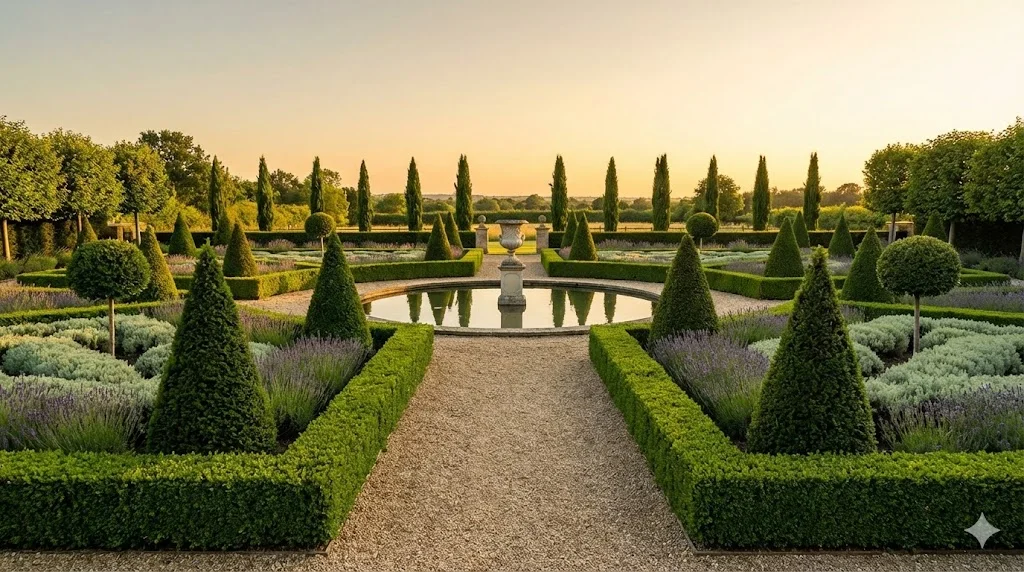
Few garden traditions carry as much quiet authority as formal garden design. Rooted in centuries of European craft, the formal garden transforms an outdoor space into a living architecture of green walls, mirrored beds, and deliberate sight lines. Whether you are drawn to the intricate embroidery of a parterre garden or the sculptural drama of topiary sentinels flanking a gravel walk, the principles behind these gardens are remarkably consistent — and surprisingly adaptable to plots of every size.
This guide covers everything you need to bring formal structure into your own garden: the foundational principles of symmetry, axis, and proportion; the art of topiary and hedging; parterre patterns from simple to ornate; water features, paths, and focal points; and practical advice for scaling a formal garden design to fit a courtyard or suburban plot.
The Principles of Formal Garden Design
Formal gardens are built on three interlocking ideas: symmetry, axis, and proportion. Understanding how they work together is the first step toward a design that feels both grand and effortless.
Symmetry
Symmetry is the hallmark of the formal style. In its purest form, one half of the garden mirrors the other across a central line. This bilateral balance creates a sense of calm and order that the eye reads immediately, even before the mind registers individual plants or paths.
Not every formal garden demands perfect mirror symmetry, however. Near-symmetry — where the overall massing is balanced but individual plantings differ slightly — can feel less rigid while still conveying structure. A pair of matching urns flanking a gate, or twin borders of lavender along a path, introduces formality without requiring that every leaf match its counterpart.
Axis
The axis is the invisible backbone of a formal layout. It is a straight line, usually running from a key viewpoint (a doorway, a terrace, a bench) toward a focal point at the far end (a statue, a fountain, an arbour). Strong formal gardens often have a primary axis and one or more cross-axes that divide the space into rooms or compartments.
Walking along an axis should feel like a narrative: there is a beginning, a middle passage, and a destination. The most powerful axial gardens reward the visitor with a reveal — a vista that opens up, a reflecting pool that captures the sky, or a change in level that reframes the view.
Proportion
Proportion governs how the parts relate to each other and to the whole. A parterre garden that is too large for its enclosing hedges will feel exposed; one that is too small will look cramped. Classical designers often used simple ratios — 2:3, 3:5, or the golden section — to size beds, paths, and lawn panels.
A practical rule of thumb: paths should be wide enough for two people to walk abreast (1.2 metres or about 4 feet minimum for main axes), and planting beds should be no wider than twice the reach of the gardener who will tend them.
For a broader look at how formal style fits alongside cottage, Japanese, Mediterranean, and other approaches, see our complete guide to garden design styles.
Topiary: The Sculpture of the Formal Garden
Topiary is the practice of clipping shrubs and trees into defined geometric or figurative shapes — spheres, cones, pyramids, spirals, or even animals and abstract forms. In a formal garden design, topiary serves as living architecture: it defines entrances, marks corners, punctuates hedges, and provides vertical interest that endures through every season.
Choosing Plants for Topiary
The classic topiary plant is common box (Buxus sempervirens), prized for its dense, fine-textured foliage and tolerance of close clipping. However, box blight and box tree caterpillar have made many gardeners look for alternatives:
- Yew (Taxus baccata) — The finest hedging and topiary plant for temperate climates. Dense, dark green, and remarkably tolerant of hard renovation pruning. Slower than box to establish but longer-lived and more resilient.
- Japanese holly (Ilex crenata) — Small, rounded leaves that mimic box closely. Good disease resistance and suited to containers.
- Privet (Ligustrum delavayanum) — Fast-growing with tiny leaves. Needs more frequent clipping but fills in quickly.
- Lonicera nitida — Very fine-textured and fast, though it can become leggy without regular attention. Excellent for small, simple shapes.
- Pittosporum (P. tenuifolium 'Golf Ball') — A good option in milder climates, naturally compact and rounded.
Clipping Technique
For clean geometric shapes, clip little and often during the growing season — typically three to four times between late spring and early autumn. Use hand shears for precision on small topiary and powered hedge trimmers for long runs of hedging. Always cut to a guide: string lines for flat tops, cardboard templates for curves, or wire frames for complex shapes.
Feed topiary plants in spring with a balanced fertiliser and water deeply during dry spells, especially container-grown specimens. A well-maintained box sphere or yew cone is a year-round focal point that only improves with age.
Parterre Patterns: The Embroidered Garden
The parterre garden is perhaps the most recognisable expression of formal garden design. Originating in the Renaissance and perfected in the French Baroque, a parterre consists of low, clipped hedges arranged in symmetrical patterns, with the spaces between filled with gravel, coloured stone, flowers, or turf.
Types of Parterre
- Parterre de broderie — The most elaborate type, where scrolling, interlocking hedge patterns resemble embroidery or lacework. The infill is typically crushed stone or coloured gravel, and the patterns are meant to be viewed from above — an upper terrace or first-floor window.
- Parterre de compartiment — Simpler than broderie but still symmetrical, with geometric beds arranged around a central motif. Often planted with seasonal flowers or herbs.
- Parterre à l'anglaise — The English variation, which uses turf panels edged with low hedging and punctuated by topiary or standard roses. Quieter and greener than its continental counterparts.
Designing a Parterre
Start with the central axis and work outward. Sketch the pattern on graph paper or plan it to scale digitally so you can test proportions before committing to the ground. Keep individual hedge sections short enough to clip comfortably — runs of 2 to 3 metres work well for intricate patterns. For the infill, pale gravel (such as Cotswold buff or white limestone) provides the strongest contrast against dark green box or yew.
Parterre gardens reward precision in execution. Mark out the pattern on the ground with sand lines or spray paint, then plant hedging at close spacing — 15 centimetres (6 inches) apart for box, 30 centimetres (12 inches) for yew — to achieve a dense, continuous line within two to three growing seasons.
Formal Water Features: Rills, Reflecting Pools, and Fountains
Water has been central to formal garden design since the Moorish gardens of Andalusia and the great Italian Renaissance villas. In a formal setting, water is almost always contained — in geometric pools, narrow channels, or raised basins — rather than allowed to flow in naturalistic streams.
Reflecting Pools
A still, dark-bottomed rectangular pool is one of the most effective features in a formal garden. It mirrors the sky and surrounding planting, doubling the visual depth of the space. Position a reflecting pool along the main axis, ideally where it will catch the light and frame a focal point at the far end.
Keep the water level as high as possible — flush with or just below the coping — to maximise the mirror effect. Dark stone or rendered interiors (charcoal, black, or deep blue) produce the clearest reflections.
Rills
A rill is a narrow, shallow channel that carries water along an axis. Rills connect spaces, lead the eye, and add the gentle sound of moving water without the visual complexity of a naturalistic stream. They work beautifully set into paving or running down the centre of a gravel path.
Fountains and Jets
A single vertical jet rising from a simple basin is the quintessential formal fountain. It provides movement, sound, and a vertical accent that anchors the centre of a parterre or courtyard. Avoid over-elaborate fountain designs in small gardens; a single spout or a low bubbling dome is usually more elegant than multiple tiers.
Gravel and Stone Paths
Paths in a formal garden are functional and decorative in equal measure. They define the geometry, provide access for maintenance, and contribute colour and texture.
Gravel is the traditional surface for formal paths and parterre infill. Self-binding gravel compacts to a firm surface that is comfortable underfoot and easy to maintain. Edge gravel paths with stone, steel, or brick to keep the lines sharp.
Natural stone — York stone, limestone, or sandstone — laid in rectangular slabs with tight joints creates the most refined formal path. Lay slabs in a running bond or stacked pattern; avoid random or crazy paving, which fights the geometry.
Brick works well for secondary paths and edging. Lay it in herringbone or basket-weave patterns for a classic look. Choose a frost-proof engineering brick in a colour that complements your stone and planting.
Statuary and Focal Points
Every axis needs a destination. In formal garden design, focal points are deliberate and restrained: a stone urn on a plinth, a classical figure, an obelisk, a sundial, or a beautifully shaped tree (a multi-stem amelanchier or a clipped standard bay, for example).
Place focal points at the ends of axes and at the intersections of cross-axes. They should be visible from the main viewpoints and scaled to the space — a life-size statue suits a long vista, while a modest urn or finial is better for a short garden room.
Restraint is key. One well-chosen piece at the right scale and in the right position is worth more than a dozen ornaments scattered without logic. If you are exploring how herbs and edible plantings can work within structured beds, our post on herb garden design and layout planning covers similar principles of geometric bed arrangement.
Scaling Formal Design for Small Gardens
Formal garden design is not reserved for estates. Some of the most compelling formal gardens occupy modest urban courtyards, walled plots, or front gardens no bigger than a living room. The principles of symmetry, axis, and proportion actually become more powerful in small spaces, where every element is seen at close range and the discipline of the design prevents visual clutter.
Strategies for Small Formal Gardens
- Simplify the pattern. A single pair of matching beds flanking a central path, edged in low hedging and centred on a pot or water bowl, is a complete formal garden in miniature.
- Use vertical accents. Tall, narrow topiary (columns, obelisks, spirals) adds formality without consuming floor space.
- Mirror and repeat. Even two identical planted containers placed symmetrically at a doorway invoke the formal tradition.
- Limit the palette. One hedging species, one path material, and one or two flowering plants is enough. Restraint reads as elegance.
- Borrow the view. If a neighbouring tree or a church spire sits on your axis, let it serve as your borrowed focal point — a technique used in formal gardens for centuries.
When working through the proportions of a small formal layout, planning your garden to scale helps you test whether beds, paths, and focal points are balanced before you begin planting.
Maintenance: The Price of Precision
Formal gardens demand more regular upkeep than naturalistic styles, but the tasks are predictable and, for many gardeners, deeply satisfying.
Hedging and Topiary
Clip two to four times per year depending on species and growth rate. Box and yew typically need two to three clips; privet and lonicera may need four or more. Feed in spring, water in dry spells, and watch for pests and disease — early intervention keeps problems manageable.
Gravel
Rake gravel paths regularly to keep the surface even and weed-free. A spring application of a residual weed preventer reduces hand-weeding through the season. Top up with fresh gravel every two to three years as material compacts and migrates.
Lawns and Turf Panels
If your formal design includes lawn, mow frequently at a consistent height and edge crisply along beds and paths. Turf panels in a parterre look best cut short and striped.
Water Features
Keep reflecting pools clean with a combination of filtration, occasional manual cleaning, and barley straw extract or similar biological treatments. Rills and fountains need their pumps checked seasonally and protected from frost in winter.
Seasonal Planting
If you include bedding in your parterre compartments, plan for two seasonal displays — spring (tulips, wallflowers, forget-me-nots) and summer (pelargoniums, begonias, salvias). Prepare plants in advance so the changeover is swift and the beds are never bare for long.
Bringing It All Together
Formal garden design is, at its heart, an exercise in clarity. Every line, every shape, every material is chosen with intention. The result is a garden that feels composed and restful — a counterpoint to the disorder of daily life.
Start with the bones: an axis, a focal point, a pair of balanced beds. Add hedging to define the structure, then layer in paths, water, and planting. Whether you are creating a grand parterre garden or a simple symmetrical courtyard, the same principles of symmetry, proportion, and restraint will guide you toward a garden that stands the test of time.
The beauty of formal design is that it improves with every season. Hedges thicken, topiary matures, stone mellows, and the garden slowly becomes the architecture it was always intended to be.
Garden Design Team
Expert garden designers sharing tips, inspiration, and practical advice for creating beautiful outdoor spaces.
Explore professional garden design
Gardenly3D is a paid professional garden-design application. See plans for included capabilities and availability.
Join the waitlistRelated articles
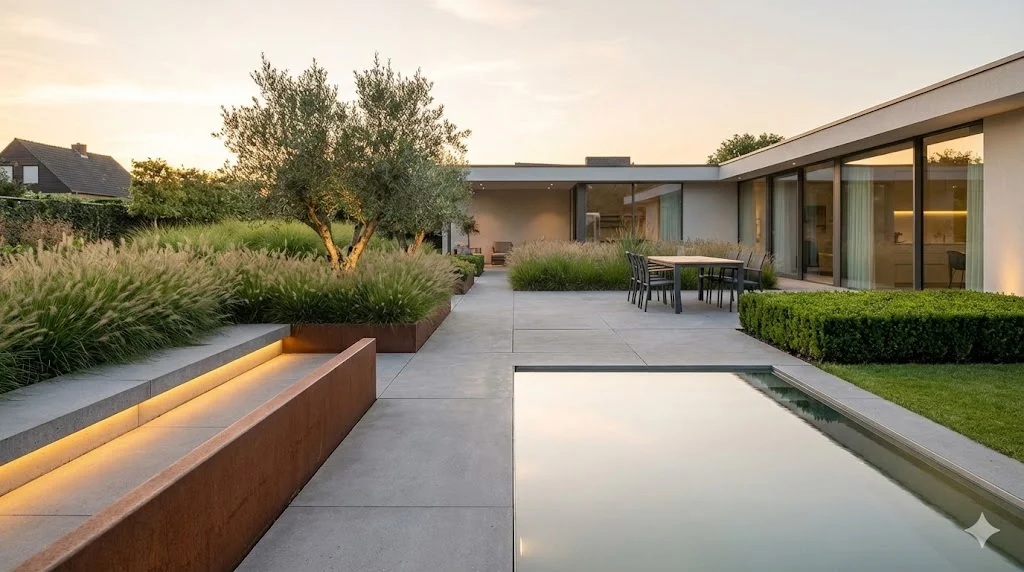
Garden Design Styles: The Complete Guide
Explore every major garden design style from cottage to Japanese, modern to Mediterranean. Find the perfect style for your space, climate, and taste.
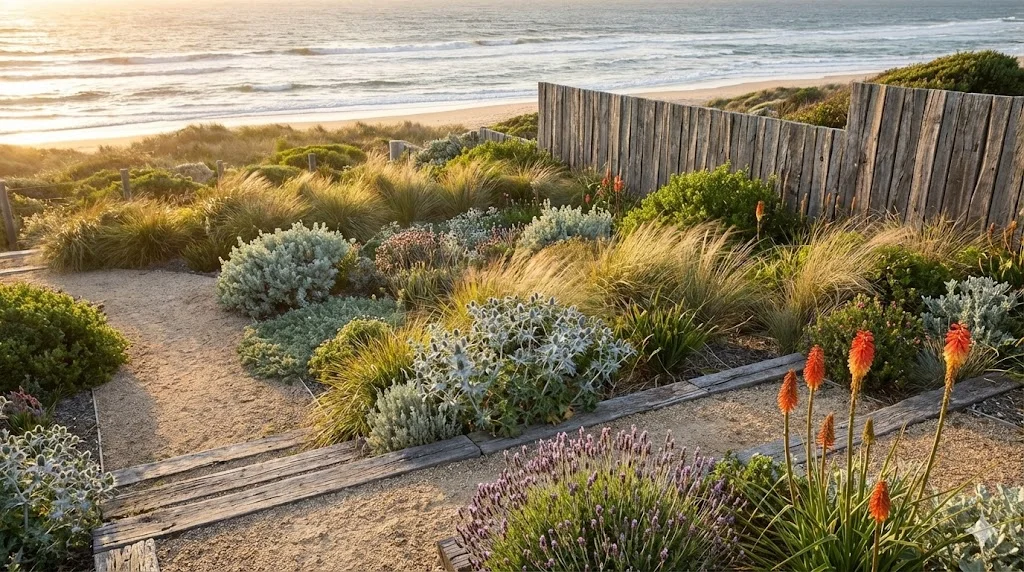
Coastal Garden Design: Salt-Tolerant Beauty
Design a beautiful coastal garden that thrives in salt spray, wind, and sandy soil. Discover the best seaside garden plants and design techniques for exposed sites.
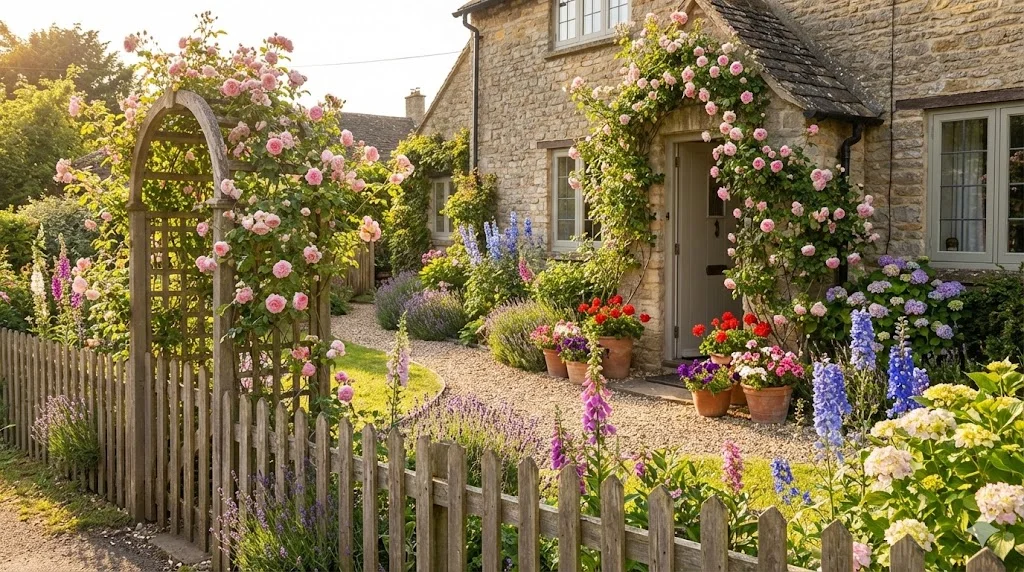
Cottage-Style Front Garden: Welcoming and Colorful
Transform your front garden into a welcoming cottage paradise with climbing roses, flower-lined paths, and seasonal color. Design tips for maximum curb appeal.