
The Complete Guide to Cottage Garden Design
Learn how to design a charming cottage garden with climbing roses, winding paths, and abundant flowers. Practical tips for creating that effortless English cottage look.
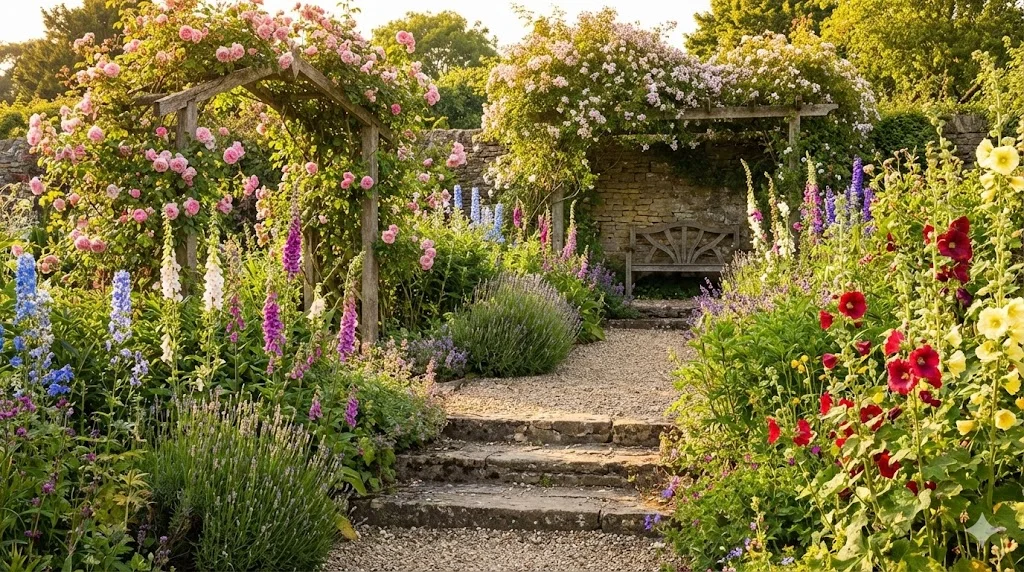
Few garden styles capture the imagination quite like the cottage garden. With its tumbling roses, self-seeding foxgloves, and stone paths nearly swallowed by creeping thyme, the English cottage garden design evokes a sense of timelessness and romance that more formal layouts simply cannot match. But beneath that seemingly effortless abundance lies a thoughtful approach to planting, structure, and seasonal rhythm.
Whether you have a sprawling country plot or a modest suburban front garden, the principles of cottage garden design can transform any outdoor space into a place that feels alive with colour and fragrance from spring through autumn. This guide walks you through everything you need to know, from choosing signature plants to laying paths, planning for year-round interest, and maintaining that gloriously untamed look without letting things spiral into chaos.
What Defines a Cottage Garden?
The cottage garden tradition stretches back centuries in the English countryside, where working families grew a mix of vegetables, herbs, and flowers in the same plot. Over time, this practical approach evolved into one of the most beloved garden styles in the world. Understanding its key characteristics is the first step toward creating one of your own.
Informal planting. Unlike formal gardens with their symmetrical beds and clipped hedges, cottage gardens embrace a relaxed, naturalistic style. Plants are encouraged to intermingle, self-seed, and spill over edges. The result is a lush tapestry of colour and texture rather than a rigid geometric pattern.
Abundance and density. Empty soil is the enemy in a cottage garden. Every gap is an invitation for another plant. Beds are packed tightly so that foliage knits together, suppressing weeds naturally while creating that overflowing, generous look.
A mix of form and function. Traditional cottage gardens blended ornamental flowers with edible plants. You might find a row of sweet peas climbing beside runner beans, or clumps of chives flowering purple among the roses. This intermingling is part of the charm.
Enclosure and intimacy. Picket fences, stone walls, arbours, and arched gateways create a sense of entering a private, enclosed world. These vertical structures also provide support for climbing roses, clematis, and honeysuckle.
Seasonal succession. A well-designed cottage garden offers something in bloom from early spring bulbs right through to late autumn asters. The planting is layered so that as one wave of flowers fades, the next is already rising to take its place.
For a broader overview of how cottage gardens compare with other approaches, see our complete guide to garden design styles.
Signature Plants for the Cottage Garden
No cottage garden design is complete without a core palette of classic plants. These are the species that define the style and give it that unmistakable English cottage garden character.
Roses
Roses are the undisputed queen of the cottage garden. Climbing varieties such as 'New Dawn' or 'Madame Alfred Carriere' drape beautifully over arches and walls, while shrub roses like David Austin's 'Gertrude Jekyll' or 'The Generous Gardener' provide structure and fragrance in the borders. For a true cottage feel, choose varieties with a loose, open flower form rather than stiff hybrid teas.
Foxgloves (Digitalis)
The tall, stately spires of foxgloves are essential for adding vertical drama. Digitalis purpurea self-seeds freely, creating naturalistic drifts of purple, pink, and white through the garden. Once established, they return year after year with minimal effort.
Lavender (Lavandula)
Lavender brings fragrance, pollinator appeal, and structure to the front of the border. English lavender (Lavandula angustifolia) varieties like 'Hidcote' and 'Munstead' are hardier than their French cousins and pair beautifully with stone paths and gravel.
Delphiniums
For sheer impact in blue and purple, few plants rival delphiniums. Their towering spikes can reach 1.5 to 1.8 metres (5 to 6 feet) and they look magnificent planted in groups of three or five behind lower-growing perennials. They do need staking in exposed positions, but the reward is well worth the effort.
Hollyhocks (Alcea rosea)
Hollyhocks are the quintessential cottage plant, traditionally grown against sunny walls and fences. Their tall flower spikes come in shades of pink, red, yellow, and near-black, and they add vertical interest at the back of the border. Like foxgloves, they self-seed readily.
Supporting Cast
Round out your planting with these cottage garden staples:
- Sweet peas for fragrance and cutting
- Hardy geraniums (cranesbills) for ground-covering foliage and long-flowering habit
- Nepeta (catmint) for billowing blue-purple clouds along path edges
- Peonies for early summer opulence
- Aquilegia (columbine) for delicate spring colour
- Alchemilla mollis (lady's mantle) for its lime-green froth of flowers and scalloped leaves
- Campanula for cottage-blue bells in sun or light shade
- Echinacea and rudbeckia for late-summer warmth
Designing Paths and Structure
A cottage garden without structure would simply be a meadow. The paths, boundaries, and vertical elements are what give the planting its framework and make the abundance feel deliberate rather than neglected.
Paths
Winding, informal paths are central to the cottage garden aesthetic. Natural stone, old brick, or gravel all work well. Avoid stark concrete or overly precise paving. The path should feel as though it has been there for generations, with plants creeping over its edges and softening the lines.
A useful approach is to lay the main path slightly wider than you think you need, perhaps 90 to 120 centimetres (3 to 4 feet), because the plants will encroach from both sides within a couple of growing seasons. Secondary paths can be narrower, even stepping-stone style through the planting.
Vertical Elements
Arches, pergolas, obelisks, and tripods add height and structure. Position an arch at the garden entrance or at a transition between different areas. Obelisks placed in the borders give climbing roses and sweet peas a support to scramble up, adding valuable vertical interest to an otherwise flat planting scheme.
Boundaries
A picket fence, low stone wall, or mixed native hedge makes the ideal boundary for a cottage garden. These define the space without creating a fortress-like feel. If you already have a taller fence or wall, soften it with climbing plants. Visualising these structural elements in a plan before you start building helps you get the proportions right and ensures paths flow naturally through the space.
Focal Points
Every cottage garden benefits from a focal point: a birdbath, a sundial, an old stone urn overflowing with trailing pelargoniums, or a rustic bench tucked beneath an arbour. These elements anchor the eye and give the garden a sense of place.
Achieving the "Effortless" Look
The greatest paradox of cottage garden design is that achieving the appearance of effortless abundance requires careful planning. Here are the principles that make it work.
Plant in odd numbers and informal groups. Clusters of three, five, or seven plants of the same variety look more natural than regimented rows or even numbers. Allow the groups to overlap and interweave.
Layer by height. Place taller plants (delphiniums, hollyhocks, foxgloves) at the back, medium plants (roses, peonies, hardy geraniums) in the middle, and low edging plants (lavender, nepeta, alchemilla) at the front. But break this rule occasionally. A tall foxglove poking up through a drift of lower plants adds spontaneity.
Repeat key plants. Rhythm is what holds an informal planting together. Repeat your main plants, such as roses, lavender, or geraniums, at intervals along the border. This creates visual cohesion even within a complex, mixed scheme.
Embrace self-seeders. Foxgloves, aquilegia, verbena bonariensis, and nigella will scatter their seeds and pop up in unexpected places. This is a feature, not a problem. Simply remove any seedlings that appear where they are genuinely unwelcome.
Use a limited colour palette. The most harmonious cottage gardens work within a restrained colour range. Classic choices include soft pinks, blues, purples, and whites, warmed up with occasional peach or apricot. If you prefer hotter colours, commit to that palette fully with reds, oranges, and golds. Mixing the two can look chaotic rather than charming.
Let edges blur. Allow plants to spill over path edges, flop onto lawns, and lean into one another. This softness is essential to the cottage feel.
If you are designing a cottage-style space for the front of your home specifically, our guide to cottage-style front garden design covers the particular considerations of visibility, access, and kerb appeal.
Seasonal Planning for Year-Round Interest
A cottage garden should never have a month where nothing is happening. Planning for seasonal succession is one of the most important aspects of the design process.
Early spring (March-April): Bulbs carry the garden through the lean weeks. Plant tulips, narcissi, and grape hyacinths (muscari) in autumn so they push up between the emerging perennials. Primroses and forget-me-nots fill the lower layer.
Late spring (May): Aquilegia, wallflowers, and the first hardy geraniums begin to flower. Wisteria and clematis montana open on walls and pergolas.
Early summer (June-July): This is the cottage garden's peak. Roses, foxgloves, delphiniums, peonies, and sweet peas put on their main show. Lavender begins to open.
High summer (August): As the first flush of roses fades (deadhead to encourage repeats), echinacea, rudbeckia, crocosmia, and dahlias take over. Verbena bonariensis weaves its airy purple heads through the borders.
Autumn (September-October): Japanese anemones, sedums, asters, and late-flowering clematis keep the garden alive. Ornamental grasses catch the lower autumn light beautifully.
Winter (November-February): Structure becomes king. Evergreen herbs like rosemary and box topiary hold the fort. Hellebores flower from midwinter onward, and the skeletal forms of deciduous shrubs and seedheads add quiet beauty.
Mapping out your planting in a design tool allows you to colour-code by season and spot gaps in your flowering calendar before you buy a single plant.
Best Conditions and Climate
The cottage garden tradition is rooted in the temperate maritime climate of the British Isles, where mild winters, reliable rainfall, and cool summers suit the classic plant palette perfectly. That said, cottage garden design adapts well to a wide range of climates with some thoughtful plant selection.
Ideal conditions: Moderate temperatures, consistent moisture, and at least five to six hours of sun per day. Most cottage garden staples are hardy to USDA zones 5-8 (or equivalent). Well-drained but moisture-retentive soil, enriched with organic matter, is the foundation of success.
Hot, dry climates: Swap moisture-loving plants for Mediterranean alternatives. Lavender, rosemary, salvias, and cistus thrive in heat. Use gravel mulch to conserve moisture and echo the relaxed cottage aesthetic.
Cold climates: Focus on plants rated for your zone. Siberian iris, peonies, hardy geraniums, and catmint are tough enough for harsh winters. Mulch crowns heavily in late autumn to protect roots.
Shade: Cottage gardens are traditionally sunny, but partial shade opens the door to foxgloves, hellebores, astilbe, ferns, and hostas. The style translates beautifully into a woodland-edge feel.
Soil: Cottage garden plants are generally forgiving, but heavy clay or very sandy soil benefits from generous annual additions of garden compost or well-rotted manure.
Maintenance: What to Expect
One of the great appeals of the cottage garden is that it looks best when it is slightly imperfect. You will never need to spend hours with a tape measure and spirit level. That said, a degree of regular care keeps the garden healthy and productive.
Weekly in the growing season: Deadhead roses and repeat-flowering perennials to keep the blooms coming. Tie in climbers as they grow. Pull or hoe any weeds that manage to find space between plants.
Monthly: Check for pests and disease, especially aphids on roses and rust on hollyhocks. Feed roses and heavy-flowering perennials with a balanced organic fertiliser in spring and midsummer.
Seasonally: Cut back spent perennials in late autumn or early spring, depending on whether you want to leave seedheads for winter interest and wildlife. Divide congested clumps of perennials every three to four years to maintain vigour. Plant spring bulbs in autumn.
Annually: Add a mulch of garden compost or well-rotted manure in late winter or early spring to feed the soil and suppress weeds. Prune climbing and shrub roses according to their type (generally in late winter).
Overall, the cottage garden sits in the moderate maintenance range. It requires more attention than a minimalist gravel garden but far less than a formal parterre or manicured lawn. The reward is a garden that feels alive, generous, and deeply personal, one that changes with the seasons and improves with every passing year.
Bringing Your Cottage Garden to Life
The beauty of cottage garden design lies in its accessibility. You do not need a grand estate or decades of gardening experience. Start with a few key structural elements, a well-chosen path, an arch, and a handful of signature plants. Choose roses, foxgloves, and lavender as your anchors, and fill in with supporting perennials that suit your soil and climate. Embrace the self-seeders, accept the imperfections, and trust that the garden will find its own rhythm.
Within a couple of seasons, the plants will knit together, the paths will soften, and you will have created a space that feels as though it has been there forever, which is, after all, the highest compliment any cottage garden can receive.
Garden Design Team
Expert garden designers sharing tips, inspiration, and practical advice for creating beautiful outdoor spaces.
Explore professional garden design
Gardenly3D is a paid professional garden-design application. See plans for included capabilities and availability.
Join the waitlistRelated articles
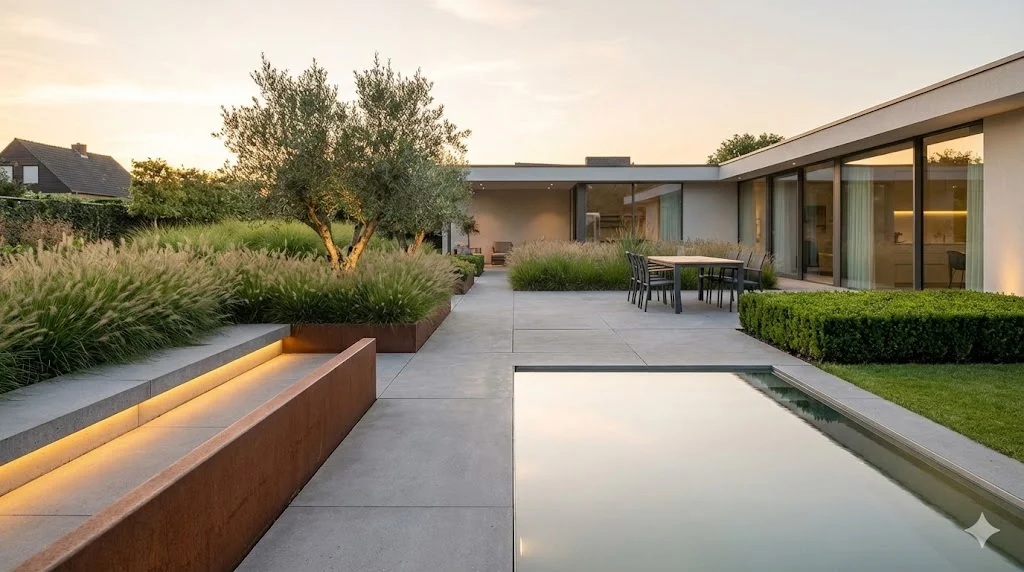
Garden Design Styles: The Complete Guide
Explore every major garden design style from cottage to Japanese, modern to Mediterranean. Find the perfect style for your space, climate, and taste.
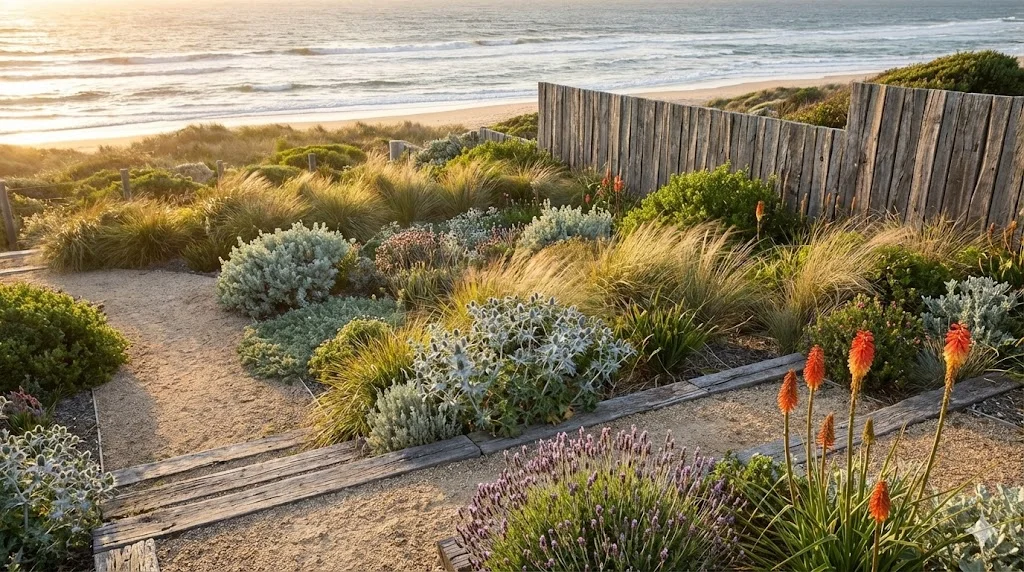
Coastal Garden Design: Salt-Tolerant Beauty
Design a beautiful coastal garden that thrives in salt spray, wind, and sandy soil. Discover the best seaside garden plants and design techniques for exposed sites.
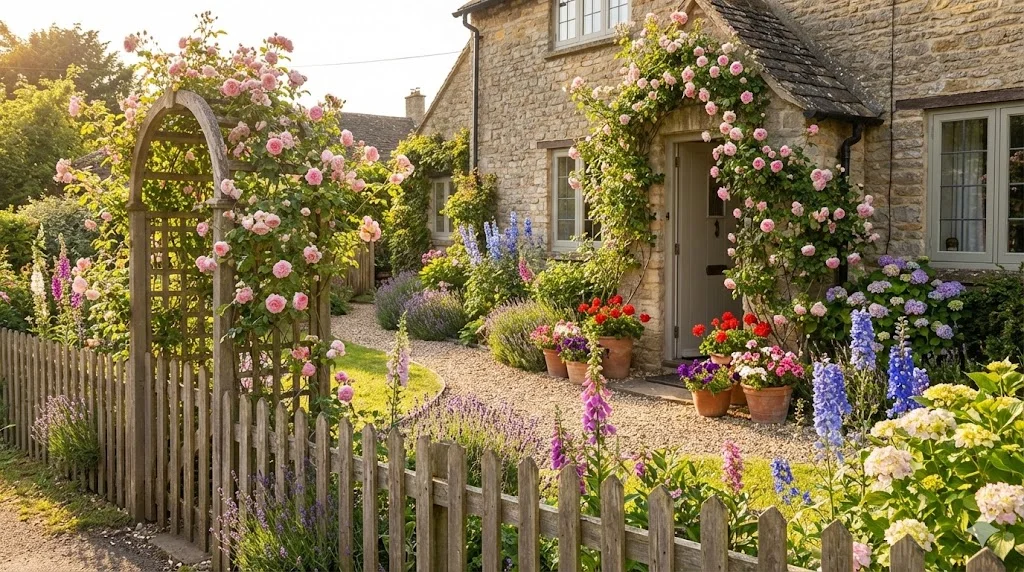
Cottage-Style Front Garden: Welcoming and Colorful
Transform your front garden into a welcoming cottage paradise with climbing roses, flower-lined paths, and seasonal color. Design tips for maximum curb appeal.